River Publishers Series in Biomedical Engineering - Böcker
Visar alla böcker i serien River Publishers Series in Biomedical Engineering. Handla med fri frakt och snabb leverans.
7 produkter
7 produkter
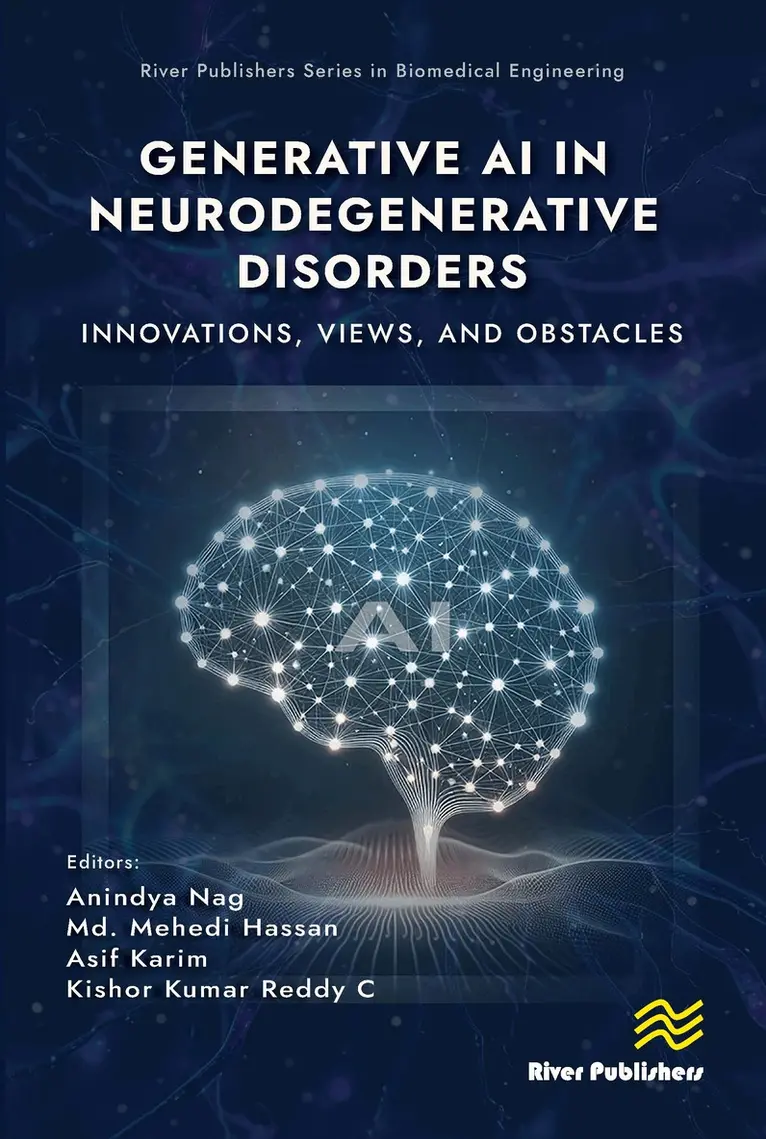
Generative AI in Neurodegenerative Disorders
Innovations, Views, and Obstacles
Inbunden, Engelska, 2025
1 603 kr
Skickas inom 10-15 vardagar
This book delves into the transformative power of AI in the realm of neurodegenerative diseases,covering topics such as ALS, Huntington’s, Parkinson’s, and Alzheimer’s. Generative AIprovides new opportunities for early diagnosis, precise therapy, and individualized rehabilitation,which are crucial as these conditions remain major obstacles for healthcare providersand researchers.Researchers, physicians, AI developers, and healthcare professionals will find this bookan invaluable resource for understanding how AI is influencing the development of treatmentsfor neurodegenerative diseases. It describes important obstacles and future directions whileproviding insights into the newest breakthroughs, thus bridging the gap between technologyand practical clinical applications. Anyone involved in neurodegenerative healthcare, fromscientists conducting AI-driven medical research to physicians seeking to incorporate AI intopatient care or AI professionals investigating new healthcare applications, will find the informationand insights they need in this comprehensive book.Predictive analytics, biomarker identification, and drug discovery are being transformedby AI-driven models, such as deep neural networks, generative adversarial networks (GANs),and variational autoencoders (VAEs). This book offers a comprehensive examination of thesedevelopments. Robots, wearable sensors, and cognitive therapy platforms are some of theAI-enhanced rehabilitation tools covered, as are AI-integrated cutting-edge technologies likefMRI and MRI, gene-editing methods like CRISPR, and more.In addition to discussing recent technical developments, this book takes a close look atthe data privacy, ethics, and regulatory issues that arise when using AI to study neurodegenerativedisorders. Issues like algorithmic bias, model explainability, and fair AI-driven healthcareare thoroughly investigated in light of the growing usage of AI models in clinical decision-making,mental health applications, and cognitive rehabilitation.
1 247 kr
Skickas inom 10-15 vardagar
Cilia are microscopic finger-like cell-surface organelles possessed by a great many eukaryotic organisms, including humans, whose purposes include generating local fluid movements via rhythmic whip-like beating and environmental sensing. Despite intense research efforts since their discovery by van Leeuwenhoek in the 1670’s, several key questions regarding ciliary functions, experimental manipulation and in silico imitation remain unanswered. Major justifications for cilia research lie in their involvement in various forms of human disease (ciliopathies) and their ability to instantiate decentralised, asynchronous sensorial-actuation of adjacent matter through modulation of beating characteristics. Further elucidation of these characteristics, which is a problem requiring the combined expertise of mathematicians, computer scientists, engineers and life scientists, will lead to novel biomedical therapies, creation of `smart’ actuating surfaces for microfluidics/lab-on-chip applications and a greater understanding of fluid mechanics in real-world scenarios.This lavishly-illustrated anthology presents recent advances in the fields of ciliary investigation, manipulation, emulation, mimesis and modelling from key researchers in their fields: its goal is to explain the state-of-the-art in cilia bioengineering and bio-computation in a uniquely creative, accessible manner, towards encouraging further transdisciplinary work in the field as well as educating a broad spectrum of scientists and lay people.The volume is split into three distinct but interwoven themes:1.Biology: Biological preliminaries for the study of cilia; the state-of-the-art in genetic engineering of ciliated cells for biomedical purposes; reprogramming of cilia dynamics in live cells.2.Engineering: Creation of macro cilia robots for object sorting applications; pneumatic cilia for the optimization of fluid motion; electrostatic, magnetic and MEMS cilia for microfluidic mixing; reviews in artificial cilia fabrication, actuation and flow induction methods. 3.Numerical and computational modelling. Analyses of thin film cilia for `lab on chip’ microfluidic mixing applications; modelling of gel-based artificial cilia towards simulating dynamic behaviors of responsive cilia layers in complex fluids across a wide range of potential applications.
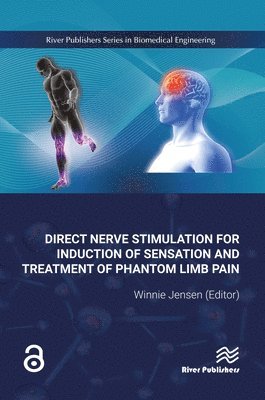
Direct Nerve Stimulation for Induction of Sensation and Treatment of Phantom Limb Pain
Inbunden, Engelska, 2019
1 354 kr
Skickas inom 10-15 vardagar
The amputation of a limb is a surgical intervention used as a last resort to remove irreparably damaged, diseased, or congenitally malformed limbs where retention of the limb is a threat to the well-being of the individual. The procedure traumatically alters the body image, but often leaves sensations that refer to the missing body part, the phantom limb. In 50-80% of cases, these sensations are perceived as painful and referred to as ‘Phantom Limb Pain’.Direct Nerve Stimulation for Induction of Sensation and Treatment of Phantom Limb Pain provides an overview of research, experiences and results for the design, development and test of hardware and software components, and the ambition to safely implant and evaluate a novel neural interface system to combat phantom limb pain in an amputee volunteer subject.
1 465 kr
Skickas inom 10-15 vardagar
Advanced technologies have been transforming the ways we carry out biological studies as well as deliver healthcare. While micro- and nano-fabrication have provided miniaturized sensors and systems with better sensitivity and selectivity,; innovations in flexible electronics, biomaterials and telecommunications have helped in enabling novel biomedical devices, reducing cost, bringing convenience and establishing mobile-health (m-Health), and personalized- and tele-medicine. Further, the recent rise of the internet of things (IoTs) and machine learning-based approaches has paved the avenue for those biomedical systems to become popular and widely accepted by our society.In this context, we edit this book aiming to cover a broad field of novel technologies used in biological assessment and analysis for humans, animal models and in vitro platforms, in both health monitoring and biological studies.Technical topics discussed in the book include:Biosensing systems and biomedical techniquesImaging techniques and systemsBiosignal analysisAnimal models used in biological research
1 465 kr
Skickas inom 10-15 vardagar
Health care today is known to suffer from siloed and fragmented data, delayed clinical communications, and disparate workflow tools due to the lack of interoperability caused by vendor-locked health care systems, lack of trust among data holders, and security/privacy concerns regarding data sharing. The health information industry is ready for big leaps and bounds in terms of growth and advancement.This book is an attempt to unveil the hidden potential of the enormous amount of health information and technology. Throughout this book, we attempt to combine numerous compelling views, guidelines, and frameworks to enable personalized health care service options through the successful application of deep learning frameworks. The progress of the health-care sector will be incremental as it learns from associations between data over time through the application of suitable AI, deep net frameworks, and patterns. The major challenge health care is facing is the effective and accurate learning of unstructured clinical data through the application of precise algorithms. Incorrect input data leading to erroneous outputs with false positives is intolerable in healthcare as patients’ lives are at stake. This book is written with the intent to uncover the stakes and possibilities involved in realizing personalized health-care services through efficient and effective deep learning algorithms.The specific focus of this book will be on the application of deep learning in any area of health care, including clinical trials, telemedicine, health records management, etc.
1 603 kr
Skickas inom 10-15 vardagar
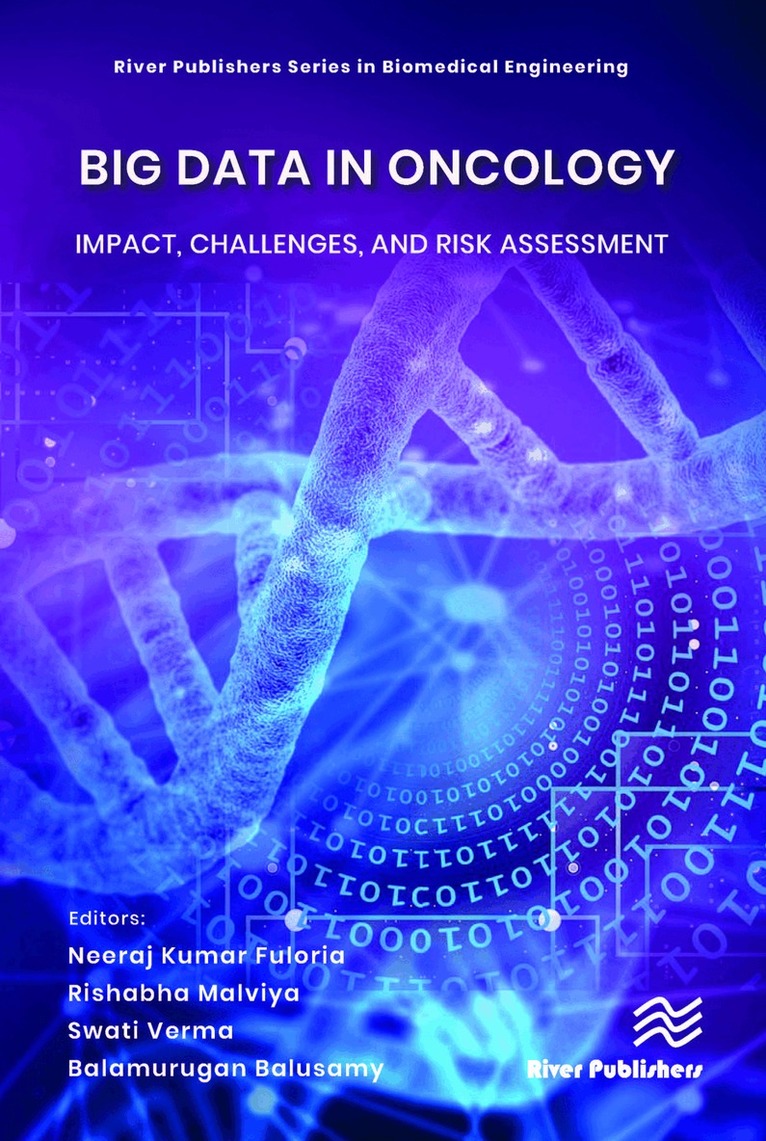
We are in the era of large-scale science. In oncology there is a huge number of data sets grouping information on cancer genomes, transcriptomes, clinical data, and more. The challenge of big data in cancer is to integrate all this diversity of data collected into a unique platform that can be analyzed, leading to the generation of readable files. The possibility of harnessing information from all the accumulated data leads to an improvement in cancer patient treatment and outcome. Solving the big data problem in oncology has multiple facets. Big data in Oncology: Impact, Challenges, and Risk Assessment brings together insights from emerging sophisticated information and communication technologies such as artificial intelligence, data science, and big data analytics for cancer management.This book focuses on targeted disease treatment using big data analytics. It provides information about targeted treatment in oncology, challenges and application of big data in cancer therapy.Recent developments in the fields of artificial intelligence, machine learning, medical imaging, personalized medicine, computing and data analytics for improved patient care.Description of the application of big data with AI to discover new targeting points for cancer treatment.Summary of several risk assessments in the field of oncology using big data.Focus on prediction of doses in oncology using big dataThe most targeted or relevant audience is academics, research scholars, health care professionals, hospital management, pharmaceutical chemists, the biomedical industry, software engineers and IT professionals.
1 603 kr
Skickas inom 10-15 vardagar
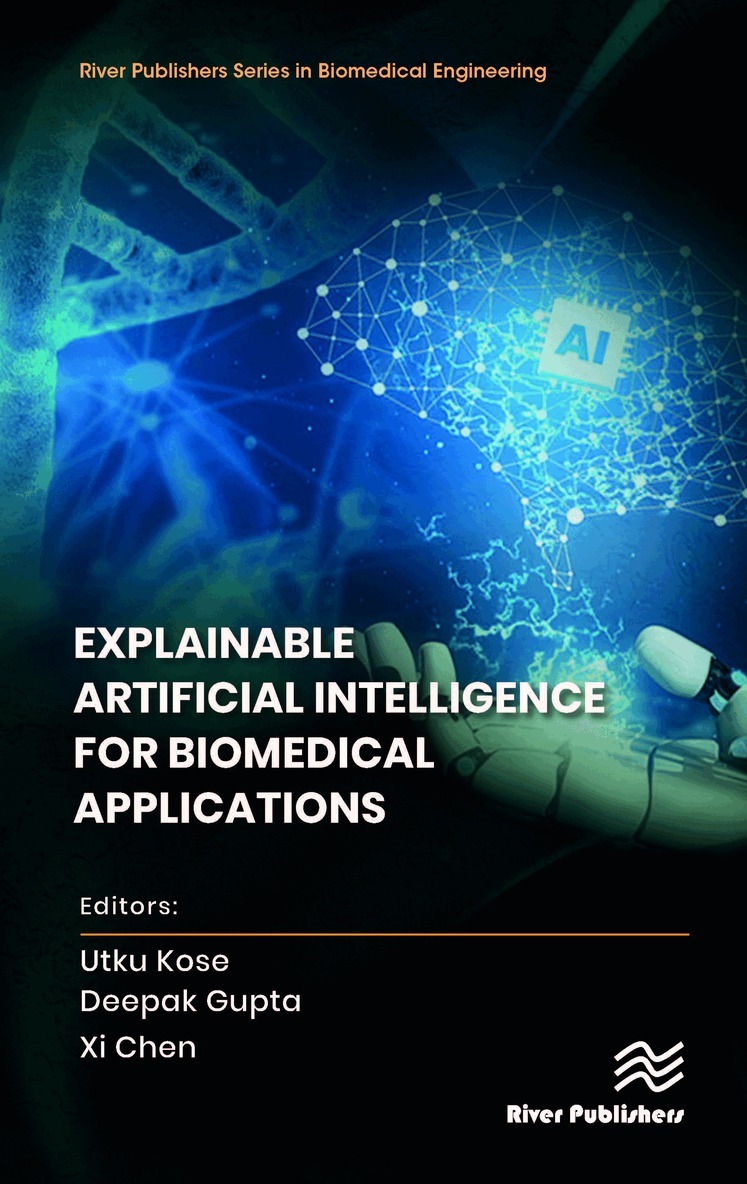
Since its first appearance, artificial intelligence has been ensuring revolutionary outcomes in the context of real-world problems. At this point, it has strong relations with biomedical and today’s intelligent systems compete with human capabilities in medical tasks. However, advanced use of artificial intelligence causes intelligent systems to be black-box. That situation is not good for building trustworthy intelligent systems in medical applications. For a remarkable amount of time, researchers have tried to solve the black-box issue by using modular additions, which have led to the rise of the term: interpretable artificial intelligence. As the literature matured (as a result of, in particular, deep learning), that term transformed into explainable artificial intelligence (XAI).This book provides an essential edited work regarding the latest advancements in explainable artificial intelligence (XAI) for biomedical applications. It includes not only introductive perspectives but also applied touches and discussions regarding critical problems as well as future insights.Topics discussed in the book include:XAI for the applications with medical imagesXAI use cases for alternative medical data/taskDifferent XAI methods for biomedical applicationsReviews for the XAI research for critical biomedical problems.Explainable Artificial Intelligence for Biomedical Applications is ideal for academicians, researchers, students, engineers, and experts from the fields of computer science, biomedical, medical, and health sciences. It also welcomes all readers of different fields to be informed about use cases of XAI in black-box artificial intelligence. In this sense, the book can be used for both teaching and reference source purposes.