Routledge Studies in Asia and the Environment – Serie
Visar alla böcker i serien Routledge Studies in Asia and the Environment. Handla med fri frakt och snabb leverans.
13 produkter
13 produkter
665 kr
Skickas inom 10-15 vardagar
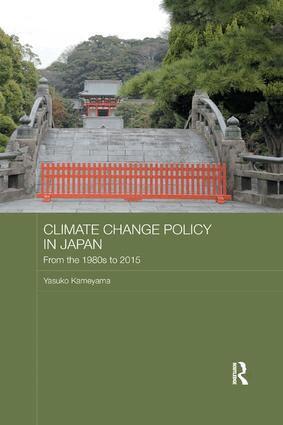
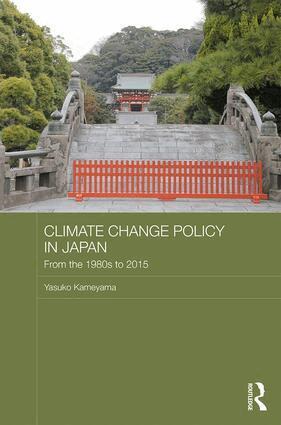
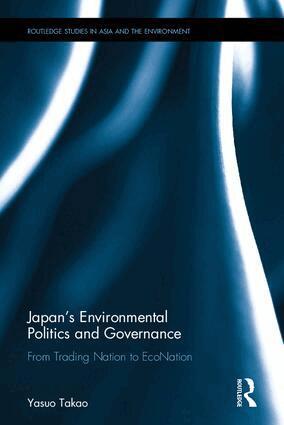
Amidst growing environmental concerns worldwide, Japan is seen as particularly vulnerable to the effects of changing climate. This book considers Japan’s response to the climate change problem from the late 1980s up to the present day, assessing how the Japanese government’s policy-making process has developed over time. From the early days of climate change policy in Japan, through the United Nations Framework Convention on Climate Change conferences and Kyoto Protocol, right up to the 2015 negotiations, the book examines the environmental, economic, and political factors that have shaped policy. As the 2015 Conference of the Parties to the United Nations Framework Convention on Climate Change projects forward beyond 2020, the book concludes by analyzing how Japan has placed itself in the global climate change debate and how the country might and should respond to the problem in the future, based on the findings from accumulated history.
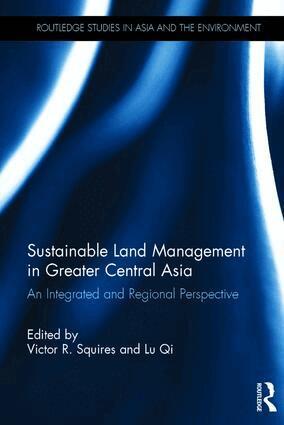
Sustainable Land Management in Greater Central Asia
An Integrated and Regional Perspective
Häftad, Engelska, 2019
637 kr
Skickas inom 10-15 vardagar
Greater Central Asia encompasses a vast area that includes deserts, natural grasslands, steppes, shrublands and alpine regions. Many of these land types are degraded and productivity is falling at a time when human populations and livestock inventories are on the rise. Ecosystem stability and biodiversity are under threat and there is an urgent need to develop more sustainable land management regimes. This book uses an integrated regional approach to provide a comprehensive exploration of sustainable land development in Central Asia. An interdisciplinary team of experts analyses the economic, ecological, sociological, technological and political factors surrounding sustainable land and water management in the region, sharing potential problems and solutions. As international concern about desertification grows, the book concludes by asking how the region is likely to develop in the future. This book will be of value to scholars, students, policy makers and NGOs with an interest in sustainable development in Central Asia.
749 kr
Skickas inom 10-15 vardagar
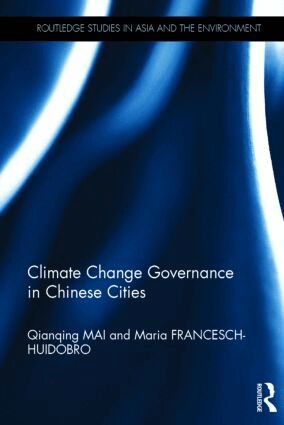
In the last thirty years, China has experienced rapid economic development and urbanisation which has resulted in high levels of environmental degradation and has put considerable pressure on the country’s infrastructure and natural resources. As China commits to considerably lower the carbon intensity of its economy, this volume analyses and explains the governance of climate change mitigation responses in major Chinese cities. The book focuses specifically on two highly carbon intensive sectors, buildings and transport, in Guangzhou, Shenzhen, and Hong Kong to explore how collaborative municipal networks function in practice in Chinese cities. The authors find that effective coordination relies on the political will of local administrative elites, the political significance attached to climate change issues, the legitimate authority granted to the coordinating agency, and human and financial capitals. Collaboration is hampered by limited span of network engagement, inadequate authority of the primary network participants, insufficient input and output legitimacy of the sectoral innovations, and missing linkages across functionally segregated sectors. The book concludes that the enhanced collaboration and coordination between networks that has emerged in the process of low carbon transitions is transforming the Chinese environmental state into a more pluralistic, inclusive and legitimate one. This book will be of interest to researchers and practitioners across disciplines including Chinese studies, environmental politics and policy, urban studies, and planning and geography.
India, China, and Climate Change Governance
Leadership and Responsibility in the Asian Global South
Inbunden, Engelska, 2026
2 258 kr
Kommande
This important volume sheds light on how the major Asian Global South states of India and China are asserting their leadership roles and responsibilities within the broader framework of global climate diplomacy, examining their governance efforts and ability to shape and manage global climate challenges. Bridging international geopolitics and climate governance from a Global South perspective, the book looks in-depth at the internal dynamics, strategic positioning, and global interactions of China and India’s role in climate politics. Chapters analyse climate ties, intra-South rivalries, and cooperation efforts between neighbouring countries, providing region-specific case studies from the Middle East, Central and South Asia. The book also highlights the role of non-state actors in shaping climate governance. By critically examining the extent to which India and China exercise agency and responsibility in the global climate regime, the book attempts to challenge the prevailing assumptions about responsibility, hierarchy, and influence in global climate politics. The book will be of value to scholars, researchers and postgraduate students in the fields of international relations, governance, and climate change studies.
693 kr
Skickas inom 10-15 vardagar
Environmental issues stretch across scales of geographic space and require action at multiple levels of jurisdiction, including the individual level, community level, national level, and global level. Much of the scholarly work surrounding new approaches to environmental governance tends to overlook the role of sub-national governments, but this study examines the potential of sub-national participation to make policy choices which are congruent with global strategies and national mandates.This book investigates the emerging actors and new channels of Japan’s environmental governance which has been taking shape within an increasingly globalized international system. By analysing this important new phenomenon, it sheds light on the changing nature of Japan’s environmental policy and politics, and shows how the links between global strategies, national mandates and local action serve as an influential factor in Japan’s changing structures of environmental governance. Further, it demonstrates that decision-making competencies are shared between actors operating at different levels and in new spheres of authority, resulting from collaboration between state and non-state actors. It highlights a number of the problems, challenges, and critiques of the actors in environmental governance, as well as raising new empirical and theoretical puzzles for the future study of governance over environmental and global issues. Finally, it concludes that changes in the tiers and new spheres of authority are leading the nation towards an environmentally stable future positioned within socio-economic and political constraints. Demonstrating that bridging policy gaps between local action, national policy and global strategies is potentially a way of reinventing environmental policy, this book will be of interest to students and scholars of Environmental Studies, Environmental Politics and Japanese Politics.
Deliberating Environmental Policy in India
Participation and the Role of Advocacy
Häftad, Engelska, 2018
644 kr
Skickas inom 10-15 vardagar
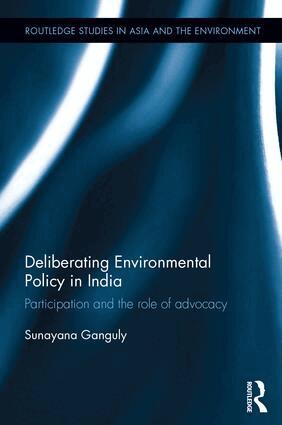
As one of the world’s largest and most bio-diverse countries, India’s approach to environmental policy will be very significant in tackling global environmental challenges. This book explores the transformations that have taken place in the making of environmental policy in India since the economic liberalization of the 1990s. It investigates if there has been a slow shift from top-down planning to increasingly bottom up and participatory policy processes, examining the successes and failures of recent environmental policies. Linking deliberation to collective action, this book contends that it is crucial to involve local actors in framing the policies that decide on their rights and control over bio-resources in order to achieve the goal of sustainable human development.The first examples of large-scale participatory processes in Indian environmental policy were the 1999 National Biodiversity Strategy Action Plan and the 2006 Scheduled Tribes and Other Traditional Forest Dwellers Act. This book explores these landmark policies, exploring the strategies of advocacy and deliberation that led to both the successes and failures of recent initiatives. It concludes that in order to deliberate with the state, civil society actors must engage in forms of strategic advocacy with the power to push agendas that challenge mainstream development discourses. The lessons learnt from the Indian experience will not only have immediate significance for the future of policy making in India, but they will also be of interest for other countries faced with the challenges of integrating livelihood and sustainability concerns into the governance process.
700 kr
Skickas inom 10-15 vardagar
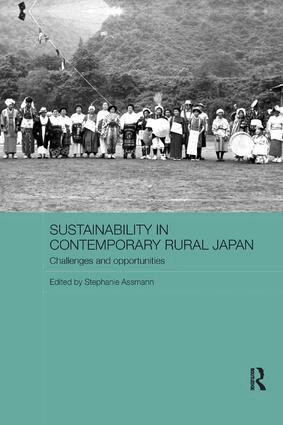
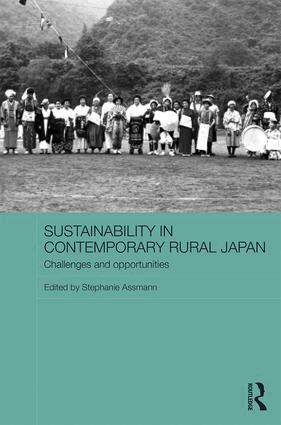
Rural communities in Japan have suffered from significant depopulation and economic downturn in post-war years. Low birth rates, aging populations, agricultural decline and youth migration to large cities have been compounded by the triple disaster of 11 March 2011, which destroyed farming and fishing communities and left thousands of people homeless. This book identifies these challenges and acknowledges that an era of post-growth has arrived in Japan. Through exploring new forms of regional employment, community empowerment, and reverse migration, the authors address potential opportunities and benefits that may help to create and ensure the quality of life in depopulating areas and post-disaster scenarios. This book will be of interest not only to students of Japanese society, but also to those outside of Japan who are seeking new approaches for tackling depopulation challenges.
2 181 kr
Skickas inom 10-15 vardagar
In the last thirty years, China has experienced rapid economic development and urbanisation which has resulted in high levels of environmental degradation and has put considerable pressure on the country’s infrastructure and natural resources. As China commits to considerably lower the carbon intensity of its economy, this volume analyses and explains the governance of climate change mitigation responses in major Chinese cities. The book focuses specifically on two highly carbon intensive sectors, buildings and transport, in Guangzhou, Shenzhen, and Hong Kong to explore how collaborative municipal networks function in practice in Chinese cities. The authors find that effective coordination relies on the political will of local administrative elites, the political significance attached to climate change issues, the legitimate authority granted to the coordinating agency, and human and financial capitals. Collaboration is hampered by limited span of network engagement, inadequate authority of the primary network participants, insufficient input and output legitimacy of the sectoral innovations, and missing linkages across functionally segregated sectors. The book concludes that the enhanced collaboration and coordination between networks that has emerged in the process of low carbon transitions is transforming the Chinese environmental state into a more pluralistic, inclusive and legitimate one. This book will be of interest to researchers and practitioners across disciplines including Chinese studies, environmental politics and policy, urban studies, and planning and geography.
Deliberating Environmental Policy in India
Participation and the Role of Advocacy
Inbunden, Engelska, 2015
2 069 kr
Skickas inom 10-15 vardagar
As one of the world’s largest and most bio-diverse countries, India’s approach to environmental policy will be very significant in tackling global environmental challenges. This book explores the transformations that have taken place in the making of environmental policy in India since the economic liberalization of the 1990s. It investigates if there has been a slow shift from top-down planning to increasingly bottom up and participatory policy processes, examining the successes and failures of recent environmental policies. Linking deliberation to collective action, this book contends that it is crucial to involve local actors in framing the policies that decide on their rights and control over bio-resources in order to achieve the goal of sustainable human development.The first examples of large-scale participatory processes in Indian environmental policy were the 1999 National Biodiversity Strategy Action Plan and the 2006 Scheduled Tribes and Other Traditional Forest Dwellers Act. This book explores these landmark policies, exploring the strategies of advocacy and deliberation that led to both the successes and failures of recent initiatives. It concludes that in order to deliberate with the state, civil society actors must engage in forms of strategic advocacy with the power to push agendas that challenge mainstream development discourses. The lessons learnt from the Indian experience will not only have immediate significance for the future of policy making in India, but they will also be of interest for other countries faced with the challenges of integrating livelihood and sustainability concerns into the governance process.
2 181 kr
Skickas inom 10-15 vardagar
Rural communities in Japan have suffered from significant depopulation and economic downturn in post-war years. Low birth rates, aging populations, agricultural decline and youth migration to large cities have been compounded by the triple disaster of 11 March 2011, which destroyed farming and fishing communities and left thousands of people homeless. This book identifies these challenges and acknowledges that an era of post-growth has arrived in Japan. Through exploring new forms of regional employment, community empowerment, and reverse migration, the authors address potential opportunities and benefits that may help to create and ensure the quality of life in depopulating areas and post-disaster scenarios. This book will be of interest not only to students of Japanese society, but also to those outside of Japan who are seeking new approaches for tackling depopulation challenges.
2 316 kr
Skickas inom 10-15 vardagar
Amidst growing environmental concerns worldwide, Japan is seen as particularly vulnerable to the effects of changing climate. This book considers Japan’s response to the climate change problem from the late 1980s up to the present day, assessing how the Japanese government’s policy-making process has developed over time. From the early days of climate change policy in Japan, through the United Nations Framework Convention on Climate Change conferences and Kyoto Protocol, right up to the 2015 negotiations, the book examines the environmental, economic, and political factors that have shaped policy. As the 2015 Conference of the Parties to the United Nations Framework Convention on Climate Change projects forward beyond 2020, the book concludes by analyzing how Japan has placed itself in the global climate change debate and how the country might and should respond to the problem in the future, based on the findings from accumulated history.
Japan's Environmental Politics and Governance
From Trading Nation to EcoNation
Inbunden, Engelska, 2016
2 386 kr
Skickas inom 10-15 vardagar
Environmental issues stretch across scales of geographic space and require action at multiple levels of jurisdiction, including the individual level, community level, national level, and global level. Much of the scholarly work surrounding new approaches to environmental governance tends to overlook the role of sub-national governments, but this study examines the potential of sub-national participation to make policy choices which are congruent with global strategies and national mandates.This book investigates the emerging actors and new channels of Japan’s environmental governance which has been taking shape within an increasingly globalized international system. By analysing this important new phenomenon, it sheds light on the changing nature of Japan’s environmental policy and politics, and shows how the links between global strategies, national mandates and local action serve as an influential factor in Japan’s changing structures of environmental governance. Further, it demonstrates that decision-making competencies are shared between actors operating at different levels and in new spheres of authority, resulting from collaboration between state and non-state actors. It highlights a number of the problems, challenges, and critiques of the actors in environmental governance, as well as raising new empirical and theoretical puzzles for the future study of governance over environmental and global issues. Finally, it concludes that changes in the tiers and new spheres of authority are leading the nation towards an environmentally stable future positioned within socio-economic and political constraints. Demonstrating that bridging policy gaps between local action, national policy and global strategies is potentially a way of reinventing environmental policy, this book will be of interest to students and scholars of Environmental Studies, Environmental Politics and Japanese Politics.
Sustainable Land Management in Greater Central Asia
An Integrated and Regional Perspective
Inbunden, Engelska, 2017
2 045 kr
Skickas inom 10-15 vardagar
Greater Central Asia encompasses a vast area that includes deserts, natural grasslands, steppes, shrublands and alpine regions. Many of these land types are degraded and productivity is falling at a time when human populations and livestock inventories are on the rise. Ecosystem stability and biodiversity are under threat and there is an urgent need to develop more sustainable land management regimes. This book uses an integrated regional approach to provide a comprehensive exploration of sustainable land development in Central Asia. An interdisciplinary team of experts analyses the economic, ecological, sociological, technological and political factors surrounding sustainable land and water management in the region, sharing potential problems and solutions. As international concern about desertification grows, the book concludes by asking how the region is likely to develop in the future. This book will be of value to scholars, students, policy makers and NGOs with an interest in sustainable development in Central Asia.