SDC-Society of Dyers and Colourists – serie
Visar alla böcker i serien SDC-Society of Dyers and Colourists. Handla med fri frakt och snabb leverans.
4 produkter
4 produkter
1 512 kr
Tillfälligt slut
The production of textile materials comprises a very large and complex global industry that utilises a diverse range of fibre types and creates a variety of textile products. As the great majority of such products are coloured, predominantly using aqueous dyeing processes, the coloration of textiles is a large-scale global business in which complex procedures are used to apply different types of dye to the various types of textile material. The development of such dyeing processes is the result of substantial research activity, undertaken over many decades, into the physico-chemical aspects of dye adsorption and the establishment of ‘dyeing theory’, which seeks to describe the mechanism by which dyes interact with textile fibres.Physico-Chemical Aspects of Textile Coloration provides a comprehensive treatment of the physical chemistry involved in the dyeing of the major types of natural, man-made and synthetic fibres with the principal types of dye. The book covers: fundamental aspects of the physical and chemical structure of both fibres and dyes, together with the structure and properties of water, in relation to dyeing;dyeing as an area of study as well as the terminology employed in dyeing technology and science;contemporary views of intermolecular forces and the nature of the interactions that can occur between dyes and fibres at a molecular level;fundamental principles involved in dyeing theory, as represented by the thermodynamics and kinetics of dye sorption;detailed accounts of the mechanism of dyeing that applies to cotton (and other cellulosic fibres), polyester, polyamide, wool, polyacrylonitrile and silk fibres;non-aqueous dyeing, as represented by the use of air, organic solvents and supercritical CO2 fluid as alternatives to water as application medium.The up-to-date text is supported by a large number of tables, figures and illustrations as well as footnotes and widespread use of references to published work. The book is essential reading for students, teachers, researchers and professionals involved in textile coloration.
878 kr
Skickas inom 7-10 vardagar
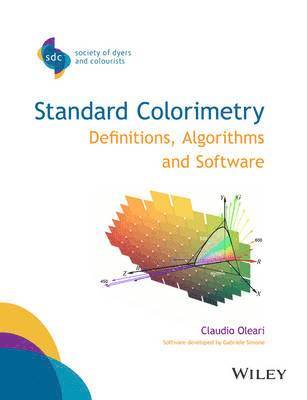
Colour is a sensation and as such it is a subjective and incommunicable quantity. Colour measurement is possible because we can create a correspondence between colour sensations and the light radiations that stimulate them. This correspondence concerns the physics of light radiation, the physiology of the visual process and the psychology of vision.Historically, in parallel to standard colorimetry, systems for colour ordering have been developed that allow colour specifications in a very practical and concrete way, based on the direct vision of material colour samples arranged in colour atlases. Colour-ordering systems are sources of knowledge of colour vision, which integrate standard colorimetry.Standard Colorimetry: Definitions, Algorithms and Software: Describes physiology and psychophysics useful to understand colorimetryConsiders all the photometric and colorimetric systems standardized by CIE (XYZ, CIELAB, CIELUV, LMS)Presents colorimetric instrumentation in order to guide the reader toward colorimetric practiceDiscusses colorimetric computation to understand the meaning of numerical colour specificationConsiders colorimetry in colour syntheses and in imaging colour reproductionIncludes ready-to-use, freely-available software, “Colorimetric eXercise”, which has multiple toolboxes dedicated to displaying CIE systems, atlases, any colour and its whole numerical specificationcolour-vision phenomena and tests Standard Colorimetry: Definitions, Algorithms and Software is an accessible and valuable resource for students, lecturers, researchers and laboratory technicians in colour science and image technology.Standard Colorimetry: Definitions, Algorithms and Software is published in partnership with the Society of Dyers and Colourists (SDC). Find out more at www.wiley.com/go/sdc
834 kr
Skickas inom 7-10 vardagar
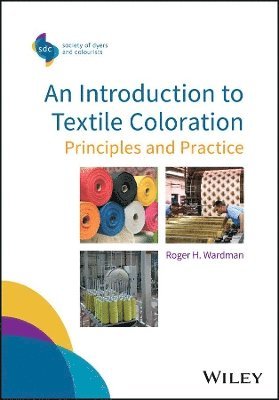
An Introduction to Textile Coloration: Principles and PracticeThe Publications Committee of the Society of Dyers and Colourists (SDC) has been aware for some time of the need to produce a book at an introductory level aimed at personnel working in textile dyeing or printing companies as well as those interested in entering into the field. The SDC runs a course for dyehouse technicians leading to the award of its Textile Coloration Certificate and this book is intended to be helpful for candidates following the course. Additionally, it will be helpful for professionals in textile companies who do not have a strong scientific background, so that they may attain a better understanding of the chemical principles of colour application.Starting with the basic science underlying dyeing and printing processes, this comprehensive book explains the fundamentals of dye and pigment chemistry and the various application techniques and processes. It offers chapter coverage of the general chemistry related to textiles, textile fibres, chemistry of dyes and pigments, industrial coloration methods, textile printing, theoretical aspects of dyeing, the measurement of colour and fastness testing. Reference is made to developments that have taken place in the coloration industry in recent years, not least of which have been the challenges imposed by the drive towards environmentally-friendly processes and restrictions on the use of certain chemicals.An Introduction to Textile Coloration: Principles and Practice Covers atomic structure, chemical reactions, and acids, bases, and saltsExplains the nature of fibre-forming polymers and the conversion of synthetic polymers into fibre filamentsEducates on the classification of colorants and the commercial naming of dyes and pigmentsIntroduces readers to the dye application processes and dyeing machineryInstructs on dye aggregation, factors affecting colour appearance, the principles of colour fastness testing, and more“…this is the sort of book any dyer, technician, student, academic will want to always have as an ready reference to everything pertaining to textile coloration.”Richard S. Blackburn, School of Design, University of Leeds, Leeds, LS2 9JT, UK
1 622 kr
Skickas inom 7-10 vardagar
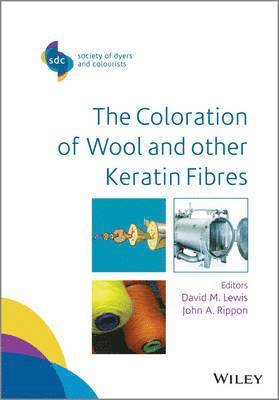
Keratin fibres, particularly wool fibres, constitute an important natural raw material in textiles due to their comfort and thermal proprieties. Wool coloration demands an understanding of the complex nature of the interplay between wool fibre chemistry, morphology and the coloration processes.The Coloration of Wool and other Keratin Fibres is a comprehensive treatment, written by leading international experts, of the chemistry and chemical processes involved in wool dyeing, printing, preparation and finishing.The book covers: the chemical and physical structure of wool keratin fibres, detailing their complex heterogeneity and the subtle links between fibre structure and dyeabilitythe coloration of fabrics containing wool, including a variety of wool blends such as wool/silk, wool/polyester and wool/cotton, and luxury keratin fibres such as mohair, cashmere and camelthe chemistry of the various types of dyes utilised in wool dyeing and in-depth discussions on the physical properties to optimise these processespractical application of dyes to wool in all its forms, loose stock, combed tops, yarns and piece goods, is covered in the chapter on wool dyeing machinerytwo chapters, one on bleaching and whitening and one on dyeing human hair, provide a valuable extension to the topic of cosmetic chemistryThe Coloration of Wool and other Keratin Fibres is essential reading for professionals world-wide working in companies involved in the dyeing and printing of wool, wool blends and other keratin fibres and also for the producers of dyes and auxiliary dyeing agents. It is a valuable resource for teachers and students of universities and technical institutes, as well as for researchers who are focusing their investigations on wool, wool blends, human hair or dyes and auxiliaries. Published in partnership with the Society of Dyers and Colourists (SDC).Find out more at www.wiley.com/go/sdc