Special Issues of Neuropsychological Rehabilitation – serie
Visar alla böcker i serien Special Issues of Neuropsychological Rehabilitation. Handla med fri frakt och snabb leverans.
17 produkter
17 produkter
Häftad, Engelska, 2017
701 kr
Skickas inom 10-15 vardagar
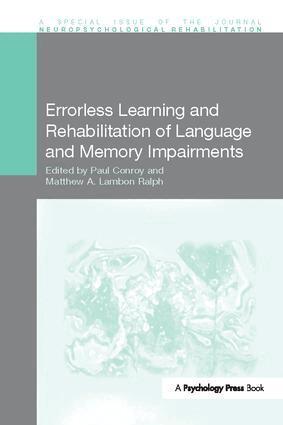
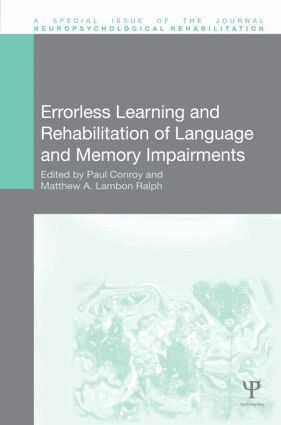
This special issue of Neuropsychological Rehabilitation brings together seven newly published studies from a range of invited international researchers in the fields of language and memory disorders and their rehabilitation. The studies address a range of current themes within these fields. Critical consideration is made of the concept of errorless learning in light of the current learning literature by Middleton & Schwartz. Identification of a locus to an errorless learning advantage in non-clinical participants is provided by Anderson and colleagues. Evaluations of errorless learning applied to a range of clinical presentations are provided, including semantic dementia (Jokel & colleagues), anomia in Alzheimer’s disease (Noonan & colleagues), aphasia (Raymer & colleagues; Conroy & Scowcroft) and apraxia of speech (Whiteside & colleagues). The breadth and depth of these studies offers an up-to-date and comprehensive account of research developments in errorless learning and rehabilitation of language and memory impairments. They delineate some of the current critical theoretical-clinical issues through which we might optimise learning and rehabilitative efforts more fully.This book was originally published as a special issue of the journal Neuropsychological Rehabilitation.
Häftad, Engelska, 2019
688 kr
Skickas inom 10-15 vardagar
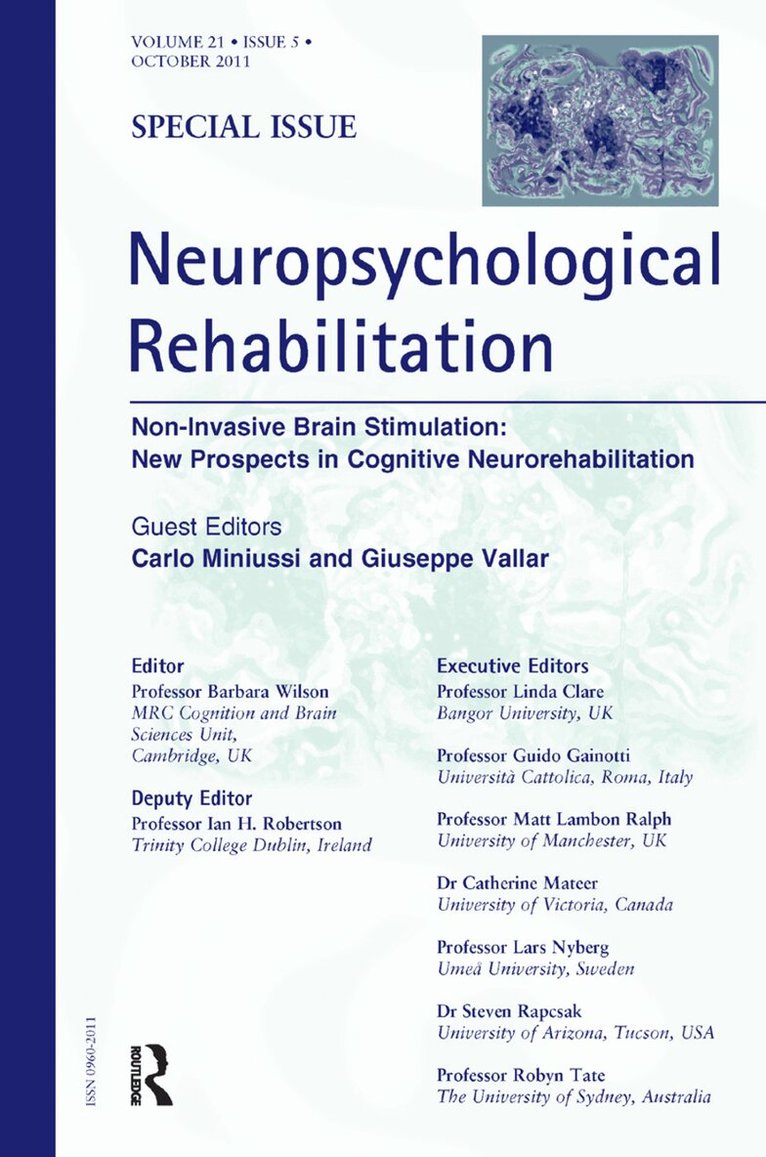
Cognitive deficits are a common consequence of neurological disease, and there is evidence that specific cognitive training may be effective in rehabilitation. Behavioural dysfunction following neurological disease constitutes one of the major causes of disability worldwide, exerts a major impact on the daily life of affected individuals, and their families, also with a financial burden both for patients, and the society in general. Therefore, the adequate treatment of cognitive dysfunction is a much relevant issue, with social and economical implications, over and above the neuropsychological problem per se.Several investigations emphasise the fact that interacting with neural activity, by means of cortical stimulation, can affect cognitive performance. A number of studies have reported enhanced performance in specific cognitive tasks in patients with several types of neurological disease, after receiving Non Invasive Brain Stimulation (NIBS) to specific cortical areas, namely: Transcranial Magnetic Stimulation, and transcranial Electrical Stimulation. In general, the evidence highlights the possibility of inducing changes in cortical excitability, which, in turn, may lead to a plastic reorganization of dysfunctional networks, responsible for the impaired cognitive functions. Despite these advances, a number of important questions remain open, regarding the use of stimulation techniques in cognitive rehabilitation. This special issue puts together international leading experts in the field, to review and discuss recent advances as to whether NIBS techniques alone, or combined with behavioural cognitive rehabilitation, can lead to performance enhancements, and why. The issue is timely and promises to have a huge impact across many domains of clinical and basic neuroscience.
Häftad, Engelska, 2015
842 kr
Skickas inom 10-15 vardagar
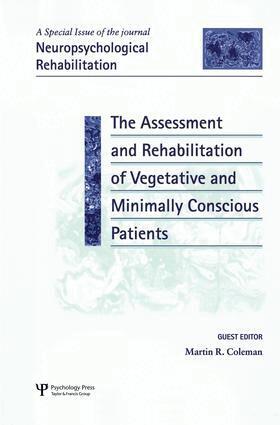
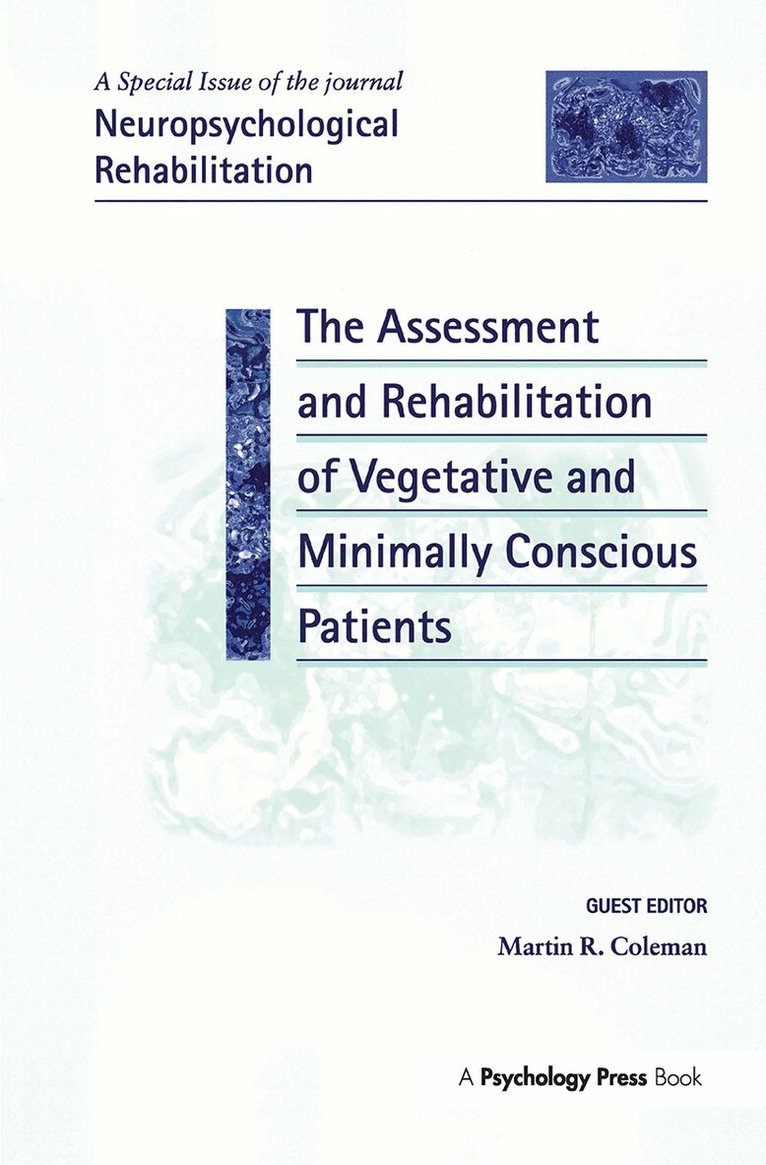
The vegetative state - a condition in which someone is awake but unaware with no evidence of a working mind - is both emotive and challenging. This condition and that of someone who gains partial recovery of mental and neurological functions - known as the minimally conscious state - have provoked intense debate and considerable interest amongst scientists, health care professionals, ethicists, philosophers and lawyers. This unique special issue unites many experts in the field to review and discuss the many advances made in our understanding of these conditions. The strength of this special issue lies in the wide range of topics discussed - from definitions and diagnostic criteria to hotly debated topics such as whether a person in the vegetative state is truly unaware. This edition will serve as both a useful reference to those caring for people in these conditions as well as to those investigating the physiological basis of human consciousness.
Häftad, Engelska, 2015
487 kr
Skickas inom 10-15 vardagar
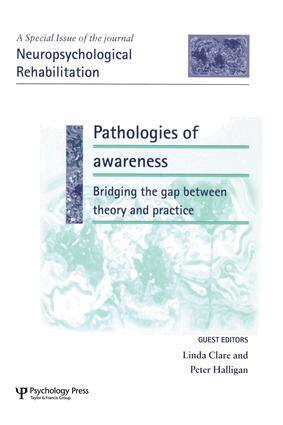
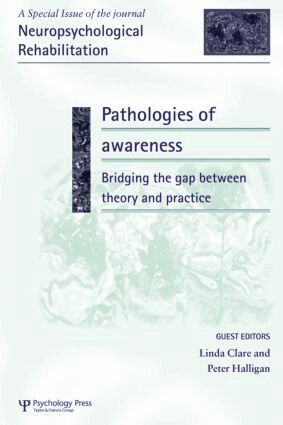
This special issue of Neuropsychological Rehabilitation provides an opportunity to characterise some of the key clinical issues concerned with assessing and managing pathologies of subjective or conscious awareness. Elucidating the cognitive processes underlying awareness, and their corresponding phenomenological experiences, provides the necessary theoretical platform to inform assessments and justify interventions aimed at compensating for, and/or reducing the functional consequences of, impaired awareness. This special issue represents an attempt to bring together previously disparate research findings and conceptual issues from relevant fields within medicine and the psychological sciences and, in so doing, provide for a more coherent, comprehensive account which clinicians and theoreticians can use to better understand the apparently obvious but unwieldy construct of awareness.
Häftad, Engelska, 2015
741 kr
Skickas inom 10-15 vardagar
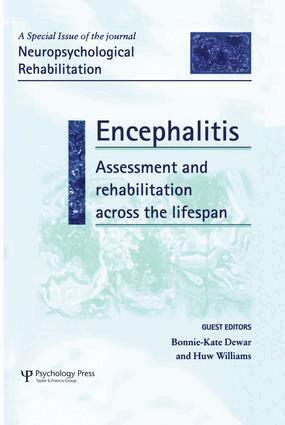
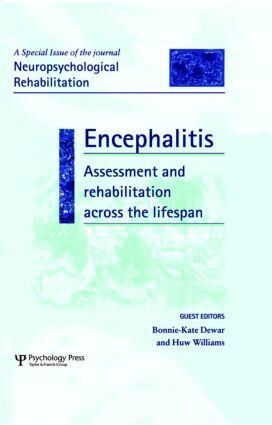
Encephalitis - inflammation of the brain - has significant cognitive, behavioural and emotional consequences.This special edition describes the pathway of recovery following encephalitis, from medical management to assessment, rehabilitation and community support and advocacy.The neuropsychological and neuropsychiatric outcomes of encephalitis in both adult and paediatric populations are described, in addition to a number of rehabilitation studies which aim to increase the functional independence and psychosocial adjustment of survivors of this rare neurological condition.
Häftad, Engelska, 2015
842 kr
Skickas inom 10-15 vardagar
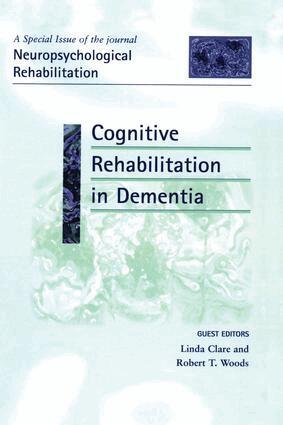
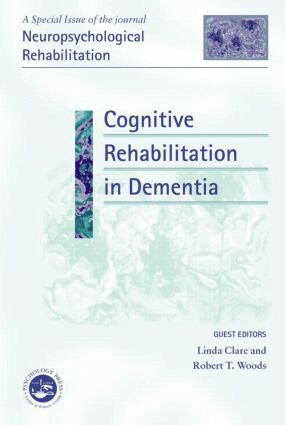
The relevance of cognitive rehabilitation for people with dementia is becoming increasingly accepted by researchers and practitioners in the field. This special issue draws together examples of state-of-the-art research and systematic review by experts in this exciting and growing area.The contributors show how cognitive rehabilitation approaches can be applied, in different ways, to help optimise functioning and address specific difficulties across the full spectrum of severity. While the main focus is on the more commonly diagnosed forms of dementia, treatment possibilities for people with fronto-temporal dementia are also explored. Cognitive rehabilitation interventions need to be grounded in a clear assessment of the profile of strengths and limitations in cognitive functioning, and to demonstrate where possible that treatment effects extend beyond improvement on target measures to have a meaningful impact on wellbeing and quality of life. For this reason, the special issue includes contributions that explore detailed aspects of cognitive functioning or describe new developments in evaluating quality of life in dementia. Cognitive rehabilitation, it is suggested, should be viewed as one important component of a holistic approach to helping people with dementia, their families, and those who care for them. This special issue seeks both to provide information about what has already been achieved and to encourage and stimulate further progress.
Häftad, Engelska, 2015
741 kr
Skickas inom 10-15 vardagar
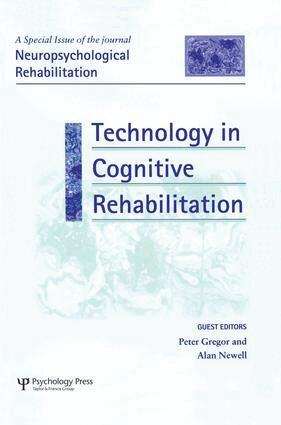
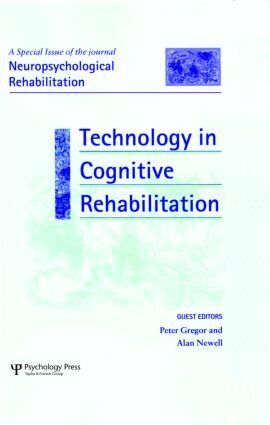
Communication and Information Technology has been used to support older and disabled people for over thirty years and there have been many successes in this field. Until recently, research has largely concentrated on people with physical or sensory dysfunction; computer technology has been increasingly used to support cognitive activities in able bodied people but its use to support people with disabilities has not had much widespread recognition. Yet well-designed C and IT systems have great potential to enhance the quality of life and independence of people with cognitive dysfunction, by: enabling them to retain a higher level of independence and control over their lives, providing appropriate levels of monitoring and supervision of 'at risk' people, without violating privacy, keeping people intellectually and physically active, and providing communications methods to reduce social isolation. This special issue of Neuropsychological Rehabilitation recognises the potential of information technology to provide support for people with cognitive dysfunction, including the use of computers to provide traditional prostheses, albeit within the cognitive domain. The selection of papers in this issue shows that the help and support available can be far more than the 'artificial replacement of part of the body' (the literal definition of prosthesis) and can include techniques to provide lifestyle support for people who would not be thought of as requiring 'prosthetic support'.
Häftad, Engelska, 2019
661 kr
Skickas inom 10-15 vardagar
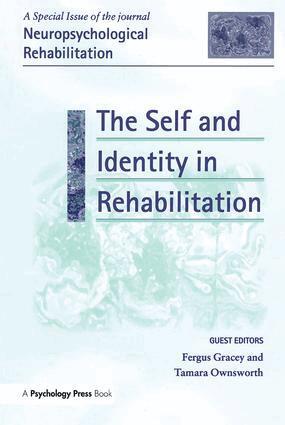
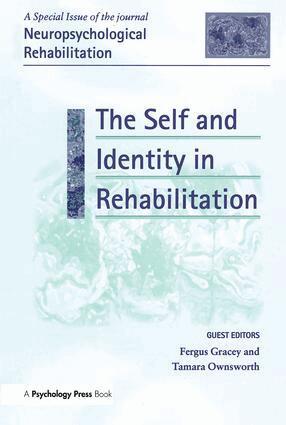
This special issue brings together developments in neurological, psychological and social understanding of sense of self and identity in neuropsychological rehabilitation. Following brain injury and in the context of neurological illness, both the individual and their loved ones report changes in personality, sense of self or identity. This issue is intended to be a key resource for clinicians trying to tackle these challenges, as well as researchers interested in the self and identity in clinical populations. New theoretical perspectives on the self, as well as quantitative and qualitative research studies, and clinical and service issues are covered.
Inbunden, Engelska, 2006
1 275 kr
Skickas inom 10-15 vardagar
This special issue of Neuropsychological Rehabilitation provides an opportunity to characterise some of the key clinical issues concerned with assessing and managing pathologies of subjective or conscious awareness. Elucidating the cognitive processes underlying awareness, and their corresponding phenomenological experiences, provides the necessary theoretical platform to inform assessments and justify interventions aimed at compensating for, and/or reducing the functional consequences of, impaired awareness. This special issue represents an attempt to bring together previously disparate research findings and conceptual issues from relevant fields within medicine and the psychological sciences and, in so doing, provide for a more coherent, comprehensive account which clinicians and theoreticians can use to better understand the apparently obvious but unwieldy construct of awareness.
Inbunden, Engelska, 2007
2 077 kr
Skickas inom 10-15 vardagar
Encephalitis - inflammation of the brain - has significant cognitive, behavioural and emotional consequences.This special edition describes the pathway of recovery following encephalitis, from medical management to assessment, rehabilitation and community support and advocacy.The neuropsychological and neuropsychiatric outcomes of encephalitis in both adult and paediatric populations are described, in addition to a number of rehabilitation studies which aim to increase the functional independence and psychosocial adjustment of survivors of this rare neurological condition.
Inbunden, Engelska, 2008
2 077 kr
Skickas inom 10-15 vardagar
This special issue brings together developments in neurological, psychological and social understanding of sense of self and identity in neuropsychological rehabilitation. Following brain injury and in the context of neurological illness, both the individual and their loved ones report changes in personality, sense of self or identity. This issue is intended to be a key resource for clinicians trying to tackle these challenges, as well as researchers interested in the self and identity in clinical populations. New theoretical perspectives on the self, as well as quantitative and qualitative research studies, and clinical and service issues are covered.
Inbunden, Engelska, 2001
2 201 kr
Skickas inom 10-15 vardagar
The relevance of cognitive rehabilitation for people with dementia is becoming increasingly accepted by researchers and practitioners in the field. This special issue draws together examples of state-of-the-art research and systematic review by experts in this exciting and growing area.The contributors show how cognitive rehabilitation approaches can be applied, in different ways, to help optimise functioning and address specific difficulties across the full spectrum of severity. While the main focus is on the more commonly diagnosed forms of dementia, treatment possibilities for people with fronto-temporal dementia are also explored. Cognitive rehabilitation interventions need to be grounded in a clear assessment of the profile of strengths and limitations in cognitive functioning, and to demonstrate where possible that treatment effects extend beyond improvement on target measures to have a meaningful impact on wellbeing and quality of life. For this reason, the special issue includes contributions that explore detailed aspects of cognitive functioning or describe new developments in evaluating quality of life in dementia. Cognitive rehabilitation, it is suggested, should be viewed as one important component of a holistic approach to helping people with dementia, their families, and those who care for them. This special issue seeks both to provide information about what has already been achieved and to encourage and stimulate further progress.
Häftad, Engelska, 2002
644 kr
Skickas inom 10-15 vardagar
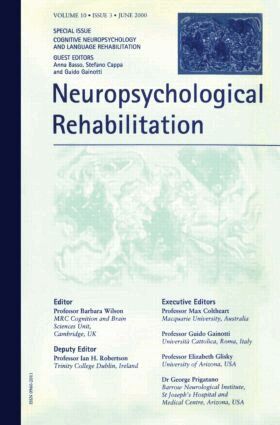
Even if, in recent years, the study of language disorders in brain-damaged patients has been strongly influenced by models and experimental paradigms of cognitive neuropsychology, much less relevant has been the impact of this new approach to language rehabilitation. Contrasting opinions exist on this subject among clinicians and researchers. Some authors maintain that cognitive neuropsychology has not changed and will not change the treatment of aphasia. Other authors adopt a less pessimistic attitude, either reporting empirical data that support this viewpoint, or trying to define more precisely theoretical models, patient's characteristics and treatment paradigms that should improve the efficacy of cognitively oriented treatments.The main scope of the present volume, which is mainly based upon contributions presented at a workshop on the relationships between cognitive neuropsychology and aphasia rehabilitation, is to make the point on this controversial issue. The volume includes several theoretical papers discussing the role of the cognitive approach in the development of language rehabilitation (Shallice; Basso & Marangolo; Best & Nickels), as well as specific examples of the application of cognitive models to the treatment of disorders of written language (Luzzatti, Colombo, Frustaci & Vitolo) and of sentence-level impairments (Springer & Huber; Mitchum, Berndt & Greenwald). Two review papers, dealing with the pragmatic approach to aphasia rehabilitation (Carlomagno, Santoro, Labruna & Blasi) and with neuroimaging studies of recovery (Cappa) complete the issue.The papers incorporate elements of the lively discussion, which took place among the restricted number of participants at the workshop, on a number of controversial issues. Leading among them were the fundamental questions: has cognitive neuropsychology given up to now a significant contribution to aphasia rehabilitation, and what can be expected in the future. We hope that the moderately optimistic view that emerged from the workshop will be shared by readers of this special issue.
Inbunden, Engelska, 2004
2 201 kr
Skickas inom 10-15 vardagar
Communication and Information Technology has been used to support older and disabled people for over thirty years and there have been many successes in this field. Until recently, research has largely concentrated on people with physical or sensory dysfunction; computer technology has been increasingly used to support cognitive activities in able bodied people but its use to support people with disabilities has not had much widespread recognition. Yet well-designed C and IT systems have great potential to enhance the quality of life and independence of people with cognitive dysfunction, by: enabling them to retain a higher level of independence and control over their lives, providing appropriate levels of monitoring and supervision of 'at risk' people, without violating privacy, keeping people intellectually and physically active, and providing communications methods to reduce social isolation. This special issue of Neuropsychological Rehabilitation recognises the potential of information technology to provide support for people with cognitive dysfunction, including the use of computers to provide traditional prostheses, albeit within the cognitive domain. The selection of papers in this issue shows that the help and support available can be far more than the 'artificial replacement of part of the body' (the literal definition of prosthesis) and can include techniques to provide lifestyle support for people who would not be thought of as requiring 'prosthetic support'.
Inbunden, Engelska, 2005
2 201 kr
Skickas inom 10-15 vardagar
The vegetative state - a condition in which someone is awake but unaware with no evidence of a working mind - is both emotive and challenging. This condition and that of someone who gains partial recovery of mental and neurological functions - known as the minimally conscious state - have provoked intense debate and considerable interest amongst scientists, health care professionals, ethicists, philosophers and lawyers. This unique special issue unites many experts in the field to review and discuss the many advances made in our understanding of these conditions. The strength of this special issue lies in the wide range of topics discussed - from definitions and diagnostic criteria to hotly debated topics such as whether a person in the vegetative state is truly unaware. This edition will serve as both a useful reference to those caring for people in these conditions as well as to those investigating the physiological basis of human consciousness.
Inbunden, Engelska, 2012
2 190 kr
Skickas inom 5-8 vardagar
This special issue of Neuropsychological Rehabilitation brings together seven newly published studies from a range of invited international researchers in the fields of language and memory disorders and their rehabilitation. The studies address a range of current themes within these fields. Critical consideration is made of the concept of errorless learning in light of the current learning literature by Middleton & Schwartz. Identification of a locus to an errorless learning advantage in non-clinical participants is provided by Anderson and colleagues. Evaluations of errorless learning applied to a range of clinical presentations are provided, including semantic dementia (Jokel & colleagues), anomia in Alzheimer’s disease (Noonan & colleagues), aphasia (Raymer & colleagues; Conroy & Scowcroft) and apraxia of speech (Whiteside & colleagues). The breadth and depth of these studies offers an up-to-date and comprehensive account of research developments in errorless learning and rehabilitation of language and memory impairments. They delineate some of the current critical theoretical-clinical issues through which we might optimise learning and rehabilitative efforts more fully.This book was originally published as a special issue of the journal Neuropsychological Rehabilitation.
Inbunden, Engelska, 2011
1 418 kr
Tillfälligt slut
Cognitive deficits are a common consequence of neurological disease, and there is evidence that specific cognitive training may be effective in rehabilitation. Behavioural dysfunction following neurological disease constitutes one of the major causes of disability worldwide, exerts a major impact on the daily life of affected individuals, and their families, also with a financial burden both for patients, and the society in general. Therefore, the adequate treatment of cognitive dysfunction is a much relevant issue, with social and economical implications, over and above the neuropsychological problem per se.Several investigations emphasise the fact that interacting with neural activity, by means of cortical stimulation, can affect cognitive performance. A number of studies have reported enhanced performance in specific cognitive tasks in patients with several types of neurological disease, after receiving Non Invasive Brain Stimulation (NIBS) to specific cortical areas, namely: Transcranial Magnetic Stimulation, and transcranial Electrical Stimulation. In general, the evidence highlights the possibility of inducing changes in cortical excitability, which, in turn, may lead to a plastic reorganization of dysfunctional networks, responsible for the impaired cognitive functions. Despite these advances, a number of important questions remain open, regarding the use of stimulation techniques in cognitive rehabilitation. This special issue puts together international leading experts in the field, to review and discuss recent advances as to whether NIBS techniques alone, or combined with behavioural cognitive rehabilitation, can lead to performance enhancements, and why. The issue is timely and promises to have a huge impact across many domains of clinical and basic neuroscience.