Springer Undergraduate Texts in Philosophy – serie
Visar alla böcker i serien Springer Undergraduate Texts in Philosophy. Handla med fri frakt och snabb leverans.
12 produkter
12 produkter
Inbunden, Engelska, 2018
503 kr
Skickas inom 10-15 vardagar
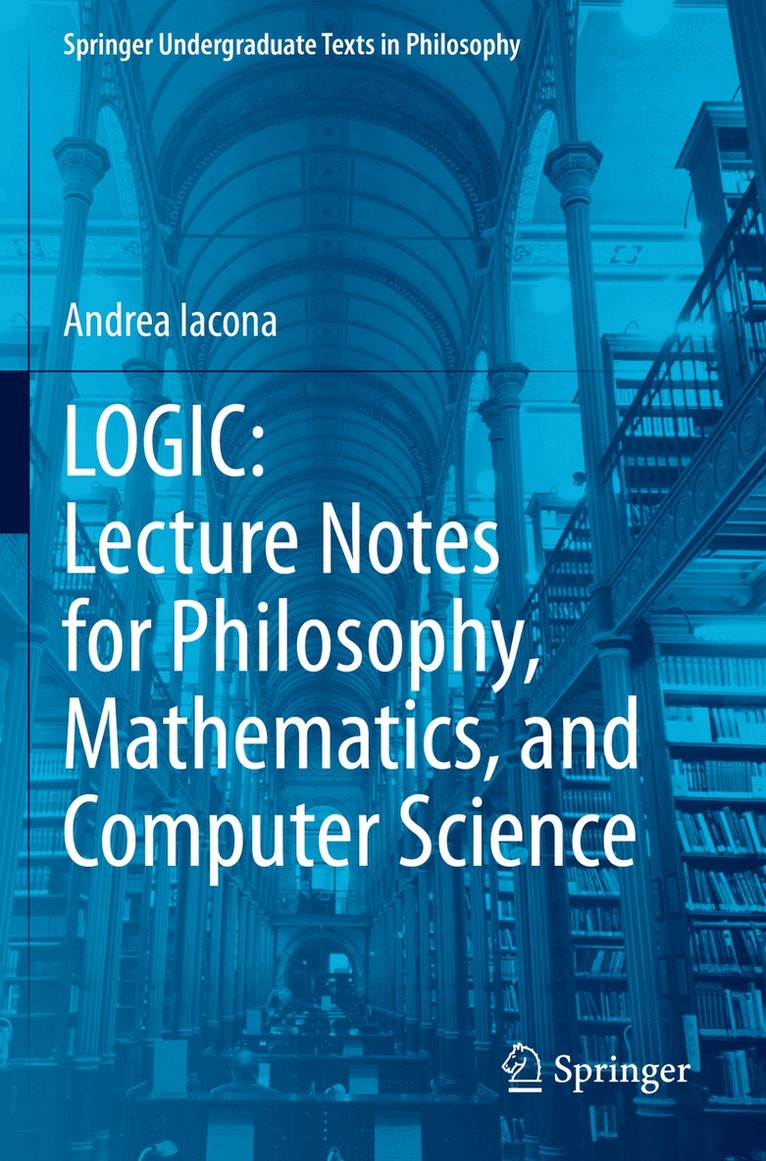
This book was written to serve as an introduction to logic, with in each chapter – if applicable – special emphasis on the interplay between logic and philosophy, mathematics, language and (theoretical) computer science. The reader will not only be provided with an introduction to classical logic, but to philosophical (modal, epistemic, deontic, temporal) and intuitionistic logic as well. The first chapter is an easy to read non-technical Introduction to the topics in the book. The next chapters are consecutively about Propositional Logic, Sets (finite and infinite), Predicate Logic, Arithmetic and Gödel’s Incompleteness Theorems, Modal Logic, Philosophy of Language, Intuitionism and Intuitionistic Logic, Applications (Prolog; Relational Databases and SQL; Social Choice Theory, in particular Majority Judgment) and finally, Fallacies and Unfair Discussion Methods. Throughout the text, the author provides some impressions of the historical development of logic: Stoic and Aristotelian logic, logic in the Middle Ages and Frege's Begriffsschrift, together with the works of George Boole (1815-1864) and August De Morgan (1806-1871), the origin of modern logic. Since "if …, then …" can be considered to be the heart of logic, throughout this book much attention is paid to conditionals: material, strict and relevant implication, entailment, counterfactuals and conversational implicature are treated and many references for further reading are given. Each chapter is concluded with answers to the exercises.Philosophical and Mathematical Logic is a very recent book (2018), but with every aspect of a classic. What a wonderful book!Work written with all the necessary rigor, with immense depth, but without giving up clarity and good taste.Philosophy and mathematics go hand in hand with the most diverse themes of logic.An introductory text, but not only that. It goes much further.It's worth diving into the pages of this book, dear reader!Paulo Sérgio Argolo
Häftad, Engelska, 2019
854 kr
Skickas inom 5-8 vardagar
This Undergraduate Textbook introduces key methods and examines the major areas of philosophy in which formal methods play pivotal roles. Coverage begins with a thorough introduction to formalization and to the advantages and pitfalls of formal methods in philosophy. The ensuing chapters show how to use formal methods in a wide range of areas. Throughout, the contributors clarify the relationships and interdependencies between formal and informal notions and constructions. Their main focus is to show how formal treatments of philosophical problems may help us understand them better. Formal methods can be used to solve problems but also to express new philosophical problems that would never have seen the light of day without the expressive power of the formal apparatus. Formal philosophy merges work in different areas of philosophy as well as logic, mathematics, computer science, linguistics, physics, psychology, biology, economics, political theory, and sociology. This title offers an accessible introduction to this new interdisciplinary research area to a wide academic audience.
Inbunden, Engelska, 2021
396 kr
Skickas inom 5-8 vardagar
This textbook is a logic manual which includes an elementary course and an advanced course. It covers more than most introductory logic textbooks, while maintaining a comfortable pace that students can follow. The technical exposition is clear, precise and follows a paced increase in complexity, allowing the reader to get comfortable with previous definitions and procedures before facing more difficult material. The book also presents an interesting overall balance between formal and philosophical discussion, making it suitable for both philosophy and more formal/science oriented students. This textbook is of great use to undergraduate philosophy students, graduate philosophy students, logic teachers, undergraduates and graduates in mathematics, computer science or related fields in which logic is required.
Häftad, Engelska, 2022
396 kr
Skickas inom 5-8 vardagar
This textbook is a logic manual which includes an elementary course and an advanced course. It covers more than most introductory logic textbooks, while maintaining a comfortable pace that students can follow. The technical exposition is clear, precise and follows a paced increase in complexity, allowing the reader to get comfortable with previous definitions and procedures before facing more difficult material. The book also presents an interesting overall balance between formal and philosophical discussion, making it suitable for both philosophy and more formal/science oriented students. This textbook is of great use to undergraduate philosophy students, graduate philosophy students, logic teachers, undergraduates and graduates in mathematics, computer science or related fields in which logic is required.
Inbunden, Engelska, 2026
982 kr
Skickas inom 10-15 vardagar
This textbook is an accessible, readable, and comprehensive introduction to contemporary analytic metaphysics. It covers all the main topics, including those that are at the forefront of the most recent research. It begins by explaining what metaphysics is and introduces the most important conceptual devices needed to understand and appreciate the ongoing debates. The text follows with core metaphysical questions, such as properties, time, identity, mereology, and modality. It concludes with more specific domains of application, in which the previously introduced concepts are put to work. The contents are organized in self-contained chapters, each of which starts with a stimulating short story, which is further articulated and closes with a summary of the main points, questions for further reflection, and reading suggestions. This textbook is perfect for teaching a basic but comprehensive course in metaphysics for undergraduate students.
Inbunden, Engelska, 2026
845 kr
Kommande
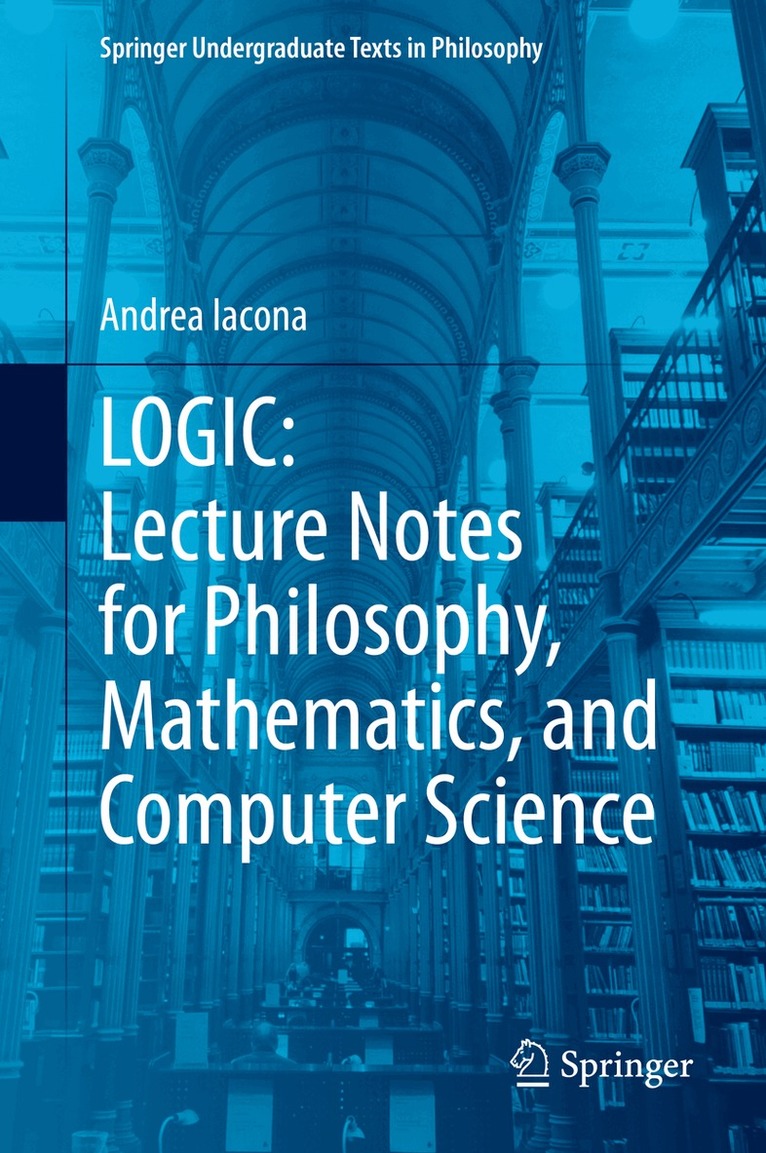
This second edition improves upon the first by offering a more detailed treatment of key topics and by expanding the set of problems and exercises. In particular, four new features deserve mention. First, the book now includes a more thorough exposition of natural deduction, explaining how derivations can be represented as trees of formulas. Second, it provides a detailed explanation of the main proof methods, illustrated with examples. Third, it offers a separate exposition of the logic of identity. Fourth, it presents a fuller treatment of modal logic, including results on consistency, soundness, and completeness. Additional changes include new examples drawn from elementary mathematics, a refined notation, and a more functional subdivision of the material, which simplifies some proofs and enhances clarity and readability. Overall, the text preserves the style of the first edition, aiming to present core ideas clearly, concisely, and with minimal distractions.
Inbunden, Engelska, 2026
838 kr
Kommande
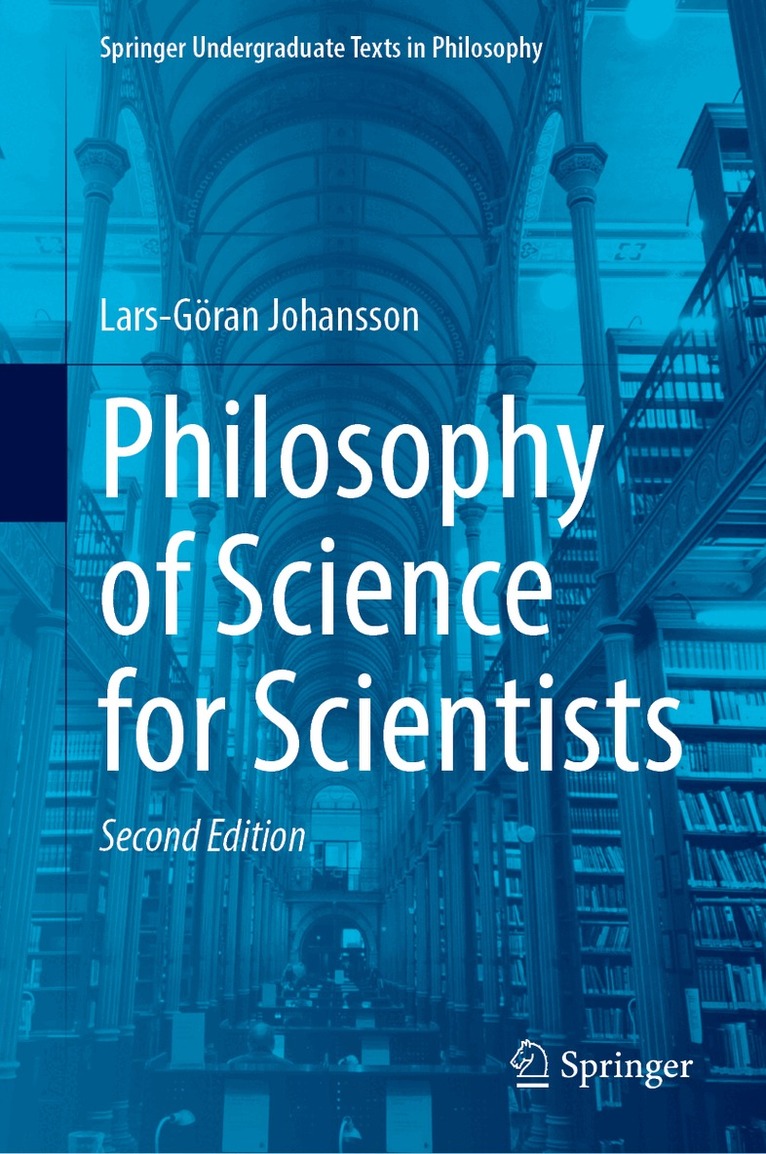
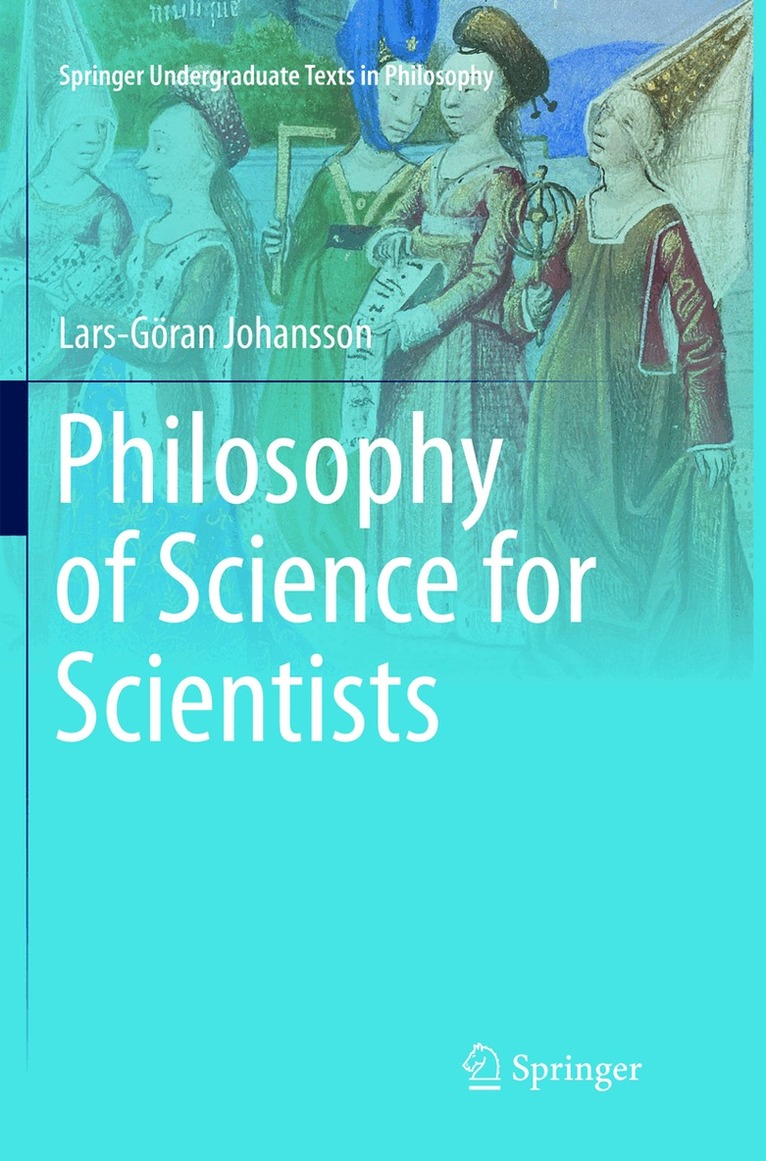
This second edition of the successful textbook Philosophy of Science for Scientists offers an introduction to the philosophy of science. This new edition contains updated references and expanded discussions on seven important topics: knowledge, use of statistics in hypothesis testing, hermeneutics, causation, explanations of actions, models, and mental causation. It helps undergraduate students from the natural, the human and social sciences to gain an understanding of what science is, how it has developed, what its core traits are, how to distinguish between science and pseudo-science and to discover what a scientific attitude is. It argues against the common assumption that there is fundamental difference between natural and human science, with natural science being concerned with testing hypotheses and discovering natural laws, and the aim of human and some social sciences being to understand the meanings of individual and social group actions. Instead examines the similarities between the sciences and shows how the testing of hypotheses and doing interpretation/hermeneutics are similar activities. The book makes clear that lessons from natural scientists are relevant to students and scholars within the social and human sciences, and vice versa. It teaches its readers how to effectively demarcate between science and pseudo-science and sets criteria for true scientific thinking.
Inbunden, Engelska, 2015
989 kr
Skickas inom 10-15 vardagar
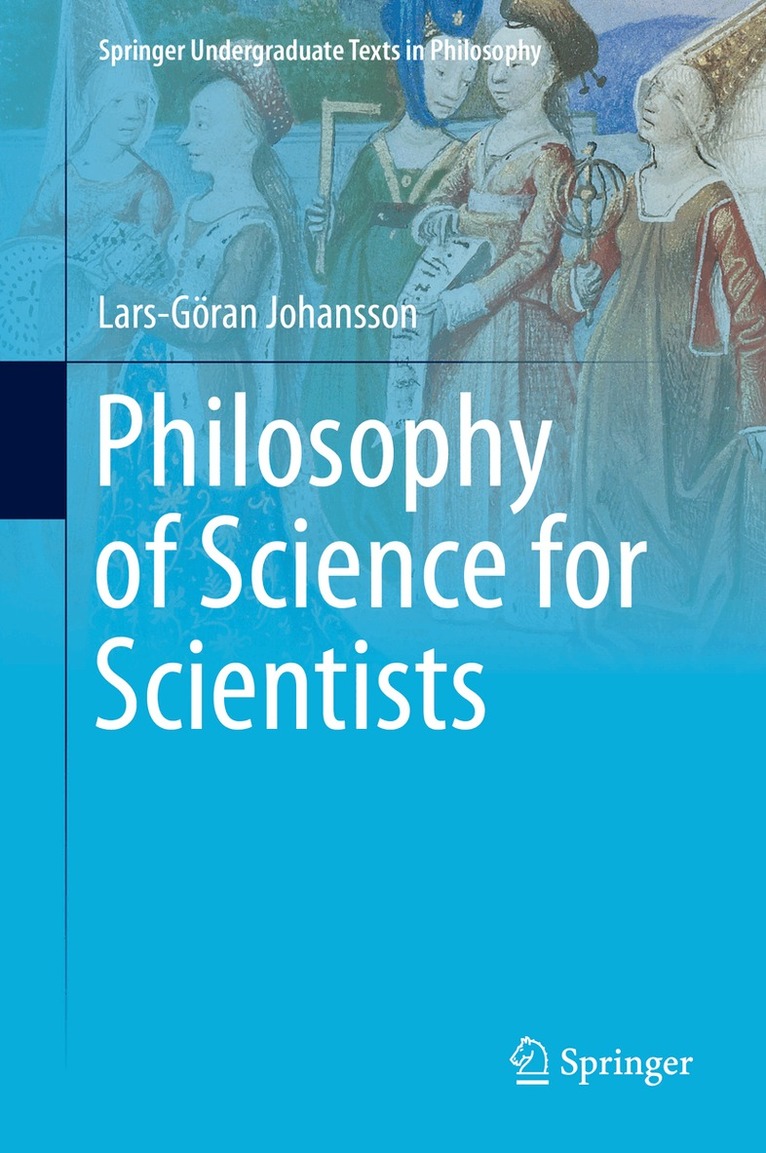
This textbook offers an introduction to the philosophy of science. It helps undergraduate students from the natural, the human and social sciences to gain an understanding of what science is, how it has developed, what its core traits are, how to distinguish between science and pseudo-science and to discover what a scientific attitude is. It argues against the common assumption that there is fundamental difference between natural and human science, with natural science being concerned with testing hypotheses and discovering natural laws, and the aim of human and some social sciences being to understand the meanings of individual and social group actions. Instead examines the similarities between the sciences and shows how the testing of hypotheses and doing interpretation/hermeneutics are similar activities. The book makes clear that lessons from natural scientists are relevant to students and scholars within the social and human sciences, and vice versa. It teaches its readers howto effectively demarcate between science and pseudo-science and sets criteria for true scientific thinking. Divided into three parts, the book first examines the question What is Science? It describes the evolution of science, defines knowledge, and explains the use of and need for hypotheses and hypothesis testing. The second half of part I deals with scientific data and observation, qualitative data and methods, and ends with a discussion of theories on the development of science. Part II offers philosophical reflections on four of the most important concepts in science: causes, explanations, laws and models. Part III presents discussions on philosophy of mind, the relation between mind and body, value-free and value-related science, and reflections on actual trends in science.
Inbunden, Engelska, 2016
873 kr
Skickas inom 10-15 vardagar
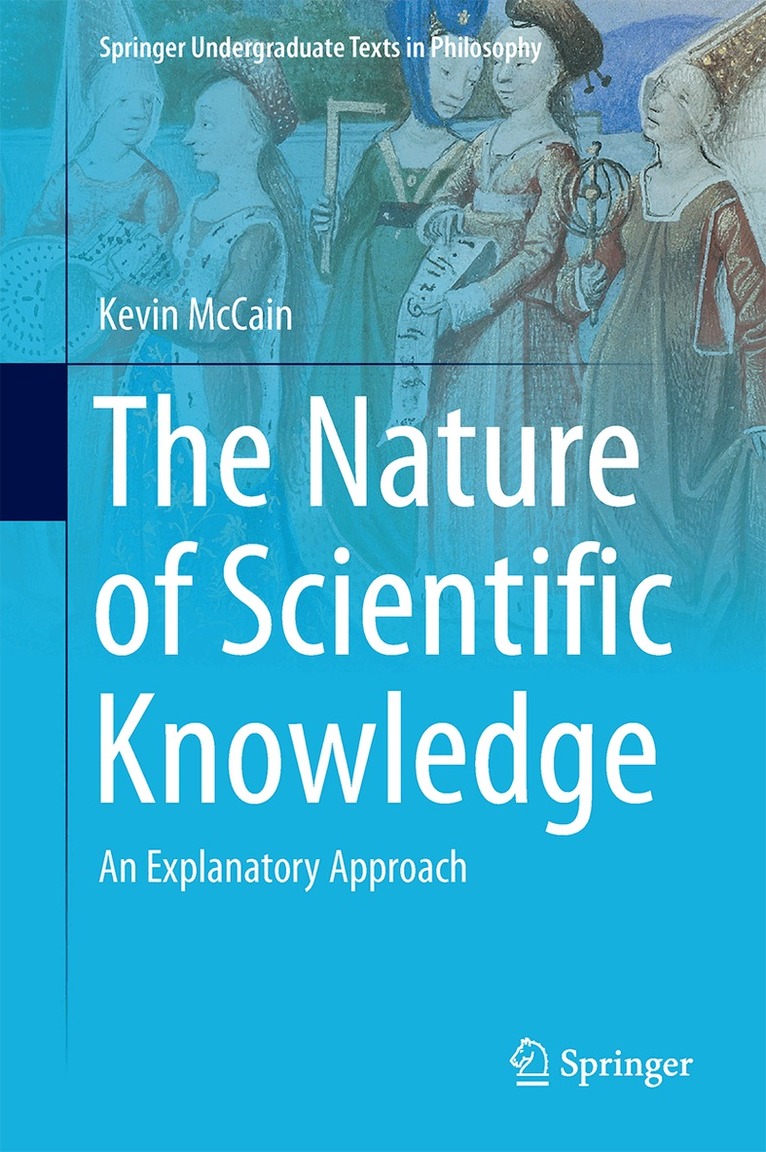
This book offers a comprehensive and accessible introduction to the epistemology of science. It not only introduces readers to the general epistemological discussion of the nature of knowledge, but also provides key insights into the particular nuances of scientific knowledge. No prior knowledge of philosophy or science is assumed by The Nature of Scientific Knowledge. Nevertheless, the reader is taken on a journey through several core concepts of epistemology and philosophy of science that not only explores the characteristics of the scientific knowledge of individuals but also the way that the development of scientific knowledge is a particularly social endeavor. The topics covered in this book are of keen interest to students of epistemology and philosophy of science as well as science educators interested in the nature of scientific knowledge. In fact, as a result of its clear and engaging approach to understanding scientific knowledge The Nature of Scientific Knowledge is a book that anyone interested in scientific knowledge, knowledge in general, and any of a myriad of related concepts would be well advised to study closely.
Inbunden, Engelska, 2018
1 389 kr
Skickas inom 5-8 vardagar
This Undergraduate Textbook introduces key methods and examines the major areas of philosophy in which formal methods play pivotal roles. Coverage begins with a thorough introduction to formalization and to the advantages and pitfalls of formal methods in philosophy. The ensuing chapters show how to use formal methods in a wide range of areas. Throughout, the contributors clarify the relationships and interdependencies between formal and informal notions and constructions. Their main focus is to show how formal treatments of philosophical problems may help us understand them better. Formal methods can be used to solve problems but also to express new philosophical problems that would never have seen the light of day without the expressive power of the formal apparatus. Formal philosophy merges work in different areas of philosophy as well as logic, mathematics, computer science, linguistics, physics, psychology, biology, economics, political theory, and sociology. This title offers an accessible introduction to this new interdisciplinary research area to a wide academic audience.
Häftad, Engelska, 2019
720 kr
This textbook offers an introduction to the philosophy of science. It helps undergraduate students from the natural, the human and social sciences to gain an understanding of what science is, how it has developed, what its core traits are, how to distinguish between science and pseudo-science and to discover what a scientific attitude is. It argues against the common assumption that there is fundamental difference between natural and human science, with natural science being concerned with testing hypotheses and discovering natural laws, and the aim of human and some social sciences being to understand the meanings of individual and social group actions. Instead examines the similarities between the sciences and shows how the testing of hypotheses and doing interpretation/hermeneutics are similar activities. The book makes clear that lessons from natural scientists are relevant to students and scholars within the social and human sciences, and vice versa. It teaches its readers howto effectively demarcate between science and pseudo-science and sets criteria for true scientific thinking. Divided into three parts, the book first examines the question What is Science? It describes the evolution of science, defines knowledge, and explains the use of and need for hypotheses and hypothesis testing. The second half of part I deals with scientific data and observation, qualitative data and methods, and ends with a discussion of theories on the development of science. Part II offers philosophical reflections on four of the most important concepts in science: causes, explanations, laws and models. Part III presents discussions on philosophy of mind, the relation between mind and body, value-free and value-related science, and reflections on actual trends in science.
Häftad, Engelska, 2018
657 kr
Skickas inom 10-15 vardagar
This book offers a comprehensive and accessible introduction to the epistemology of science. It not only introduces readers to the general epistemological discussion of the nature of knowledge, but also provides key insights into the particular nuances of scientific knowledge. No prior knowledge of philosophy or science is assumed by The Nature of Scientific Knowledge. Nevertheless, the reader is taken on a journey through several core concepts of epistemology and philosophy of science that not only explores the characteristics of the scientific knowledge of individuals but also the way that the development of scientific knowledge is a particularly social endeavor. The topics covered in this book are of keen interest to students of epistemology and philosophy of science as well as science educators interested in the nature of scientific knowledge. In fact, as a result of its clear and engaging approach to understanding scientific knowledge The Nature of Scientific Knowledge is a book that anyone interested in scientific knowledge, knowledge in general, and any of a myriad of related concepts would be well advised to study closely.