1 052 kr
Skickas inom 5-8 vardagar
1 052 kr
Skickas inom 5-8 vardagar
1 052 kr
Skickas inom 5-8 vardagar
411 kr
Skickas inom 5-8 vardagar
What is a sustainable community? The pressing need to answer thissimple question is what prompted John Pierce and Ann Dale to gather theessays in this volume. Communities, Development, and Sustainabilityacross Canada is a timely synthesis of work on how Canadiancommunities can achieve sustainable development. It bridges the gapbetween theory and praxis and brings together academics, policy makers,and community activists, all of whom have argued for increased localparticipation in sustainable community development. Communities havebecome the weak link in efforts to refashion relations between theenvironment and the economy. The goal of this book is not simply todescribe problems but also to suggest answers, not simply to offertheory but also to promote action, so that Canadian communities canbetter achieve sustainable development.
The twelve essays are organized into four sections: Vision,Connections, Action, and Assessing Progress. The first and lastsections discuss local sustainable development within the context ofincreasing globalization. The second section approaches sustainabledevelopment from the perspective of social evolution and urban systems.The third section, the heart of the book, is comprised of threecommunity case studies, an assessment of the Pacific salmon fishery,and four general discussions of sustainable development. The conclusionreiterates the need to make communities stronger links in sustainabledevelopment.
The message of Communities, Development, and Sustainabilityacross Canada is clear: it is time for communities themselves toact if they are to achieve sustainable development. This provocativeand persuasive book will prove to be a valuable guide to taking thefirst steps.
1 178 kr
Skickas inom 5-8 vardagar
1 178 kr
Skickas inom 5-8 vardagar
411 kr
Skickas inom 5-8 vardagar
639 kr
Skickas inom 3-6 vardagar
1 141 kr
Skickas inom 5-8 vardagar
423 kr
Skickas inom 5-8 vardagar
411 kr
Skickas inom 5-8 vardagar
383 kr
Skickas inom 5-8 vardagar
Canada is known for being an energy-producing nation – with much attention being paid to the Alberta tar sands and their large carbon footprint. This book looks at a very different part of the Canadian energy sector: the hundreds of renewable energy co-ops that have sprung up across the nation. These co-ops are democratically structured, community-based organizations that use sun, wind, rivers, tides, and plant and animal waste as sources of local power generation.
Empowering Electricity offers an illuminating analysis of these co-ops within the context of larger debates over climate change, renewable electricity policy, sustainable community development, and provincial power-sector ownership. It looks at the conditions that led to this new wave of co-operative development, examines their form and location, and shines a light on the promises and challenges accompanying their development.
494 kr
Skickas inom 5-8 vardagar
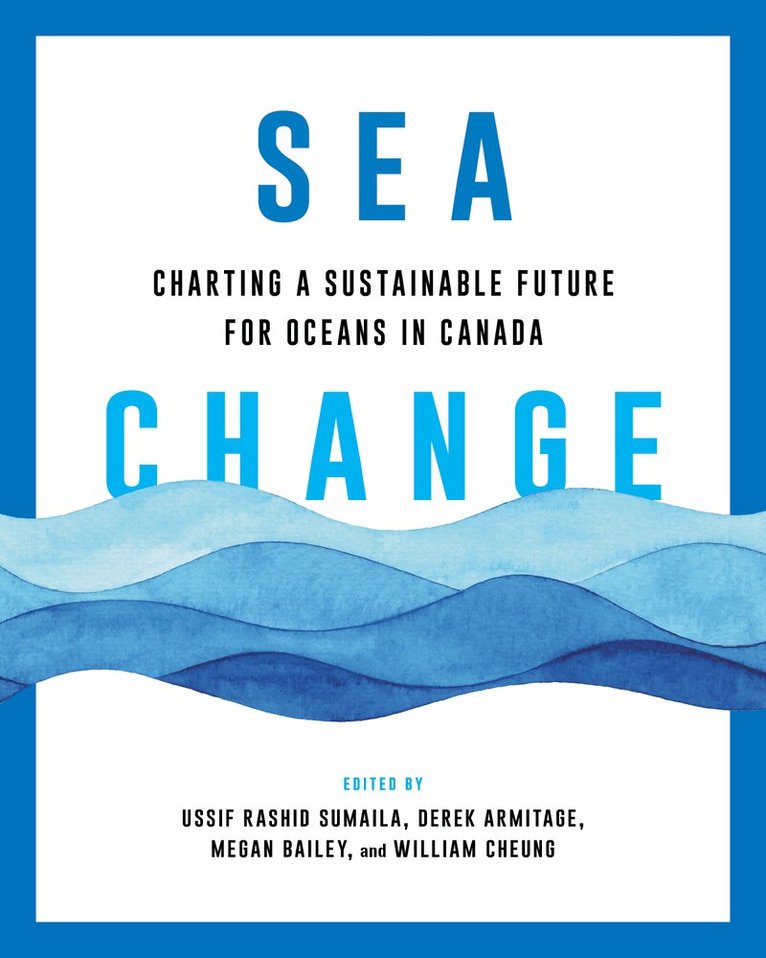
As climate change, resource overexploitation, and pollution leave ever more visible marks, ocean ecosystems, economies, and people are all affected. With coasts on the Atlantic, Pacific, and Arctic, Canada faces a formidable challenge in building resilient, sustainable oceans and supporting the communities that rely on them.
Sea Change reports on the OceanCanada Partnership, a multidisciplinary project to take stock of what we know about Canada's oceans, construct possible scenarios for coastal regions, and create a national dialogue and vision. Three themes emerge from this impressive synthesis of social, cultural, economic, and environmental research: ocean change, access to ocean resources, and ocean governance.
Indigenous and non-Indigenous scholars and practitioners focus on finding solutions to rapid environmental and social transformation, outlining the implications for legislation and offering policy recommendations. Increasingly, civil society will have to advocate for oceans, and Sea Change will empower the voices of those who take up that task.
537 kr
Skickas inom 5-8 vardagar
The Gulf of St. Lawrence is one of Canada's largest and most complex marine systems, bordering on five provinces with 250,000 people living in proximity to the coast. Managing the aquatic environment of this vast territory must consider not only biophysical processes but also human use, policy jurisdiction, and politics.
Environmental Governance in the Gulf of St. Lawrence focuses on the coastal margin and deepwater Gulf in a series of policy studies, covering topics such as marine infrastructure, fisheries, offshore petroleum, coastal zones, marine transport, aquaculture, large ocean management, protected areas, and Indigenous governance. The authors examine each semi-autonomous field of environmental action within a geopolitical context, and then compare them as parts of a policy whole, with the goal of understanding the management of this vital region.
This yields a picture of polycentric politics, where environmental policy subnetworks interact. Building on this, Environmental Governance poses questions about possible reform agendas.
614 kr
Kommande
In a rich history of evolving aquatic area conservation, Blue Canada recounts what can be achieved when we align science, cultural values, political will, and Indigenous stewardship practices.
Conserving marine areas, for other than fishery purposes, is a relatively recent addition to post-contact Canadian culture. Parks Canada has conserved federal lands and their enclosed freshwaters since the 1880s, and yet did not establish a national marine park until 1987. Meanwhile, Indigenous cultures have likely practised coastal conservation for millennia.
To envision a sustainable and equitable conservation future, N.A. Sloan looks to the Pacific north coast – particularly, the Haida Gwaii archipelago – for examples of progressive marine planning and co-management with Indigenous peoples. Sloan also explores the worldwide struggle to balance area preservation (strongly limited uses) with area conservation (sustainable uses that may include resource extraction).
This comprehensive account of aquatic area conservation illuminates what can be done by working together toward a bluer Canada.