Worlds of the Ancient Near East and Mediterranean – serie
Visar alla böcker i serien Worlds of the Ancient Near East and Mediterranean. Handla med fri frakt och snabb leverans.
11 produkter
11 produkter
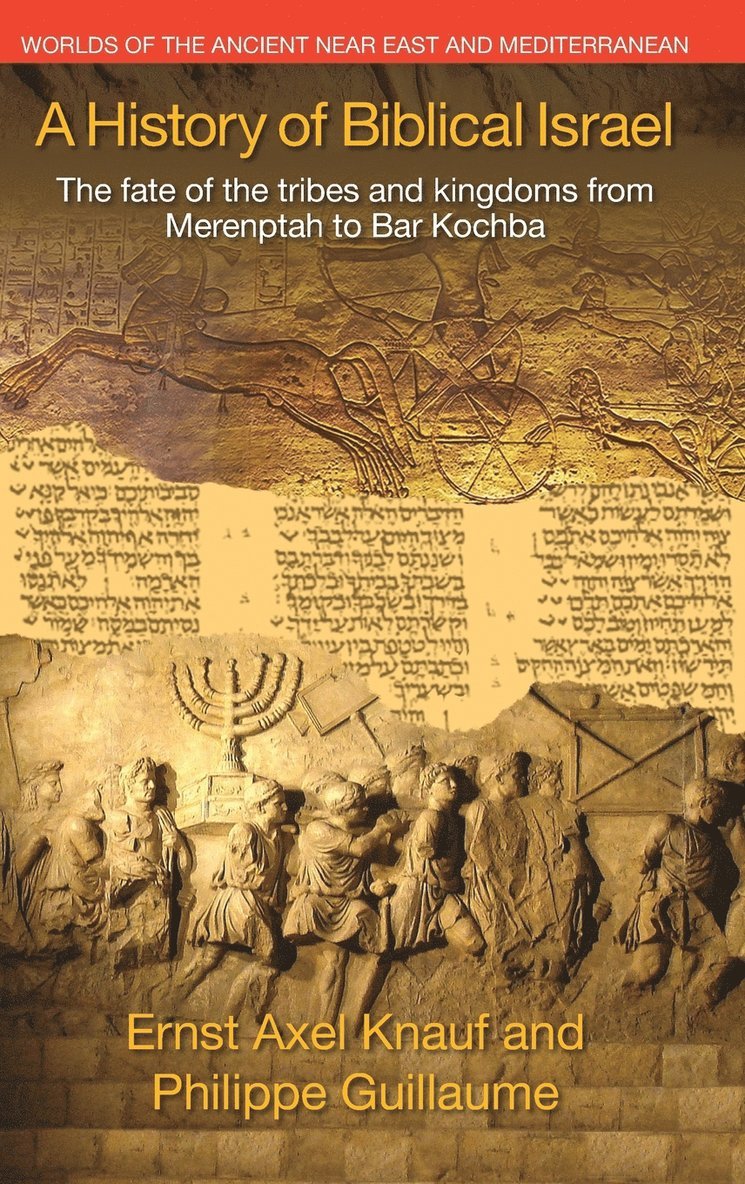
History of Biblical Israel
The Fate of the Tribes and Kingdoms from Merenptah to Bar Kochba
Inbunden, Engelska, 2016
1 177 kr
Skickas inom 5-8 vardagar
There was probably only one past, but there are many different histories. As mental representations of narrow segments of the past, 'histories' reflect different cultural contexts and different historians, although 'history' is a scientific enterprise whenever it processes representative data using rational and controllable methods to work out hypotheses that can be falsified by empirical evidence. A History of Biblical Israel combines experience gained through decades of teaching biblical exegesis and courses on the history of ancient Israel, and of on-going involvement in biblical archaeology. 'Biblical Israel' is understood as a narrative produced primarily in the province of Yehud to forge the collective memory of the elite that operated the temple of Jerusalem under the auspices of the Achaemenid imperial apparatus. The notion of 'Biblical Israel' provides the necessary hindsight to narrate the fate of the kingdoms of Israel and Judah as the pre-history of 'Biblical Israel', since the archives of these kingdoms were only mined in the Persian era to produce the grand biblical narrative.The volume covers the history of 'Biblical Israel' through its fragmentation in the Hellenistic and Roman periods until 136 CE, when four Roman legions crushed the revolt of Simeon Bar-Kosiba.
History of Biblical Israel
The Fate of the Tribes and Kingdoms from Merenptah to Bar Kochba
Häftad, Engelska, 2016
370 kr
Skickas inom 5-8 vardagar
There was probably only one past, but there are many different histories. As mental representations of narrow segments of the past, 'histories' reflect different cultural contexts and different historians, although 'history' is a scientific enterprise whenever it processes representative data using rational and controllable methods to work out hypotheses that can be falsified by empirical evidence. A History of Biblical Israel combines experience gained through decades of teaching biblical exegesis and courses on the history of ancient Israel, and of on-going involvement in biblical archaeology. 'Biblical Israel' is understood as a narrative produced primarily in the province of Yehud to forge the collective memory of the elite that operated the temple of Jerusalem under the auspices of the Achaemenid imperial apparatus. The notion of 'Biblical Israel' provides the necessary hindsight to narrate the fate of the kingdoms of Israel and Judah as the pre-history of 'Biblical Israel', since the archives of these kingdoms were only mined in the Persian era to produce the grand biblical narrative.The volume covers the history of 'Biblical Israel' through its fragmentation in the Hellenistic and Roman periods until 136 CE, when four Roman legions crushed the revolt of Simeon Bar-Kosiba.
1 850 kr
Skickas inom 5-8 vardagar
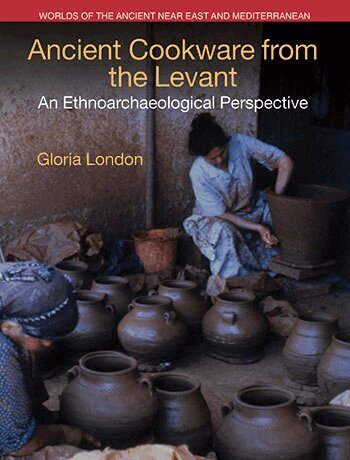
Ancient clay cooking pots in the southern Levant are unappealing, rough pots that are not easily connected to meals known from ancient writings or iconographic representations. To narrow the gap between excavated sherds and ancient meals, the approach adopted in this study starts by learning how food traditionally was processed, preserved, cooked, stored, and transported in clay containers. This research is based on the cookware and culinary practices in traditional societies in Cyprus and the Levant, where people still make pots by hand.Clay pots were not only to cook or hold foods. Their absorbent and permeable walls stored memories of food residue. Clay jars were automatic yogurt makers and fermentation vats for wine and beer, while jugs were the traditional water coolers and purifiers. Dairy foods, grains, and water lasted longer and/or tasted better when stored or prepared in clay pots. Biblical texts provide numerous terms for cookware without details of how they looked, how they were used, or why there are so many different words.Recent studies of potters for over a century in the southern Levant provide a wealth of names whose diversity helps to delineate the various categories of ancient cookware and names in the text.Ancient Cookware from the Levant begins with a description of five data sources: excavations, ancient and medieval texts, 20th century government reports, early accounts of potters, and ethnoarchaeological studies. The final section focuses on the shape, style, and manufacture of cookware for the past 12,000 years. For archaeologists, changes in cooking pot morphology offer important chronological information for dating entire assemblages, from Neolithic to recent times. The survey of pot shapes in Israel, Palestine, and Jordan presents how different shapes were made and used.
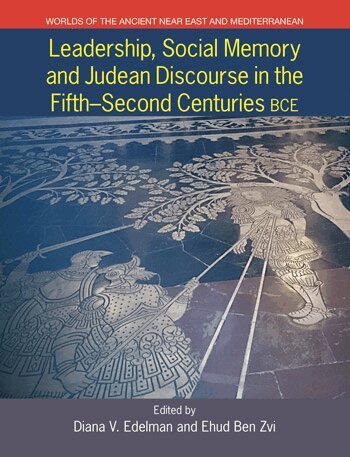
Leadership, Social Memory and Judean Discourse in the Fifth-Second Centuries BCE
Häftad, Engelska, 2016
381 kr
Skickas inom 5-8 vardagar
The theme of leadership played an important role in ancient Israel and its discourse. It was explored time and again through memories of proper, improper and in-between leaders and through memories of particular institutions like monarchy, priesthood, and prophethood. The ways in which this theme was shaped, reflected and explored through social memory and how, in turn, those memories played a socializing role within the community is the focus of this collection of essays. Although the nature and limitations of kingship, both native and foreign, is a central theme of many of the essays, the volume includes discussions of both official and unofficial local leadership within an empire setting, alternatives to royal leadership like theocracy, charismatic judgeship, and Greek-style tyrants, as well as considerations of Greek political discourse on the best type of leadership.
1 371 kr
Skickas inom 5-8 vardagar
This book follows a continuous line of development from Canaanite pottery to the Phoenician pottery corpus. Phoenician pottery typically is considered to have first emerged in the Iron Age, and most research is limited to the first half of the first millennium BCE. The current analysis, however, shows the Canaanite predecessors as well as the ongoing continuity of Phoenician forms and techniques during the Hellenistic and Roman periods. There are two areas of focus, both of which will be illustrated from materials drawn primarily from the Levant. The first is Phoenician container products, especially amphorae and bottles, although other coarse ware forms are included. The second is red-slip pottery, which was a constant feature of the Phoenician assemblage. These were mainly open vessels that did not contain other products and were valued for their ritual attributes.
1 451 kr
Skickas inom 5-8 vardagar
This book focuses on the Canaanite-Phoenician economic systems that predominated in and determined Mediterranean history. Phoenician trade networks were sophisticated and elaborate operations that required a highly developed society and institutions in order to spread and be maintained. By tracking the manufacture, use, and shipment routes of Phoenician products, primarily those traded in amphorae and bottles but also fine-ware and their associated assemblages, a new map of Mediterranean connectivity and interrelations emerges, whose routes, operations and cultural affiliation lasted a long time. The Phoenician trade-nets are presented geographically, with special attention paid to the traceable product networks involving wine, salted fish, or perfumed oils.
1 331 kr
Skickas inom 5-8 vardagar
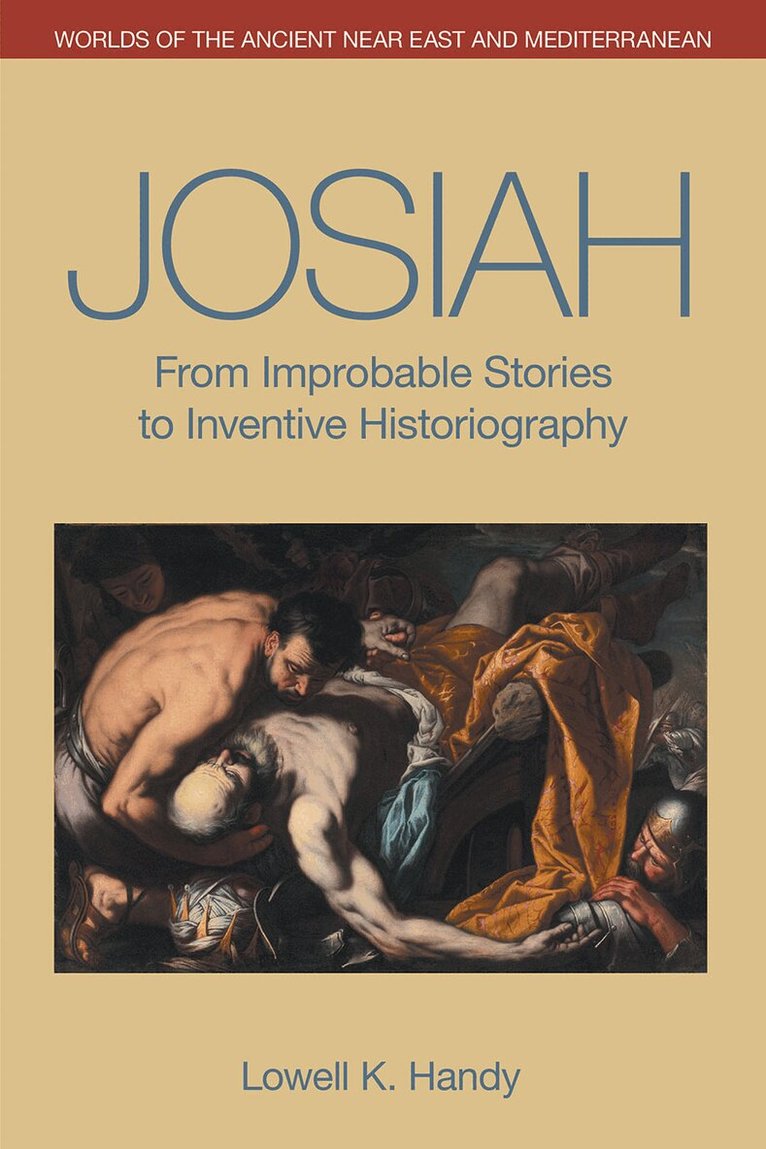
This book considers the various ways in which the last major King of Judah has been presented in biblical texts and the subsequent cultures that have made use of the biblical narratives. It is posited that there is no reliable material that can be dated to the time of Josiah and that the literary constructions of Josiah's reign in Kings, Chronicles, and First Esdras already provided the inventive memory of a no longer recoverable monarch's life. Aspects of these narratives are considered as well as the history of Josiah in historiographical renditions of world history and in presenting his story in narrative artistic productions.
401 kr
Skickas inom 5-8 vardagar
This book considers the various ways in which the last major King of Judah has been presented in biblical texts and the subsequent cultures that have made use of the biblical narratives. It is posited that there is no reliable material that can be dated to the time of Josiah and that the literary constructions of Josiah's reign in Kings, Chronicles, and First Esdras already provided the inventive memory of a no longer recoverable monarch's life. Aspects of these narratives are considered as well as the history of Josiah in historiographical renditions of world history and in presenting his story in narrative artistic productions.
About Edom and Idumea in the Persian Period
Recent Research and Approaches from Archaeology, Hebrew Bible Studies and Ancient Near Eastern Studies
Inbunden, Engelska, 2022
2 261 kr
Skickas inom 5-8 vardagar
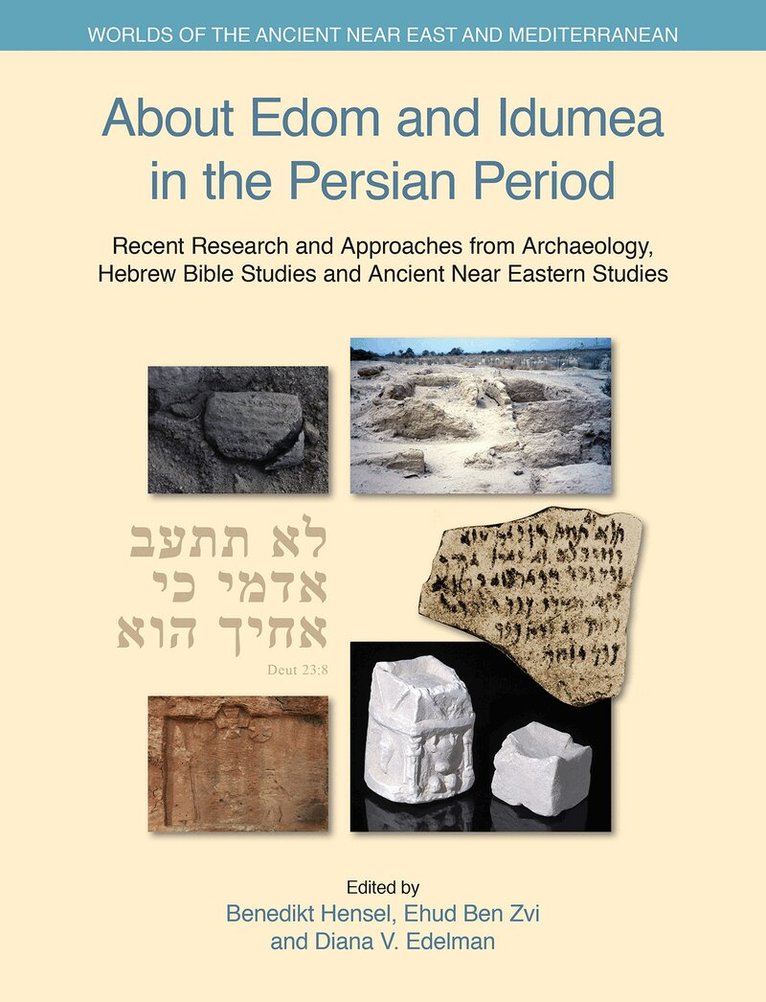
This volume highlights and advances new developments in the study of Edom and Idumea in eighteen essays written by researchers from different disciplines (History, Archaeology, Assyriology, Epigraphy, Memory Studies, and Hebrew Bible studies). The topics examined include the emergence of Idumea, the evolution of Edomite/Idumean identity, the impact of the Arabian trade on the region, comparative and regional studies of Idumea and Judah, studies of specific sites, artifacts, epigraphic and literary sources, and a section on literary and ideological constructions and memories of Edom reflected in the Hebrew Bible. This volume is a go-to place for all who are interested in the current state of research about these matters.
1 177 kr
Skickas inom 5-8 vardagar
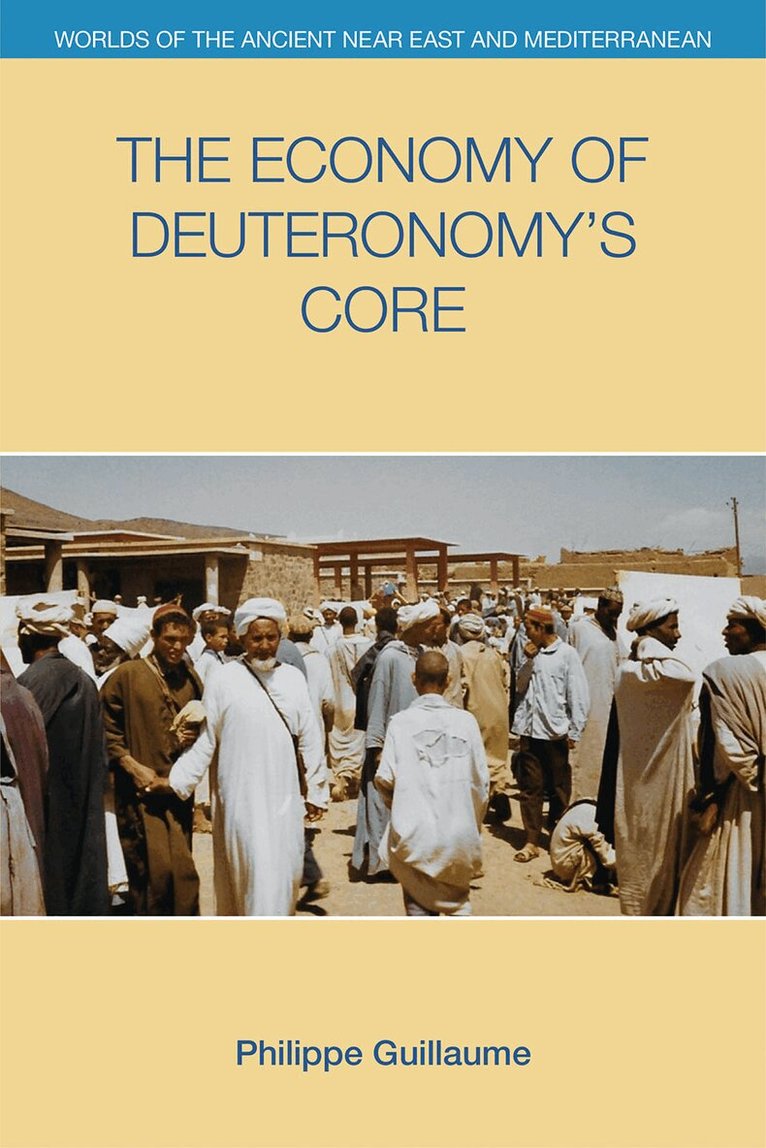
The Economy of Deuteronomy's Core contributes to the current debate over the date and purpose of the biblical book of Deuteronomy to advance the discussion beyond the Josianic hypothesis of Wilhelm M. L. de Wette that has dominated the field for the last two centuries. It is the first comprehensive analysis and synthesis of the economic issues that the laws of Deuteronomy 12-26. It provides the basis for the identification of the functions of the three institutions upon which a new Israelite identity builds: the local autonomous settlement (your gates), the yearly gathering of all Israel to eat and drink joyfully in front of YHWH (the Place), and a guild-like brotherhood involving Israelite, Edomite and third generation Egyptian associates (qehal-YHWH). Grounded in the text itself, The Economy of Deuteronomy's Core reads Deuteronomy 12-26 in light of what we know about Ancient Near Eastern economies. The results open new horizons regarding the origins of the Deuteronomic laws.
511 kr
Skickas inom 5-8 vardagar
The Economy of Deuteronomy's Core contributes to the current debate over the date and purpose of the biblical book of Deuteronomy to advance the discussion beyond the Josianic hypothesis of Wilhelm M. L. de Wette that has dominated the field for the last two centuries. It is the first comprehensive analysis and synthesis of the economic issues that the laws of Deuteronomy 12-26. It provides the basis for the identification of the functions of the three institutions upon which a new Israelite identity builds: the local autonomous settlement (your gates), the yearly gathering of all Israel to eat and drink joyfully in front of YHWH (the Place), and a guild-like brotherhood involving Israelite, Edomite and third generation Egyptian associates (qehal-YHWH). Grounded in the text itself, The Economy of Deuteronomy's Core reads Deuteronomy 12-26 in light of what we know about Ancient Near Eastern economies. The results open new horizons regarding the origins of the Deuteronomic laws.