• Fri frakt över 249 kr
  • •
  • Snabba leveranser
  • •
  • Billiga böcker
Kundservice

Du är på sajten för privatpersoner.

Företag, bibliotek eller offentlig verksamhet?

Du handlar på classic.bokus.com, där alla dina funktioner finns intakta.
Till classic.bokus.com
Bokus logotyp. Gå till startsidan.
  • Erbjudanden
  • Nyheter
  • Student
  • Topplistor
  • Barn & ungdom
  • Bokus Play
  • E-böcker
  • Pocketböcker
  • Spel & pussel

10% rabatt på allt med kod: NYSTART10 →

Sidfot

Mina sidor

    Hjälp

    • Kundservice
    • Vanliga frågor och svar
    • Frakt och leverans
    • Retur vid ångerrätt
    • Reklamera vara
    • Betalning
    • Köpvillkor
    • Allmänna villkor
    • Information om webbplatsens tillgänglighet

    Om Bokus

    • Om oss
    • Pressrum
    • För studenter
    • För företag
    • För bibliotek och offentlig verksamhet
    • För leverantörer
    • Hållbarhet

    Populärt

    • Aktuella erbjudanden
    • Presentkort
    • Studentlitteratur
    • Nya böcker
    • Topplistor
    • Signerade böcker
    • Engelska böcker

    Inspiration

    • Boktips
    • BookTok
    • Populära bokserier
    • Barnbokskaraktärer
    • Populära författare
    Logotyp för Bokus
    Följ oss på Facebook (extern länk)Följ oss på Instagram (extern länk)Följ oss på YouTube (extern länk)Följ oss på TikTok (extern länk)
    bokus @ CookiesAnpassa cookiesIntegritetspolicyKöpvillkor
    Till Citymail hemsida (extern länk)Till Budbee hemsida (extern länk)Till Postnord hemsida (extern länk)Till Schenker hemsida (extern länk)Till Early Bird hemsida (extern länk)Till Walleys hemsida (extern länk)
    1. Naturvetenskap och teknik
    2. Teknik och industri
    3. Tillverkningsteknik

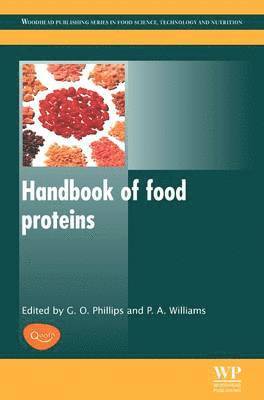
    Handbook of Food Proteins

    AvGlyn O. Phillips,Peter A. Williams

    Häftad, Engelska, 2016

    Del i serien Woodhead Publishing Series in Food Science, Technology and Nutrition

    2 125 kr

    Beställningsvara. Skickas inom 10-15 vardagar. Fri frakt över 249 kr.

    Beskrivning

    Traditionally a source of nutrition, proteins are also added to foods for their ability to form gels and stabilise emulsions, among other properties. The range of specialised protein ingredients used in foods is increasing. Handbook of food proteins provides an authoritative overview of the characteristics, functionalities and applications of different proteins of importance to the food industry in one convenient volume.

    The introductory chapter provides an overview of proteins and their uses in foods. The following chapters each focus on a particular protein ingredient or group of ingredients covering their origins, production, properties and applications. The proteins discussed are caseins, whey proteins, gelatin and other meat-derived protein ingredients, seafood proteins, egg proteins, soy proteins, pea and other legume proteins, mycoprotein, wheat gluten, canola and other oilseed proteins, algal proteins and potato protein. A chapter on texturised vegetable proteins completes the volume. Innovative products and potential methods for improving nutrition and diet using these proteins are described.

    With its distinguished editors and international team of expert contributors Handbook of food proteins is an invaluable reference tool for professionals using food protein ingredients for both food and other applications.

    • An authoritative overview of the characteristics, functionalities and applications of different proteins of importance to the food industry
    • Chapters each focus on a particular protein ingredient or group of ingredients
    • Innovative products and potential methods for improving nutrition and diet using proteins is also described

    Produktinformation

    • Utgivningsdatum:2016-08-19
    • Mått:156 x 234 x 24 mm
    • Vikt:640 g
    • Format:Häftad
    • Språk:Engelska
    • Serie:Woodhead Publishing Series in Food Science, Technology and Nutrition
    • Antal sidor:464
    • Förlag:Elsevier Science
    • ISBN:9780081016695

    Utforska kategorier

    • Tillverkningsteknik inom Naturvetenskap och teknik

    Mer om författaren

    Professor Glyn O. Phillips was Professor of Chemistry at the University of Salford and appointed as Executive Principal of the North East Wales Institute (now Wrexham Glyndwr University) in 1976. He is a Fellow of the Learned Society of Wales and was awarded an honorary degree of Doctor of Science by the University of Benin in 1990 and an honorary degree of Doctor of Laws by the University of Wales in 1999. He was awarded the A.G. Evans Medal by the University of Cardiff in 1991, the first Science and Technology Medal by the National Eisteddfod of Wales in 2004 and the Food Hydrocolloids Trust Medal in 2007. He has a broad range of scientific interests and has published more than 600 research papers in areas including radiation and free radical chemistry, radiation sterilisation, photochemistry and carbohydrate and polysaccharide chemistry. He was technical adviser to the International Atomic Energy Agency and editor of the journals, Food Hydrocolloids, Advances in Tissue Banking and International Journal of Cell and Tissue banking. He initiated the Gums and Stabilisers for the Food industry series of Conferences in 1981 and established the Phillips Hydrocolloids Research Centre at Wrexham Glyndwr University in 2003. Peter A. Williams is Professor of Polymer and Colloid Chemistry and Director of the Centre for Water Soluble Polymers at Wrexham Glyndwr University. He was awarded the degree of Doctor of Philosophy by the University of Salford in 1982 and Doctor of Science in 2009. He is a Fellow of the Royal Society of Chemistry and a Chartered Chemist. He has over 35 years research experience in the chemical modification, physicochemical characterisation, rheological properties and interfacial behaviour of hydrocolloids. He has published over 230 research papers and edited 42 books. He is co-founder and Editor-in-Chief of the international journal Food Hydrocolloids which was launched in 1986. He has been involved in the organisation of more than 40 international conferences on behalf of the Food Hydrocolloids Trust, the Cellucon Trust the Royal Society of Chemistry and the Society of Chemical Industry. He is a past Chairman of the Society of Chemical Industry Surface and Colloids Group and past Treasurer of the Royal Society of Chemistry Colloid and Interface Science Group. He was awarded the SCI Distinguished Service award in 2007 and the Food Hydrocollloids Trust Medal in 2013.

    Recensioner i media

    "This is a good book that will be appreciated by a wide range of engineers, scientists, technologists, academics and students." --Society of Dairy Technology

    Innehållsförteckning

    • Contributor contact detailsWoodhead Publishing Series in Food Science, Technology and NutritionPrefaceChapter 1: Introduction to food proteinsAbstract:1.1 Introduction1.2 Structure of protein1.3 Functional properties of proteins1.4 Scope of this bookChapter 2: CaseinsAbstract:2.1 Introduction2.2 Manufacture of casein-based ingredients2.3 Structure and properties2.4 Uses and applications of casein-based ingredients2.5 Interactions with other ingredients2.6 Technical data and specifications2.7 Regulatory statusChapter 3: Whey proteinsAbstract:3.1 Introduction3.2 Manufacture of whey protein ingredients3.3 Chemistry of the major whey proteins3.4 Technical data3.5 Uses and applications of whey protein ingredients3.6 Whey protein hydrolysates3.7 Regulatory status3.8 Future trends3.9 Sources of further information and advice3.10 AcknowledgementsChapter 4: Meat protein ingredientsAbstract:4.1 Introduction4.2 Sources of meat protein ingredients4.3 Lean tissue protein ingredients4.4 Connective tissue protein ingredients4.5 Hydrolysates and flavors4.6 Blood protein ingredients4.7 Future trends4.8 AcknowledgmentChapter 5: GelatinAbstract:5.1 Introduction5.2 Manufacturing gelatin5.3 Regulations, technical data and standard quality test methods5.4 Chemical composition and physical properties of collagens and gelatins5.5 Gelatin derivatives5.6 Applications of gelatin5.7 AcknowledgementsChapter 6: Seafood proteinsAbstract:6.1 Introduction6.2 Chemistry of seafood proteins6.3 Seafood proteins as a component of the human diet6.4 Comparison of seafood proteins with vegetable and other animal proteins6.5 Functional properties of seafood proteins6.6 Factors affecting functional properties of seafood proteins6.7 Isolation and recovery of fish muscle proteins from whole fish and fish processing by-products6.8 Products derived from seafood proteins6.9 Environmental considerations for continuous sustainability of proteins from aquatic resources6.10 Regulatory aspects of seafood protein: allergies to seafood proteinsChapter 7: Egg proteinsAbstract:7.1 Introduction7.2 Egg white: chemical composition and structure7.3 Manufacture of egg white ingredients7.4 Functional properties of egg white7.5 Conclusion: egg white7.6 Egg yolk: chemical composition and structure7.7 Manufacture of egg yolk ingredients and egg yolk separation7.8 Functional properties of egg yolk7.9 Conclusion: egg yolk7.10 Regulatory status: egg proteins as food allergensChapter 8: Soy proteinsAbstract:8.1 Introduction8.2 Soybean storage proteins: structure-function relationship of β -conglycinin and glycinin8.3 Soy protein as a food ingredient8.4 Improving soy protein functionality8.5 ConclusionChapter 9: Peas and other legume proteinsAbstract:9.1 Introduction9.2 Processing and protein isolation9.3 Characterization of pea and other legume proteins and isolates9.4 Functional properties in isolates and ways of improving them9.5 Utilization of pea and other legume proteins in foods9.6 Future challenges and trends in using peas and other legume proteinsChapter 10: Wheat gluten: production, properties and applicationAbstract:10.1 Introduction10.2 World production and trade10.3 Wheat gluten manufacturing processes10.4 Composition and protein structure10.5 Functional and sensory properties10.6 Modification of gluten for new functional properties10.7 Uses and applications of wheat gluten10.8 Regulatory status and gluten intolerance10.9 Future trendsChapter 11: Canola and other oilseed proteinsAbstract:11.1 Introduction11.2 Processing and protein isolation11.3 Characterization of canola and other oilseed proteins and isolates11.4 Functional properties11.5 Utilization of canola and other oilseed proteins11.6 Issues in using canola and other oilseed proteinsChapter 12: Potato proteinsAbstract:12.1 Introduction12.2 Physico-chemical properties of the different potato proteins12.3 Functionality of different types of potato proteins12.4 Potato protein isolation12.5 Specifications of industrially produced potato protein preparations12.6 Uses and applications12.7 Regulatory status and safetyChapter 13: Mycoprotein: origins, production and propertiesAbstract:13.1 Introduction13.2 Manufacture of mycoprotein13.3 The production of foods from mycoprotein13.4 Texture creation in mycoprotein13.5 Nutritional properties of mycoprotein13.6 Regulatory status13.7 Future trends: mycoprotein and sustainabilityChapter 14: Algal proteinsAbstract:14.1 Introduction14.2 Cultivation and production of algae and algal proteins14.3 Composition of algal proteins14.4 Extraction procedures and processing of algal proteins14.5 Functional properties of algal proteins14.6 Nutritional quality of algal proteins14.7 Toxicological and safety aspects14.8 Utilisation of algal proteins14.9 Future trendsChapter 15: Texturized vegetable proteinsAbstract:15.1 Introduction15.2 Raw materials for textured vegetable protein15.3 Soy processing to generate raw materials for texturization15.4 Processing other crops to generate raw materials for texturization15.5 Processes for making textured vegetable protein15.6 Types of textured vegetable proteins15.7 Uses of texturized vegetable proteinIndex