• Fri frakt över 249 kr
  • •
  • Snabba leveranser
  • •
  • Billiga böcker
Kundservice

Du är på sajten för privatpersoner.

Företag, bibliotek eller offentlig verksamhet?

Du handlar på classic.bokus.com, där alla dina funktioner finns intakta.
Till classic.bokus.com
Bokus logotyp. Gå till startsidan.
  • Erbjudanden
  • Nyheter
  • Student
  • Topplistor
  • Barn & ungdom
  • Bokus Play
  • E-böcker
  • Pocketböcker
  • Spel & pussel

10% rabatt på allt med kod: NYSTART10 →

Sidfot

Mina sidor

    Hjälp

    • Kundservice
    • Vanliga frågor och svar
    • Frakt och leverans
    • Retur vid ångerrätt
    • Reklamera vara
    • Betalning
    • Köpvillkor
    • Allmänna villkor
    • Information om webbplatsens tillgänglighet

    Om Bokus

    • Om oss
    • Pressrum
    • För studenter
    • För företag
    • För bibliotek och offentlig verksamhet
    • För leverantörer
    • Hållbarhet

    Populärt

    • Aktuella erbjudanden
    • Presentkort
    • Studentlitteratur
    • Nya böcker
    • Topplistor
    • Signerade böcker
    • Engelska böcker

    Inspiration

    • Boktips
    • BookTok
    • Populära bokserier
    • Barnbokskaraktärer
    • Populära författare
    Logotyp för Bokus
    Följ oss på Facebook (extern länk)Följ oss på Instagram (extern länk)Följ oss på YouTube (extern länk)Följ oss på TikTok (extern länk)
    bokus @ CookiesAnpassa cookiesIntegritetspolicyKöpvillkor
    Till Citymail hemsida (extern länk)Till Budbee hemsida (extern länk)Till Postnord hemsida (extern länk)Till Schenker hemsida (extern länk)Till Early Bird hemsida (extern länk)Till Walleys hemsida (extern länk)
    1. Naturvetenskap och teknik
    2. Teknik och industri
    3. Tillverkningsteknik

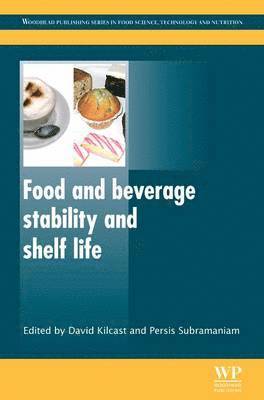
    Food and Beverage Stability and Shelf Life

    AvDavid Kilcast,Persis Subramaniam

    Häftad, Engelska, 2016

    Del i serien Woodhead Publishing Series in Food Science, Technology and Nutrition

    2 624 kr

    Beställningsvara. Skickas inom 10-15 vardagar. Fri frakt över 249 kr.

    Beskrivning

    Ensuring that foods and beverages remain stable during the required shelf life is critical to their success in the market place, yet companies experience difficulties in this area. Food and beverage stability and shelf life provides a comprehensive guide to factors influencing stability, methods of stability and shelf life assessment and the stability and shelf life of major products.

    Part one describes important food and beverage quality deterioration processes, including microbiological spoilage and physical instability. Chapters in this section also investigate the effects of ingredients, processing and packaging on stability, among other factors. Part two describes methods for stability and shelf life assessment including food storage trials, accelerated testing and shelf life modelling. Part three reviews the stability and shelf life of a wide range of products, including beer, soft drinks, fruit, bread, oils, confectionery products, milk and seafood.

    With its distinguished editors and international team of expert contributors, Food and beverage stability and shelf life is a valuable reference for professionals involved in quality assurance and product development and researchers focussing on food and beverage stability.

    • A comprehensive guide to factors influencing stability, methods of stability and shelf life assessment and the stability and shelf life of major products
    • Describes important food and beverage quality deterioration processes exploring microbiological spoilage and physical instability
    • Investigate the effects of ingredients, processing and packaging on stability and documents methods for stability and shelf life assessment

    Produktinformation

    • Utgivningsdatum:2016-08-19
    • Mått:156 x 234 x 44 mm
    • Vikt:1 210 g
    • Format:Häftad
    • Språk:Engelska
    • Serie:Woodhead Publishing Series in Food Science, Technology and Nutrition
    • Antal sidor:864
    • Förlag:Elsevier Science
    • ISBN:9780081016831

    Utforska kategorier

    • Tillverkningsteknik inom Naturvetenskap och teknik

    Mer om författaren

    Dr David Kilcast is a consultant in Sensory Quality. Persis Subramaniam works at Leatherhead Food Research Association, one of the world's leading international research, information and training centres for the food and drinks industry.

    Innehållsförteckning

    • Contributor contact detailsWoodhead Publishing Series in Food Science, Technology and NutritionPrefacePart I: Deteriorative processes and factors influencing shelf lifeChapter 1: Microbiological spoilage of foods and beveragesAbstract:1.1 Introduction1.2 Spoilage of foods and beverages; a microbiological approach: microbes vs indigenous enzymes1.3 Factors affecting the rate of microbiological spoilage of foods and beverages1.4 Evaluating, monitoring and measuring microbiological spoilage of foods and beverages1.5 Predicting microbiological spoilage of foods and beverages1.6 Preventing microbiological spoilage of foods and beverages1.7 Future trendsChapter 2: Chemical deterioration and physical instability of foods and beveragesAbstract:2.1 Introduction2.2 Chemical deterioration and physical instability of foods and beverages2.3 Factors affecting the rate of quality loss due to chemical deterioration and physical instability2.4 Measuring chemical deterioration and physical instability of foods and beverages2.5 Predicting and monitoring chemical deterioration and physical instability of foods and beverages2.6 Preventing chemical deterioration and physical instability of foods and beverages2.7 Future trendsChapter 3: Moisture loss, gain and migration in foodsAbstract:3.1 Introduction: moisture loss, gain and migration in foods and quality deterioration3.2 Mechanism of the moisture transfers in food products3.3 Measuring, monitoring and predicting moisture loss, gain and migrations3.4 Moisture loss, gain and migration related to the shelf life3.5 Conditions for moisture migration and foods affected by moisture transferChapter 4: Insect and mite penetration and contamination of packaged foodsAbstract:4.1 Introduction4.2 Insects and mites contaminating stored food products4.3 Combating critical points in the food chain4.4 Future trendsChapter 5: The influence of ingredients on product stability and shelf lifeAbstract:5.1 Introduction to shelf life5.2 Methods of shelf life extension5.3 Movement of moisture in food systems5.4 Food spoilage due to water activity5.5 Edible moisture barriers5.6 Molecular mobility5.7 Preservation of foods by freezing5.8 Sweetener ingredients as humectants or cryoprotectants5.9 Ingredients for shelf life extension5.10 Future trends5.12 AppendixChapter 6: Processing and food and beverage shelf lifeAbstract:6.1 Introduction6.2 Main quality change factors and their interaction with processing6.3 Shelf life and stability6.4 Product and process design6.5 Processing6.6 Unit operations6.7 Production of low and intermediate moisture foods6.8 Thermal processing6.9 Filling and packaging6.10 Novel processes6.11 Hygiene6.12 Future trendsChapter 7: Packaging and food and beverage shelf lifeAbstract:7.1 Introduction7.2 Role of packaging in extending food and beverage shelf life7.3 Major packaging materials7.4 Key package properties related to shelf life7.5 Predicting shelf life of packaged foods and beverages7.6 Packaging migrants and food and beverage shelf life7.7 Future trendsChapter 8: Effects of food and beverage storage, distribution, display and consumer handling on shelf lifeAbstract:8.1 Introduction8.2 Overview of the cold chain8.3 Storage life8.4 Sectors of the cold chain and their influence on food quality and safety8.5 Future trendsChapter 9: Smart packaging for monitoring and managing food and beverage shelf lifeAbstract:9.1 Introduction: smart packaging – time-temperature integrators (TTIs)9.2 Principles of the application of time-temperature integrators (TTIs) for shelf life monitoring9.3 Requirements and selection of time-temperature integrators (TTIs) for food and beverage products9.4 Use of time-temperature integrators (TTIs) for shelf life management and optimization in the cold chain – case study9.5 Future trends9.6 AcknowledgementsPart II: Methods for shelf life and stability evaluationChapter 10: Food storage trials: an introductionAbstract:10.1 Introduction10.2 Food deterioration and spoilage10.3 Storage trials10.4 Future trendsChapter 11: Sensory evaluation methods for food shelf life assessmentAbstract:11.1 Introduction11.2 Principles of sensory evaluation11.3 Basic requirements for sensory analysis11.4 Discrimination tests11.5 Quantitative descriptive tests11.6 Consumer acceptability testing11.7 Operation of sensory shelf life tests11.8 Design of sensory shelf life tests11.9 Interpretation of sensory shelf life data11.10 Instrumental methods11.11 Standardisation in sensory shelf life testing11.12 Future trends11.15 AppendixChapter 12: Advances in instrumental methods to determine food quality deteriorationAbstract:12.1 Introduction12.2 Assessing food appearance12.3 Measurement of relative humidity (RH), moisture, and water activity (aw)12.4 Texture evaluation12.5 Evaluation of rheological properties of liquid and semi-solid foods12.6 Assessing lipid oxidation12.7 Electronic nose12.8 Electronic tongue12.9 Infrared (IR) spectroscopy12.10 Microbiological testing12.11 Future trendsChapter 13: Modelling microbiological shelf life of foods and beveragesAbstract:13.1 Introduction13.2 Classification of predictive models by microbial response13.3 Development of predictive models for microbiological safety and stability13.4 Modelling approaches, applications and opportunities for shelf life prediction13.5 Usage considerations and access to predictive microbiology electronic resources13.6 Future trends13.7 AcknowledgementsChapter 14: Modelling chemical and physical deterioration of foods and beveragesAbstract:14.1 Introduction14.2 Factors influencing shelf life14.3 Development of mathematical models14.4 Predictive mathematical models14.5 Future trendsChapter 15: Accelerated shelf life testing of foodsAbstract:15.1 Introduction15.2 Basic principles15.3 Initial rate approach15.4 Kinetic model approach15.5 Single accelerating factor15.6 Glass transition models15.7 Multiple accelerating factors15.8 Dynamic methods15.9 The ‘no model’ approach15.10 Combination of approaches15.11 Problems in accelerated shelf life tests15.12 Future trendsChapter 16: Microbiological challenge testing of foodsAbstract:16.1 Introduction: role of challenge testing in shelf life evaluation16.2 Basic principles16.3 Challenge testing limitations16.4 Challenge testing and the use of mathematical models16.5 Future trendsPart III: The stability and shelf life of particular productsChapter 17: Beer shelf life and stabilityAbstract:17.1 Introduction17.2 Biological instability17.3 Physical instability17.4 Flavour stability17.5 Foam stability17.6 Gushing17.7 Light stability17.8 ConclusionsChapter 18: Shelf life of wineAbstract:18.1 Introduction18.2 Factors affecting wine stability and shelf life18.3 Changes during the shelf life of wine18.4 Evaluating wine shelf life18.5 Preventing wine quality deterioration at or post-bottling18.6 Sensory significance of shelf life changes18.7 Future trendsChapter 19: The stability and shelf life of fruit juices and soft drinksAbstract:19.1 Introduction19.2 Factors influencing the stability of fruit juices and soft drinks19.3 Ensuring product stability and extending shelf life19.4 Shelf life determination19.5 Future trendsChapter 20: Practical uses of sensory evaluation for the assessment of soft drink shelf lifeAbstract:20.1 Introduction20.2 Using a risk-based approach to shelf life for soft drinks20.3 Estimating shelf life20.4 Determining shelf life20.5 Monitoring shelf life20.6 Considerations before developing the shelf life plan20.7 Developing the sensory plan20.8 Case studies20.9 Future trendsChapter 21: The stability and shelf life of coffee productsAbstract:21.1 Introduction21.2 Main critical events affecting the stability and shelf life of coffee products21.3 Ensuring stability and extending the shelf life of coffee21.4 Evaluating the shelf life of coffee21.5 Future trendsChapter 22: The stability and shelf life of fruit and vegetablesAbstract:22.1 Introduction22.2 Stability and shelf life of fruit and vegetables22.3 Extending the shelf life of fruit and vegetables22.4 Controlled and modified atmosphere packaging for longer shelf life22.5 Future trendsChapter 23: The stability and shelf life of bread and other bakery productsAbstract:23.1 Introduction23.2 A brief overview of the manufacture of bakery products23.3 The key ‘fresh’ characteristics of bakery products23.4 Factors affecting the stability of bread and other bakery products23.5 Evaluating the shelf life of bread and other bakery products23.6 Ensuring stability and extending the shelf life of bread and other bakery products23.7 Future trendsChapter 24: The stability and shelf life of fats and oilsAbstract:24.1 Introduction24.2 Mechanisms of oxidation and hydrolysis in fats and oils24.3 Factors affecting the stability and shelf life of fats and oils24.4 Evaluating the shelf life of fats and oils24.5 Ensuring stability and extending the shelf life of fats and oils24.6 Future trendsChapter 25: The stability and shelf life of confectionery productsAbstract:25.1 Introduction25.2 Factors affecting shelf life25.3 Chocolate and chocolate products25.4 Sugar glass25.5 Toffee25.6 Gums and jellies25.7 Aerated confectioneryChapter 26: The stability and shelf life of vitamin-fortified foodsAbstract:26.1 Introduction26.2 Factors affecting the stability and shelf life of vitamin-fortified foods26.3 Ensuring stability and extending the shelf life of vitamin-fortified foods26.4 Evaluating the shelf life of vitamin-fortified foods26.5 Future trendsChapter 27: The stability and shelf life of milk and milk productsAbstract:27.1 Introduction27.2 Chemical composition and principal reactions of milk27.3 Bacteria in milk and related enzyme activity27.4 Raw milk enzymes27.5 Control of the quality of short shelf life products27.6 Factors influencing the stability of long shelf life products27.7 Control of the stability of long life milk products27.8 Conclusions27.9 DedicationChapter 28: The stability and shelf life of seafoodAbstract:28.1 Introduction28.2 Factors affecting the stability and shelf life of seafood28.3 Microorganisms involved in seafood spoilage28.4 Evaluation of the shelf life of seafood28.5 Future trendsChapter 29: The stability and shelf life of meat and poultryAbstract:29.1 Introduction29.2 Factors affecting the stability and shelf life of meat and poultry29.3 Evaluating the shelf life of meat and poultry29.4 Ensuring stability and extending the shelf life of meat and poultry29.5 Future trendsIndex