• Fri frakt över 249 kr
  • •
  • Snabba leveranser
  • •
  • Billiga böcker
Kundservice

Du är på sajten för privatpersoner.

Företag, bibliotek eller offentlig verksamhet?

Du handlar på classic.bokus.com, där alla dina funktioner finns intakta.
Till classic.bokus.com
Bokus logotyp. Gå till startsidan.
  • Erbjudanden
  • Nyheter
  • Student
  • Topplistor
  • Barn & ungdom
  • Bokus Play
  • E-böcker
  • Pocketböcker
  • Spel & pussel

10% rabatt på allt med kod: NYSTART10 →

Sidfot

Mina sidor

    Hjälp

    • Kundservice
    • Vanliga frågor och svar
    • Frakt och leverans
    • Retur vid ångerrätt
    • Reklamera vara
    • Betalning
    • Köpvillkor
    • Allmänna villkor
    • Information om webbplatsens tillgänglighet

    Om Bokus

    • Om oss
    • Pressrum
    • För studenter
    • För företag
    • För bibliotek och offentlig verksamhet
    • För leverantörer
    • Hållbarhet

    Populärt

    • Aktuella erbjudanden
    • Presentkort
    • Studentlitteratur
    • Nya böcker
    • Topplistor
    • Signerade böcker
    • Engelska böcker

    Inspiration

    • Boktips
    • BookTok
    • Populära bokserier
    • Barnbokskaraktärer
    • Populära författare
    Logotyp för Bokus
    Följ oss på Facebook (extern länk)Följ oss på Instagram (extern länk)Följ oss på YouTube (extern länk)Följ oss på TikTok (extern länk)
    bokus @ CookiesAnpassa cookiesIntegritetspolicyKöpvillkor
    Till Citymail hemsida (extern länk)Till Budbee hemsida (extern länk)Till Postnord hemsida (extern länk)Till Schenker hemsida (extern länk)Till Early Bird hemsida (extern länk)Till Walleys hemsida (extern länk)
    1. Naturvetenskap och teknik
    2. Geovetenskap
    3. Miljövetenskap och miljöpolitik

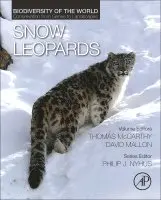
    Snow Leopards

    Biodiversity of the World: Conservation from Genes to Landscapes

    AvPhilip J. Nyhus

    Inbunden, Engelska, 2016

    Del i serien Biodiversity of the World: Conservation from Genes to Landscapes

    1 417 kr

    Beställningsvara. Skickas inom 5-8 vardagar. Fri frakt över 249 kr.

    Beskrivning

    Snow Leopards: Biodiversity of the World: Conservation from Genes to Landscapes is the only comprehensive work on the biology, behavior, and conservation status of the snow leopard, a species that has long been one of the least studied, and hence poorly understood, of the large cats.

    Breakthroughs in technologies and methodologies to study this elusive cat have come rapidly, including non-invasive genetics, camera traps, and GPS-satellite collaring. The book begins with chapters on the genetic standing and taxonomy of the snow leopard, followed by chapters on their behavior and ecology. Additional contributions follow on the current and emerging threats to the species, which include longstanding concerns, such as poaching and conflicts with livestock, and new and emerging threats such as mining and climate change.

    A section on conservation solutions, backed by valuable case studies, starts with an overview of the important role mountain communities play in assuring the snow leopard's long-term persistence. In addition, chapters on the role of captive snow leopards for the conservation of the species, state-of-the-art techniques and technologies for studying and monitoring snow leopards, status reports from around the region, and future perspectives, such as transboundary conservation initiatives, international conventions (CITES, CMS, etc.), the role of the IUCN Cat Specialist Group and the Snow Leopard Network, and undertakings such as the Global Snow Leopard Forum facilitated by the World Bank are also included.


    • Serves as the first and only comprehensive book on the biology, behavior, and conservation status of the snow leopard
    • Brings together the most current scientific knowledge, documents the most pressing conservation issues, and shares success stories in alleviating the broad threats that now jeopardize the long-term survival of this species
    • Brings current knowledge of the species, not only to researchers and conservationists, but also to decision makers, academics, and students
    • Edited by recognized snow leopard experts, with more than 50 years of collective experience in research and conservation of the species

    Produktinformation

    • Utgivningsdatum:2016-08-10
    • Mått:191 x 235 x undefined mm
    • Vikt:1 470 g
    • Format:Inbunden
    • Språk:Engelska
    • Serie:Biodiversity of the World: Conservation from Genes to Landscapes
    • Antal sidor:644
    • Förlag:Elsevier Science
    • ISBN:9780128022139

    Utforska kategorier

    • Miljövetenskap och miljöpolitik inom Naturvetenskap och teknik
    • Däggdjur inom Naturvetenskap och teknik
    • Däggdjur inom Djur och Natur

    Mer om författaren

    Philip Nyhus is the Director of the Environmental Studies Program at Colby College in Maine, Maine, US. His interdisciplinary research bridges the natural and social sciences to address human interactions with the environment, including endangered species conservation and recovery, human-wildlife conflict, large landscape conservation, and spatial modelling. He is co-editor of Tigers of the World: The Science, Politics and Conservation of Panthera tigris (2010). Dr. Tom McCarthy, Panthera’s Director of Snow Leopard Programs, began his conservation career studying brown bears, black bears, mountain goats and caribou in Alaska in the early 1980s. A strong interest in international conservation led him to Mongolia in 1992, where, under the guidance of Dr. George Schaller (known as “one of the founding fathers of wildlife conservation”), he took over the management of a long-term snow leopard research project. He was the first biologist to use satellite radio-collars on snow leopards. McCarthy became the Science and Conservation Director of the Snow Leopard Trust in 2000 and has since led their extensive science and community-based conservation programs across much of snow leopard range in Asia. From 2002-2009, Dr. McCarthy served as Executive Director of the Snow Leopard Network, a global consortium of more than 200 professionals involved in snow leopard research and conservation. Among other research initiatives, Dr. McCarthy is leading both a range-wide assessment of snow leopard genetics that seeks to identify movement corridors which are critical to maintaining the health and genetic diversity of the species, and a revision of methods by which snow leopard populations can be monitored over time, including such novel non-invasive approaches as fecal genetics, camera trapping and statistical modeling based on sign surveys. Dr. David Mallon is not only a recognized expert on snow leopards, he is extremely knowledgeable on the conservation status of Central Asia as a whole. He conducted some of the early assessments of the status of snow leopards in Mongolia and has done surveys in many of the Himalayan range states. He has more than 25 years of field work experience in the Himalaya, Tibetan Plateau, Mongolia, Central Asia and Arabia, mainly focused on large mammals, and involving species surveys, biodiversity assessment, habitat assessment, camera trapping, training, capacity building, and training local partners in census and monitoring techniques. He is a Fellow of the Royal Geographical Society and the Zoological Society of London, as well as a member of the International Editorial Board for Oryx, the International Journal of Conservation. He has been a Steering Committee member of the Snow Leopard Network since its inception in 2003 and is currently the elected Chairman of that 400 member organization, which represents nearly every biologist and conservationist now active in the snow leopard world. He is highly respected among his peers as an expert on this cat.

    Recensioner i media

    "Snow leopards are one of the most secretive and least understood of all the great cats. Today, that changes with the publication of Snow Leopards. The editors have assembled a blue-ribbon team of specialists to produce the most comprehensive synthesis of available knowledge on the ecology and conservation of this iconic cat." --Dr. Luke Hunter, President and Chief Conservation Officer of Panthera"This is an incredibly important book. It has collected virtually all the most recent research and information from all 12 range states, covering biology, behavior, threats, and conservation activities for this mysterious and elusive big cat. This book will serve as the go-to reference work on snow leopards for decades to come." --Peter Zahler, Coordinator for the Wildlife Conservation Society's Snow Leopard Program

    Innehållsförteckning

    • Section I - Defining the Snow Leopard 1 What Is A Snow Leopard? Taxonomy, Morphology, and Phylogeny2 What Is A Snow Leopard? Behavior and Ecology3 What Is A Snow Leopard? Biogeography and Status Overview4 Snow Leopard’s Prey and DietSection II - Conservation Concerns 5 Livestock Predation by Snow Leopards: Conflicts and the Search for Solutions6 Living on the Edge: Depletion of Wild Prey and Survival of the Snow Leopard7 Monitoring Illegal Trade in Snow leopards (2003-2012)8 Climate Change Impacts on Snow Leopard Range9 Diseases of Free-ranging Snow Leopards and Primary Prey Species10 Resource Extraction10a Introduction10b Emerging Threats to Snow Leopards from Energy and Mineral Development10c Linear Infrastructure and Snow Leopard Conservation10d Harvesting of Caterpillar Fungus and Wood by Local People10e SynthesisSection III - Conservation Solutions In situ 11 The Role of Mountain Communities in Snow Leopard Conservation12 Building Community Governance Structures and Institutions for Snow Leopard Conservation13 Incentive and Reward Programs in Snow Leopard Conservation13a Himalayan Homestays: Fostering Human-Snow Leopard Coexistence13b Handicrafts - Snow Leopard Enterprise in Mongolia13c A Review of Lessons, Successes and Pitfalls of Livestock Insurance Schemes13d Synthesis14 Livestock Husbandry and Snow Leopard Conservation14a Corral Improvements14b The Role of Village Reserves in Revitalizing the Natural Prey Base of the Snow Leopard14c The Ecosystem Health Program: A Tool to Promote the Co-Existence of Livestock Owners and Snow Leopards14d Synthesis15 Religion and Cultural Impacts on Snow Leopards Conservation15a Introduction15b Tibetan Buddhist Monastery-based Snow Leopard Conservation15c Shamanism in Central Asian Snow Leopard Cultures15d Snow Leopards in Art and Legend of the Pamir15e The Snow Leopard in Symbolism, Heraldry and Numismatics: The Order "Barys" and Title "Snow Leopard"16 Trophy Hunting as a Conservation Tool for Snow Leopards16a The Trophy Hunting Program: Enhancing Snow Leopard Prey Populations through Community Participation16b Argali Sheep (Ovis ammon) and Siberian Ibex (Capra sibirica) Trophy Hunting in Mongolia16c Hunting of prey species - a review of lessons, successes and pitfalls. Experiences from Kyrgyzstan and Tajikistan16d Synthesis17 Environmental Education for Snow Leopard Conservation18 Law Enforcement in Snow Leopard Conservation19 Transboundary Initiatives and Snow Leopard Conservation20 Corporate Business and the Conservation of the Snow Leopard: Worlds that Need not CollideSection IV - Conservation Solutions Ex situ 21 The Role of Zoos in Snow Leopard Conservation: Management of Captive Snow Leopards in the EAZA Region22 The Role of Zoos in Snow Leopard Conservation: The Species Survival Plan in North America23 The Role of Zoos in Snow Leopard Conservation: Captive Snow Leopards as Ambassadors of Wild Kin23a Kolmården Wildlife Park: Supporting Snow Leopards in the Wild, Sharing the Message at Home23b Woodland Park Zoo: From a Zoo Came a True Snow Leopard Champion23c Bronx Zoo: Ambassadors from the Roof of the World24 Rescue/rehab Centres and Reintroductions to the Wild24a Tigers, Lynx and Jags: Implications for Snow Leopards24b The NABU Kyrgyz ExperienceSection V - Techniques and Technologies for the Study of a Cryptic Felid 25 Snow Leopard Research: A Historical Perspective26 From VHF to Satellite GPS Collars: Advancements in Snow Leopard Telemetry27 The Role of Genetics27a Conservation Genetics of Snow Leopards27b Diet Reconstruction of Snow Leopard Using Genetic Techniques 28 Camera Trapping: Advancing the Technology29 Landscape Ecology: Linking Landscape Metrics to Ecological ProcessesSection VI - Snow Leopard Status and Conservation: Regional Reviews and Updates 30 Central Asia: Afghanistan31 Central Asia: Kyrgyzstan32 Central Asia: Kazakhstan33 Central Asia: Tajikistan34 Central Asia: Uzbekistan35 South Asia: Bhutan 36 South Asia: India37 South Asia: Nepal38 South Asia: Pakistan 38a Snow Leopard Conservation in Pakistan: A Historical Perspective38b The Current State of Snow Leopard Conservation in Pakistan39 Northern Range: Mongolia40 Northern Range: Russia41 China: The Tibetan Plateau, Sanjiangyuan Region42 China: Current State of Snow Leopard Conservation in ChinaSection VII - The Future of Snow Leopards 43 Sharing the Conservation Message44 Global Strategies for Snow Leopard Conservation: A Synthesis45 The Global Snow Leopard and Ecosystem Protection Program 46 Joining Up the Spots: Aligning Approaches to Big Cat Conservation from Policy to the Field47 Future Prospects for Snow Leopard Survival