• Fri frakt över 249 kr
  • •
  • Snabba leveranser
  • •
  • Billiga böcker
Kundservice

Du är på sajten för privatpersoner.

Företag, bibliotek eller offentlig verksamhet?

Du handlar på classic.bokus.com, där alla dina funktioner finns intakta.
Till classic.bokus.com
Bokus logotyp. Gå till startsidan.
  • Erbjudanden
  • Nyheter
  • Student
  • Topplistor
  • Barn & ungdom
  • Bokus Play
  • E-böcker
  • Pocketböcker
  • Spel & pussel

10% rabatt på allt med kod: NYSTART10 →

Sidfot

Mina sidor

    Hjälp

    • Kundservice
    • Vanliga frågor och svar
    • Frakt och leverans
    • Retur vid ångerrätt
    • Reklamera vara
    • Betalning
    • Köpvillkor
    • Allmänna villkor
    • Information om webbplatsens tillgänglighet

    Om Bokus

    • Om oss
    • Pressrum
    • För studenter
    • För företag
    • För bibliotek och offentlig verksamhet
    • För leverantörer
    • Hållbarhet

    Populärt

    • Aktuella erbjudanden
    • Presentkort
    • Studentlitteratur
    • Nya böcker
    • Topplistor
    • Signerade böcker
    • Engelska böcker

    Inspiration

    • Boktips
    • BookTok
    • Populära bokserier
    • Barnbokskaraktärer
    • Populära författare
    Logotyp för Bokus
    Följ oss på Facebook (extern länk)Följ oss på Instagram (extern länk)Följ oss på YouTube (extern länk)Följ oss på TikTok (extern länk)
    bokus @ CookiesAnpassa cookiesIntegritetspolicyKöpvillkor
    Till Citymail hemsida (extern länk)Till Budbee hemsida (extern länk)Till Postnord hemsida (extern länk)Till Schenker hemsida (extern länk)Till Early Bird hemsida (extern länk)Till Walleys hemsida (extern länk)
    1. Naturvetenskap och teknik
    2. Geovetenskap
    3. Miljövetenskap och miljöpolitik

    Cheetahs: Biology and Conservation

    Biodiversity of the World: Conservation from Genes to Landscapes

    AvPhilip J Nyhus

    Inbunden, Engelska, 2017

    Del i serien Biodiversity of the World: Conservation from Genes to Landscapes

    1 079 kr

    Beställningsvara. Skickas inom 10-15 vardagar. Fri frakt över 249 kr.

    Beskrivning

    Cheetahs: Biology and Conservation reports on the science and conservation of the cheetah. This volume demonstrates the interdisciplinary nature of research and conservation efforts to study and protect the cheetah.

    The book begins with chapters on the evolution, genetics, physiology, ecology and behavior of the species, as well as distribution reports from range countries. These introductory chapters lead into discussions of the challenges facing cheetah survival, including habitat loss, declining prey base, human-wildlife conflict, illegal trade, and newly-emerging threats, notably climate change. This book also focuses on conservation strategies and solutions, including environmental education and alternative livelihoods. Chapters on the role of captive cheetahs to conservation and the long-term research of the species are included, as are a brief discussion of the methods and analyses used to study the cheetah. The book concludes with the conservation status and future outlook of the species.

    Cheetahs: Biology and Conservation is a valuable resource for the regional and global communities of cheetah conservationists, researchers, and academics. Although cheetah focussed the book provides information relevant to the study of broader topics such as wildlife conservation, captive breeding, habitat management, conservation biology and animal behaviour.

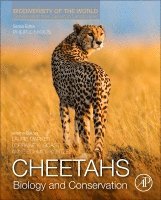
    �Cover photograph by Angela Scott


    • Includes chapters by the world's leading cheetah researchers and practitioners, who have focused their efforts on this high-profile species of conservation concern
    • Provides findings as a combination of scientific detail and basic explanations so that they can be available not only to cheetah researchers and conservationists, but also to policy makers, business leaders, zoo managers, academics, students, and people interested in the cheetah and its future
    • Presents the current knowledge of the species, helping lay the foundations and best practices for cheetah conservation and research worldwide
    • Additional protocols and forms (which were provided by authors) can be found at the Cheetahs: Biology and Conservation companion site: https://www.elsevier.com/books-and-journals/book-companion/9780128040881

    Produktinformation

    • Utgivningsdatum:2017-11-28
    • Mått:191 x 235 x 37 mm
    • Vikt:1 380 g
    • Format:Inbunden
    • Språk:Engelska
    • Serie:Biodiversity of the World: Conservation from Genes to Landscapes
    • Antal sidor:596
    • Förlag:Elsevier Science
    • ISBN:9780128040881

    Utforska kategorier

    • Miljövetenskap och miljöpolitik inom Naturvetenskap och teknik
    • Däggdjur inom Naturvetenskap och teknik
    • Däggdjur inom Djur och Natur

    Mer om författaren

    Philip Nyhus is the Director of the Environmental Studies Program at Colby College in Maine, Maine, US. His interdisciplinary research bridges the natural and social sciences to address human interactions with the environment, including endangered species conservation and recovery, human-wildlife conflict, large landscape conservation, and spatial modelling. He is co-editor of Tigers of the World: The Science, Politics and Conservation of Panthera tigris (2010). Dr. Laurie Marker (DPhil) is a leading expert on the cheetah and Founder and Executive Director of Cheetah Conservation Fund (CCF), the longest running conservation organization dedicated to cheetah survival. From CCF’s International Field Research and Education Centre in Namibia, Dr. Marker develops range-wide solutions to problems threatening the world’s fastest land mammal in collaboration with researchers and conservationists from all over the globe. Dr. Marker earned her DPhil in Zoology from the University of Oxford’s WildCru, and has published more than 100 scientific papers in peer-reviewed journals encompassing cheetah genetics, biology, ecology, health and reproduction, human impact, and species survival. She is an A.D. White Professor-at-Large with Cornell University, chairs the Large Carnivore Management Association of Namibia, serves on Panthera’s Cat Advisory Council, and is a member of the International Union for Conservation of Nature (IUCN) Cat Specialist (core) Group, as well as the Conservation Breeding Specialist Group and Veterinary Specialist Groups. Dr. Marker has received many awards for her research contributions and scientifically-based conservation strategies, including the Tyler Prize for Environmental Achievement, the E.O. Wilson Biodiversity Technology Pioneer Award, and the Ulysses S. Seal Award for Innovation in Conservation. Dr Lorraine Boast (PhD) began a career in cheetah conservation in 2006 with Cheetah Conservation Botswana. Coordinator of the project ‘s research program from 2008 to 2011, she has experience in a broad range of monitoring techniques and their application to cheetahs, including spoor tracking, camera-trapping, scat analysis, questionnaires and mark and recapture. As coordinator of the project’s field base on Botswana farmland, she gained first-hand experience of the complexities of human-cheetah conflict and its mitigation, and completed her PhD on predator conflict on game ranches in 2014. Dr Boast currently resides in China where she is a visiting academic researcher at Beijing Forestry University; her main research interests are big cat conservation focusing on human-wildlife conflict and illegal trade. Dr. Anne Schmidt-Küntzel (DVM, PhD) is the Assistant Director for Animal Health and Research for Cheetah Conservation Fund (CCF), for which she established the Life Technologies Conservation Genetics Laboratory in 2008. She earned her DVM in 2002 from the Veterinary School of Liège in Belgium, and her PhD in Genetics in 2007 from The George Washington University in Washington D.C., under the mentorship of conservation geneticist Dr. Stephen O’Brien. Dr. Schmidt-Küntzel carries out research on a variety of endangered species using techniques ranging from non-invasive genetics to biomedical questions. Her main focus is the status of cheetah genetics and its consequences for conservation, and she was a member of the international collaborative research team responsible for mapping the cheetah genome in 2015. Dr. Schmidt-Küntzel shares her time between CCF’s International Field Research and Education Centre in Namibia and the Washington D.C., metropolitan area of the United States, where she is a Research Associate at the Smithsonian Institute.

    Innehållsförteckning

    • Section 1: the Cheetah1. A Brief History of Cheetah Conservation2. History of the Cheetah–Human Relationship3. The Cheetah: Evolutionary History and Paleoecology4. Cheetah Rangewide Status and Distribution5. Asiatic Cheetahs in Iran: Decline, Current Status and Threats 6. Conservation Genetics of the Cheetah: Genetic History and Implications for Conservation7. Cheetah Specialization: Physiology and Morphology 8. Ecology of Free-Ranging Cheetahs 9. Behavior and Communication of Free-Ranging CheetahsSection 2: Conservation Threats10. Drivers of Habitat Loss and Fragmentation: Implications for the Design of Landscape Linkages for Cheetahs11. The Status of Key Prey Species and the Consequences of Prey Loss for Cheetah Conservation in North and West Africa 12. The Impact of Climate Change on the Conservation and Survival of the Cheetah 13. The Costs and Causes of Human-Cheetah Conflict on Livestock and Game Farms14. Pets and Pelts: Understanding and Combating Poaching and Trafficking in CheetahsSection 3: Conservation Solutions15. Use of Livestock Guarding Dogs to Reduce Human-Cheetah Conflict16. Improved and Alternative Livelihoods: Links Between Poverty Alleviation, Biodiversity and Cheetah Conservation17. Coordination of Large Landscapes for Cheetah Conservation18. Cheetah Conservation and Educational Programs19. Protected Areas for Cheetah Conservation20. Cheetah Translocation and Reintroduction Programs: Past, Present, and Future21. Global Cheetah Conservation Policy: A Review of International Law and EnforcementSection 4: Captive Cheetahs22. History of Cheetahs in Zoos and Demographic Trends Through Managed Captive Breeding Programs23. The Role of Zoos in Cheetah Conservation: Integrating Ex Situ and In Situ Conservation Action24. Clinical Management of Captive Cheetahs25. Diseases Impacting Captive and Free-Ranging Cheetahs26. Nutritional Considerations for Captive Cheetahs27. Reproductive Physiology of the Cheetah and Assisted Reproductive Techniques 28. Communicating the Conservation Message—Using Ambassador Cheetahs to Connect, Teach, and InspireSection 5: Techniques and Analyses29. The Use of Remote Camera Trapping to Study Cheetahs: Past Reflections and Future Directions30. Spoor Tracking to Monitor Cheetah Populations31. Mining Black Gold—Insights from Cheetah Scat Using Noninvasive Techniques in the Field and Laboratory: Scat-Detection Dogs, Genetic Assignment, Diet and Hormone Analyses32. Field Methods for Visual and Remote Monitoring of the Cheetah33. Capture, Care, Collaring, and Collection of Biomedical Samples in Free-Ranging Cheetahs34. Citizen Science in Cheetah Research 35. Social Science Methods to Study Human–Cheetah Interactions36. Spatial and Landscape Analysis: Applications for Cheetah Conservation 37. Now You See them, Soon You Won’t: Statistical and Mathematical Models for Cheetah Conservation Management 38. A Review of Population Viability Analysis and Its Use in Cheetah ConservationSection 6: The Future39. The Conservation Status of the Cheetah40. What Does the Future Hold for the Cheetah?