• Fri frakt över 249 kr
  • •
  • Snabba leveranser
  • •
  • Billiga böcker
Kundservice

Du är på sajten för privatpersoner.

Företag, bibliotek eller offentlig verksamhet?

Du handlar på classic.bokus.com, där alla dina funktioner finns intakta.
Till classic.bokus.com
Bokus logotyp. Gå till startsidan.
  • Erbjudanden
  • Nyheter
  • Student
  • Topplistor
  • Barn & ungdom
  • Bokus Play
  • E-böcker
  • Pocketböcker
  • Spel & pussel

10% rabatt på allt med kod: NYSTART10 →

Sidfot

Mina sidor

    Hjälp

    • Kundservice
    • Vanliga frågor och svar
    • Frakt och leverans
    • Retur vid ångerrätt
    • Reklamera vara
    • Betalning
    • Köpvillkor
    • Allmänna villkor
    • Information om webbplatsens tillgänglighet

    Om Bokus

    • Om oss
    • Pressrum
    • För studenter
    • För företag
    • För bibliotek och offentlig verksamhet
    • För leverantörer
    • Hållbarhet

    Populärt

    • Aktuella erbjudanden
    • Presentkort
    • Studentlitteratur
    • Nya böcker
    • Topplistor
    • Signerade böcker
    • Engelska böcker

    Inspiration

    • Boktips
    • BookTok
    • Populära bokserier
    • Barnbokskaraktärer
    • Populära författare
    Logotyp för Bokus
    Följ oss på Facebook (extern länk)Följ oss på Instagram (extern länk)Följ oss på YouTube (extern länk)Följ oss på TikTok (extern länk)
    bokus @ CookiesAnpassa cookiesIntegritetspolicyKöpvillkor
    Till Citymail hemsida (extern länk)Till Budbee hemsida (extern länk)Till Postnord hemsida (extern länk)Till Schenker hemsida (extern länk)Till Early Bird hemsida (extern länk)Till Walleys hemsida (extern länk)
    1. Juridik
    2. Särskilda rättsområden
    3. Rättsordning

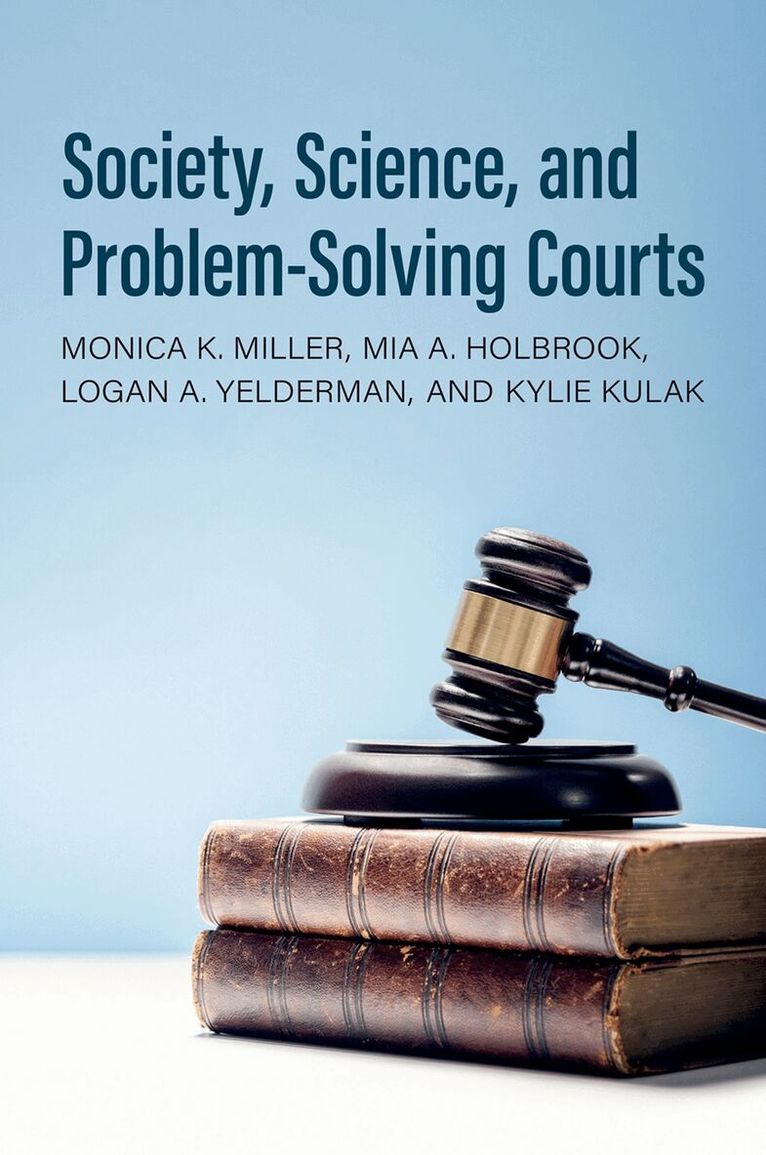
    Society, Science, and Problem-Solving Courts

    AvMonica K. Miller,Mia A. Holbrook

    Inbunden, Engelska, 2025

    587 kr

    Beställningsvara. Skickas inom 5-8 vardagar. Fri frakt över 249 kr.

    Beskrivning

    Problem-solving courts are special courts that do not simply punish offenders, but use other justice principles—like therapeutic jurisprudence and restorative justice—and psychology principles—like anticipated emotion, operant conditioning, and social support—to address underlying social issues that contributed to the crime. The U.S. has numerous types of problem-solving courts, such as drug courts, mental health courts, and homelessness courts. Other countries do not have such courts, have altered versions, or have courts for other issues, like aboriginal courts. Comparison of these courts worldwide shows that many societies address their social issues through courts in dramatically different ways than do problem-solving courts in the U.S. Society, Science, and Problem-Solving Courts takes a broad social science approach to explain what societal factors brought about development of the wide variety of problem-solving courts, and what factors prevent such development or make problem-solving courts unnecessary. The book also investigates the role of science and technology in the development, enforcement, and evaluation of problem-solving courts. It is this combination of society and science that makes problem-solving courts possible.

    Produktinformation

    • Utgivningsdatum:2025-02-04
    • Mått:168 x 242 x 27 mm
    • Vikt:662 g
    • Format:Inbunden
    • Språk:Engelska
    • Antal sidor:352
    • Förlag:OUP USA
    • ISBN:9780190059804

    Utforska kategorier

    • Rättsordning inom Juridik
    • Lag och samhälle inom Juridik
    • Arbetspsykologi inom Psykologi och pedagogik

    Mer om författaren

    Monica K. Miller joined the University of Nevada, Reno in 2004 after receiving her J.D. and PhD from the University of Nebraska system. Her interests involve the application of psychological theories and justice principles to laws, policies, and court procedures. Specifically, she is interested in social cognitive biases (i.e., gender and religion-based prejudice) and individual differences in moral and legal decisions (e.g., jury decisions); how the law regulates the family; how community sentiment and science relate to law; how problem-solving courts address social issues; and the well-being of those who interact with the legal system (including the use of therapy dogs).Mia A. Holbrook joined the University of Nevada, Reno in 2019 after receiving her PhD in Criminal Justice and Criminology from Washington State University. Dr. Holbrook's research interests and expertise lie in evidence-based practices and model fidelity; program and policy evaluation; equitable practices in the criminal justice system; problem-solving and specialty courts; organizational trust & collaboration; perceptions & attitudes; and instrument validation.Logan A. Yelderman earned his BA in Psychology and Communication Specialist in 2011 from Baylor University and his PhD in Social Psychology in 2016 from the University of Nevada, Reno. His research interests involve topics at the intersection of social psychology, religion, and law with an emphasis on legal decision-making. His research typically includes experimental and non-experimental designs related to jury and parole decision-making, juvenile drug courts, religious fundamentalism, and the interplay between cognition and emotion.Kylie Kulak earned her BA in Psychology at Fresno State University in 2020, her MS in Psychology at Arizona State University in 2022, and is currently a Social Psychology doctoral student at the University of Nevada, Reno. Her research interests focus on emotions and extralegal factors that can influencejury decision-making, such as race and gender. She also has an interest in the therapeutic effects of facility dogs in the legal system.

    Innehållsförteckning

    • Section 1: Introduction to Problem-Solving CourtsChapter 1: Society, Science, and Problem-solving Courts in the U.S. and AbroadChapter 2: Overview of the Types of Problem-Solving Courts Mia A. Holbrook and Mary Dhondt Section 2: The Science of Problem-Solving CourtsChapter 3: The Justice Principles of Problem-Solving Courts Logan A. Yelderman, Mia A. Holbrook, Jennifer L. Lanterman, Alicia DeVault, Monica K. MillerChapter 4:The Psychology of Problem-Solving CourtsChapter 5: Scientific Methodology used in Evaluations and Problem-Solving CourtsChapter 6: Effectiveness of Problem-Solving Courts Mia A. Holbrook and Mary Dhondt Section 3: Society and Problem-Solving CourtsChapter 7: When Law and Culture CollideChapter 8: Problem-Solving Courts and the Social Mind-set Model Monica K Miller, Kylie Kulak, and Amber Westbrook Section 4: The Development (or Not) of Problem-solving CourtsChapter 9: Why Some Countries Have Problem-solving Courts Waleed Jami, Kylie Kulak, and Monica K. MillerChapter 10: Why Some Countries Do Not Have Problem-solving Courts Section 5: Problem-solving Courts: Looking to the Future by Looking at the PastChapter 11: The Benefits (Pros) and Drawbacks (Cons) of Problem-Solving Courts: A Scientific Understanding of Variations in Perspectives Across Societies ConclusionChapter 12: Society, Science, and Problem-solving Courts: Yesterday, Today, and Tomorrow References