• Fri frakt över 249 kr
  • •
  • Snabba leveranser
  • •
  • Billiga böcker
Kundservice

Du är på sajten för privatpersoner.

Företag, bibliotek eller offentlig verksamhet?

Du handlar på classic.bokus.com, där alla dina funktioner finns intakta.
Till classic.bokus.com
Bokus logotyp. Gå till startsidan.
  • Erbjudanden
  • Nyheter
  • Student
  • Topplistor
  • Barn & ungdom
  • Bokus Play
  • E-böcker
  • Pocketböcker
  • Spel & pussel

10% rabatt på allt med kod: NYSTART10 →

Sidfot

Mina sidor

    Hjälp

    • Kundservice
    • Vanliga frågor och svar
    • Frakt och leverans
    • Retur vid ångerrätt
    • Reklamera vara
    • Betalning
    • Köpvillkor
    • Allmänna villkor
    • Information om webbplatsens tillgänglighet

    Om Bokus

    • Om oss
    • Pressrum
    • För studenter
    • För företag
    • För bibliotek och offentlig verksamhet
    • För leverantörer
    • Hållbarhet

    Populärt

    • Aktuella erbjudanden
    • Presentkort
    • Studentlitteratur
    • Nya böcker
    • Topplistor
    • Signerade böcker
    • Engelska böcker

    Inspiration

    • Boktips
    • BookTok
    • Populära bokserier
    • Barnbokskaraktärer
    • Populära författare
    Logotyp för Bokus
    Följ oss på Facebook (extern länk)Följ oss på Instagram (extern länk)Följ oss på YouTube (extern länk)Följ oss på TikTok (extern länk)
    bokus @ CookiesAnpassa cookiesIntegritetspolicyKöpvillkor
    Till Citymail hemsida (extern länk)Till Budbee hemsida (extern länk)Till Postnord hemsida (extern länk)Till Schenker hemsida (extern länk)Till Early Bird hemsida (extern länk)Till Walleys hemsida (extern länk)
    1. Ekonomi och Ledarskap
    2. Nationalekonomi

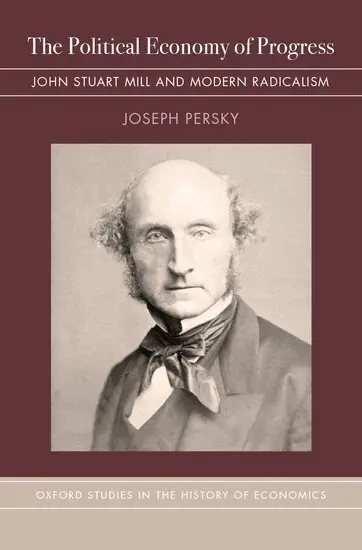
    The Political Economy of Progress

    John Stuart Mill and Modern Radicalism

    AvJoseph Persky

    Inbunden, Engelska, 2016

    Del i serien Oxford Studies in History of Economics

    2 070 kr

    Beställningsvara. Skickas inom 3-6 vardagar. Fri frakt över 249 kr.

    Beskrivning

    While there had been much radical thought before John Stuart Mill, Joseph Persky argues it was Mill, as he moved to the left, who provided the radical wing of liberalism with its first serious analytical foundation, a political economy of progress that still echoes today. A rereading of Mill's mature work suggests his theoretical understanding of accumulation led him to see laissez-faire capitalism as a transitional system. Deeply committed to the egalitarian precepts of the Enlightenment, Mill advocated gradualism and rejected revolutionary expropriation on utilitarian grounds: gradualism, not expropriation, promised meaningful long-term gains for the working classes. He endorsed laissez-faire capitalism because his theory of accumulation saw that system approaching a stationary state characterized by a great reduction in inequality and an expansion of cooperative production. These tendencies, in combination with an aggressive reform agenda made possible by the extension of the franchise, promised to provide a material base for social progress and individual development.The Political Economy of Progress goes on to claim that Mill's radical political economy anticipated more than a little of Marx's analysis of capitalism and laid a foundation for the work of Fabians and other gradualist radicals in the 20th century. More recently, modern philosophic radicals, such as Rawls, have deep links to this Millean political economy. These links are still worthy of development. In particular, a politically meaningful acceptance of Rawls's radical liberalism waits on a movement capable of re-engineering the workplace in a manner consistent with Mill's endorsement of worker management.

    Produktinformation

    • Utgivningsdatum:2016-07-07
    • Mått:160 x 236 x 22 mm
    • Vikt:499 g
    • Format:Inbunden
    • Språk:Engelska
    • Serie:Oxford Studies in History of Economics
    • Antal sidor:272
    • Förlag:OUP USA
    • ISBN:9780190460631

    Utforska kategorier

    • Nationalekonomi inom Ekonomi och Ledarskap
    • Liberalism och centerideologier inom Samhälle och politik
    • Filosofiska discipliner inom Filosofi och religion

    Mer om författaren

    Joseph Persky is Professor of Economics at the University of Illinois at Chicago. Professor Persky's work takes distributional questions as central to both history and current policy. His articles have appeared in a number of journals, including the American Economics Association's Journal of Economic Perspectives, where he is the informal editor of the Retrospectives feature. He is the author of The Burden of Dependency, an exploration of the history of economic thought in the Southern U.S. He is a co-author of When Corporations Leave Town, and Does "Trickle Down " Work?, both concerned with distributional implications of metropolitan economic development strategies. Persky's politics slant to the labor left.

    Recensioner i media

    "Stressing Mill's historically situated political economy and his theories of the path of progressive social justice, Persky compares Mill to a wide-ranging cast of philosophers and economists in his own time and today. It includes both institutional and moral transformation ranging from producer-owned cooperatives and family life to the evolution of social and moral psychology to embrace growing egalitarian sympathies that require increasing materialredistributions. Summing up: Highly recommended." --CHOICE"Joseph Persky's Political Economy of Progress is a thoughtful and provocative reflection on problems with modern radical thought, and how a sympathetic reading of John Stuart Mill can provide some needed coherence. It is definitely worth reading." -- David Colander, Christian A Johnson Distinguished Professor of Economics, Middlebury College"Like Fleischacker on Smith, Persky on Mill claims the man for the left. The claim is certainly correct, and is here thoroughly argued, exhibiting the generosity and thoughtfulness characteristic of Perksy's scholarship. Mill was simultaneously the apotheosis of laissez-faire and the beginning of its long descent. Some of us think the descent was ill-considered. To understand it, though, Persky's is the essential book, a pleasure to read from beginning to end." -- Deirdre McCloskey, Distinguished Professor of Economics, History, English, and Communication Emerita, University of Illinois at Chicago"This fine book straddles the disciplines of intellectual history and political philosophy. Persky's original and insightful discussion of how John Stuart Mill reconciled the tension between his progressivism and his commitment to liberalism will be of considerable interest to scholars of Mill and of Utilitarianism in general. The book's argument that Utilitarianism provides the most robust grounding for the design of public policy opens up a useful debate onwhat philosophical principles should underpin social and economic policymaking. An excellent chapter on Mill and Fabianism illustrates the author's intriguing hypothesis that modern radicalism isreformist rather than revolutionary. This book is sure to find favor with intellectual historians and political philosophers who specialize in Mill and themes of social justice." -- Gary Mongiovi, Professor of Economics, St John's University"Persky's book marks a significant advance in our knowledge of John Stuart Mill and of his place in the history of economic thought. It argues convincingly that Mill made important additions to the work of his predecessors, and that these additions make Mill's work of great interest and relevance today." -- Steven Pressman, Emeritus Professor of Economics and Finance, Monmouth University and Professor of Economics, Colorado State University"A thoroughly researched account of J. S. Mill's reformism and a vindication of its relevance for modern radicalism. The book, written in a clear and crisp style, encompasses intellectual history, political philosophy, and history of economic thought." - Daniela Donnini Maccio, European Journal of the History of Economic Thought

    Innehållsförteckning

    • PROLOGUE: Modern Radicalism and Mill PART 1: THE UTILITARIAN READING OF ACCUMULATION Chapter 1: Antecedents Chapter 2: The Greatest Happiness of the Greatest Number Chapter 3: Bentham's Liberal Triumphalism Chapter 4: Utilitarian Perspectives on Private Property Chapter 5: Mill's Radical Case for Laissez-Faire Capitalism PART II: PROGRESS AND RADICAL REFORM Chapter 6: Inheritance and LandChapter 7: Poverty, the Poor Laws, and the Family Chapter 8: The Education of the Working ClassesChapter 9: Cooperatives, Unions and Economic Democracy PART III: ECHOESChapter 10: Marx and MillChapter 11: The Fabians, Early and LateChapter 12: Rawls and the Means of ProductionChapter 13: Radical Luck MILL'S VISION BIBLIOGRAPHY