• Fri frakt över 249 kr
  • •
  • Snabba leveranser
  • •
  • Billiga böcker
Kundservice

Du är på sajten för privatpersoner.

Företag, bibliotek eller offentlig verksamhet?

Du handlar på classic.bokus.com, där alla dina funktioner finns intakta.
Till classic.bokus.com
Bokus logotyp. Gå till startsidan.
  • Erbjudanden
  • Nyheter
  • Student
  • Topplistor
  • Barn & ungdom
  • Bokus Play
  • E-böcker
  • Pocketböcker
  • Spel & pussel

10% rabatt på allt med kod NYSTART10 →

Sidfot

Mina sidor

    Hjälp

    • Kundservice
    • Vanliga frågor och svar
    • Frakt och leverans
    • Retur vid ångerrätt
    • Reklamera vara
    • Betalning
    • Köpvillkor
    • Allmänna villkor
    • Information om webbplatsens tillgänglighet

    Om Bokus

    • Om oss
    • Pressrum
    • För studenter
    • För företag
    • För bibliotek och offentlig verksamhet
    • För leverantörer
    • Hållbarhet

    Populärt

    • Aktuella erbjudanden
    • Presentkort
    • Studentlitteratur
    • Nya böcker
    • Topplistor
    • Signerade böcker
    • Engelska böcker

    Inspiration

    • Boktips
    • BookTok
    • Populära bokserier
    • Barnbokskaraktärer
    • Populära författare
    Logotyp för Bokus
    Följ oss på Facebook (extern länk)Följ oss på Instagram (extern länk)Följ oss på YouTube (extern länk)Följ oss på TikTok (extern länk)
    bokus @ CookiesAnpassa cookiesIntegritetspolicyKöpvillkor
    Till Citymail hemsida (extern länk)Till Budbee hemsida (extern länk)Till Postnord hemsida (extern länk)Till Schenker hemsida (extern länk)Till Early Bird hemsida (extern länk)Till Walleys hemsida (extern länk)
    1. Ekonomi och Ledarskap
    2. Nationalekonomi
    3. Ekonomisk politik

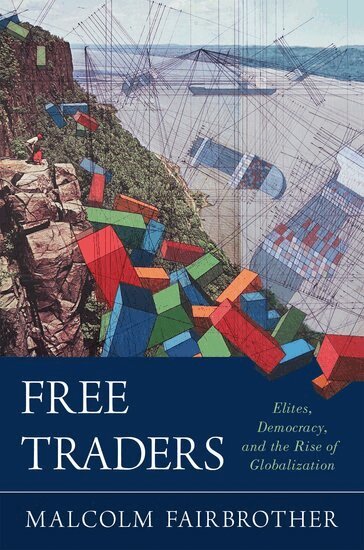
    Free Traders

    Elites, Democracy, and the Rise of Globalization in North America

    AvMalcolm Fairbrother

    Häftad, Engelska, 2019

    380 kr

    Skickas . Fri frakt över 249 kr.

    Fler format och utgåvor

    Inbunden

    1 790 kr

    E-bok

    316 kr

    E-bok

    316 kr

    Beskrivning

    Today's global economy was largely established by political events and decisions in the 1980s and 90s, when scores of nations opened up their economies to the forces of globalization. In Free Traders, Malcolm Fairbrother argues that politicians' embrace of globalization was much less motivated by public preferences than by the agendas of businesspeople and other elites. Drawing on over one hundred interviews with decision-makers, and analyses of archival materials from Canada, Mexico, and the U.S., Fairbrother tells the story of how each country negotiated and ratified two agreements that substantially opened and integrated their economies: the 1989 Canada-U.S. and trilateral 1994 North American Free Trade Agreement. Contrary to what many commentators believe, these agreements-like free trade elsewhere-were based less on mainstream, neoclassical economics than on the informal, self-serving economic ideas of business. While the stakes in the globalization debate remain high, Free Traders uses a comparative-historical approach to sharpen our understanding of how globalization arose in the past to provide us with clearer trajectory for how it will develop in the future.

    Produktinformation

    • Utgivningsdatum:2019-10-09
    • Mått:155 x 231 x 17 mm
    • Vikt:386 g
    • Format:Häftad
    • Språk:Engelska
    • Antal sidor:272
    • Förlag:OUP USA
    • ISBN:9780190635466

    Utforska kategorier

    • Ekonomisk politik inom Ekonomi och Ledarskap
    • Sociologi inom Samhälle och politik
    • Statsvetenskap och politisk teori inom Samhälle och politik

    Mer om författaren

    Malcolm Fairbrother is a professor of sociology at Umeå University, Sweden, and the University of Graz, Austria. He is also a researcher at the Institute for Futures Studies, Stockholm.

    Recensioner i media

    This excellent study dissects the role that businesses, economists, and political elites each played in constructing hyper-globalization. Fairbrother eschews easy generalizations, yet provides a unified and convincing account that challenges accepted theories.