• Fri frakt över 249 kr
  • •
  • Snabba leveranser
  • •
  • Billiga böcker
Kundservice

Du är på sajten för privatpersoner.

Företag, bibliotek eller offentlig verksamhet?

Du handlar på classic.bokus.com, där alla dina funktioner finns intakta.
Till classic.bokus.com
Bokus logotyp. Gå till startsidan.
  • Erbjudanden
  • Nyheter
  • Student
  • Topplistor
  • Barn & ungdom
  • Bokus Play
  • E-böcker
  • Pocketböcker
  • Spel & pussel

10% studentrabatt med kod TERM26

Sidfot

Mina sidor

    Hjälp

    • Kundservice
    • Vanliga frågor och svar
    • Frakt och leverans
    • Retur vid ångerrätt
    • Reklamera vara
    • Betalning
    • Köpvillkor
    • Allmänna villkor
    • Information om webbplatsens tillgänglighet

    Om Bokus

    • Om oss
    • Pressrum
    • För studenter
    • För företag
    • För bibliotek och offentlig verksamhet
    • För leverantörer
    • Hållbarhet

    Populärt

    • Aktuella erbjudanden
    • Presentkort
    • Studentlitteratur
    • Nya böcker
    • Topplistor
    • Signerade böcker
    • Engelska böcker

    Inspiration

    • Boktips
    • BookTok
    • Populära bokserier
    • Barnbokskaraktärer
    • Populära författare
    Logotyp för Bokus
    Följ oss på Facebook (extern länk)Följ oss på Instagram (extern länk)Följ oss på YouTube (extern länk)Följ oss på TikTok (extern länk)
    bokus @ CookiesAnpassa cookiesIntegritetspolicyKöpvillkor
    Till Citymail hemsida (extern länk)Till Budbee hemsida (extern länk)Till Postnord hemsida (extern länk)Till Schenker hemsida (extern länk)Till Early Bird hemsida (extern länk)Till Walleys hemsida (extern länk)
    1. Kultur
    2. Musikböcker
    3. Musik: stilar och genrer
    4. Klassisk musik, konstmusik och orkestermusik

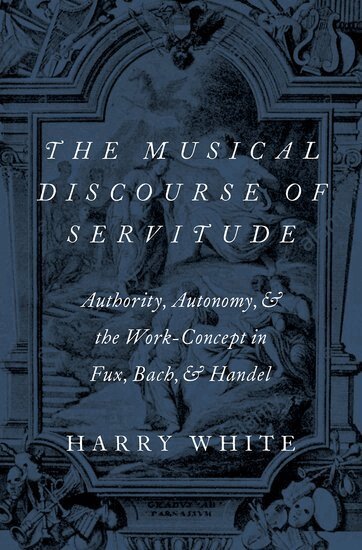
    The Musical Discourse of Servitude

    Authority, Autonomy, and the Work-Concept in Fux, Bach and Handel

    AvHarry White

    Inbunden, Engelska, 2020

    1 230 kr

    Beställningsvara. Skickas inom 5-8 vardagar. Fri frakt över 249 kr.

    Beskrivning

    Examining, for the first time, the compositions of Johann Joseph Fux in relation to his contemporaries Bach and Handel, The Musical Discourse of Servitude presents a new theory of the late baroque musical imagination. Author Harry White contrasts musical "servility" and "freedom" in his analysis, with Fux tied to the prevailing servitude of the day's musical imagination, particularly the hegemonic flowering of North Italian partimento method across Europe. In contrast, both Bach and Handel represented an autonomy of musical discourse, with Bach exhausting generic models in the mass and Handel inventing a new genre in the oratorio. A potent critique of Lydia Goehr's seminal The Imaginary Museum of Musical Works, The Musical Discourse of Servitude draws on Goehr's formulation of the "work-concept" as an imaginary construct which, according to Goehr, is an invention of nineteenth-century reception history. White locates this concept as a defining agent of automony in Bach's late works, and contextualized the "work-concept" itself by exploring rival concepts of political, religious, and musical authority which define the European musical imagination in the first half of the eighteenth century. A major revisionist statement about the musical imagination in Western art music, The Musical Discourse of Servitude will be of interest to scholars of the Baroque, particularly of Bach and Handel.

    Produktinformation

    • Utgivningsdatum:2020-11-05
    • Mått:241 x 160 x 17 mm
    • Vikt:454 g
    • Format:Inbunden
    • Språk:Engelska
    • Antal sidor:326
    • Förlag:OUP USA
    • ISBN:9780190903879

    Utforska kategorier

    • Klassisk musik, konstmusik och orkestermusik inom Kultur
    • Tonsättare och låtskrivare inom Kultur
    • Musikvetenskap inom Kultur

    Mer om författaren

    Harry White is Professor of Music at University College Dublin and a Fellow of the Royal Irish Academy of Music. He is widely acclaimed as the foremost cultural historian of music in Ireland.

    Recensioner i media

    Harry White has the unusual and idiosyncratic ability to link cultural debates about servitude and autonomy to very specific moments in the music of three of the greatest musical figures of the eighteenth century. He not only achieves the seemingly impossible task of integrating J. S. Bach and Handel into one discussion, but goes even further by introducing Fux, a figure who had the tenacity to derive creative capital from the highest degree of musical servitude. We learn about political power, religious prescription, drama, poetry, and the emerging power of autonomous musical works-all articulated with a literary flair that is rare in musicological discourse.

    Innehållsförteckning

    • Preface & Acknowledgements Introduction: Servitude, Autonomy and the European Musical ImaginationChapter 1: The Minstrelsy of Heaven: Servility, Freedom and the Dynastic Style Chapter 2: The Virtuoso of Submissiveness: Fux and the Concept of AuthorityChapter 3: The Steward of Unmeaning Art: Bach and the Musical SubjectChapter 4: 'A Darkness Which Might be Felt': Handel, Fux and the OratorioChapter 5: Steps to Parnassus: Fux, Caldara and BachConclusion: Well, well, well: Fux, Bach and Handel Select BibliographySelect Index