• Fri frakt över 249 kr
  • •
  • Snabba leveranser
  • •
  • Billiga böcker
Kundservice

Du är på sajten för privatpersoner.

Företag, bibliotek eller offentlig verksamhet?

Du handlar på classic.bokus.com, där alla dina funktioner finns intakta.
Till classic.bokus.com
Bokus logotyp. Gå till startsidan.
  • Erbjudanden
  • Nyheter
  • Student
  • Topplistor
  • Barn & ungdom
  • Bokus Play
  • E-böcker
  • Pocketböcker
  • Spel & pussel

10% rabatt på allt med kod NYSTART10 →

Sidfot

Mina sidor

    Hjälp

    • Kundservice
    • Vanliga frågor och svar
    • Frakt och leverans
    • Retur vid ångerrätt
    • Reklamera vara
    • Betalning
    • Köpvillkor
    • Allmänna villkor
    • Information om webbplatsens tillgänglighet

    Om Bokus

    • Om oss
    • Pressrum
    • För studenter
    • För företag
    • För bibliotek och offentlig verksamhet
    • För leverantörer
    • Hållbarhet

    Populärt

    • Aktuella erbjudanden
    • Presentkort
    • Studentlitteratur
    • Nya böcker
    • Topplistor
    • Signerade böcker
    • Engelska böcker

    Inspiration

    • Boktips
    • BookTok
    • Populära bokserier
    • Barnbokskaraktärer
    • Populära författare
    Logotyp för Bokus
    Följ oss på Facebook (extern länk)Följ oss på Instagram (extern länk)Följ oss på YouTube (extern länk)Följ oss på TikTok (extern länk)
    bokus @ CookiesAnpassa cookiesIntegritetspolicyKöpvillkor
    Till Citymail hemsida (extern länk)Till Budbee hemsida (extern länk)Till Postnord hemsida (extern länk)Till Schenker hemsida (extern länk)Till Early Bird hemsida (extern länk)Till Walleys hemsida (extern länk)
    1. Kultur
    2. Konstböcker
    3. Konsthistoria

    Technological Animation in Classical Antiquity

    AvTatiana Bur,Maria Gerolemou

    Inbunden, Engelska, 2024

    1 785 kr

    Beställningsvara. Skickas inom 5-8 vardagar. Fri frakt över 249 kr.

    Beskrivning

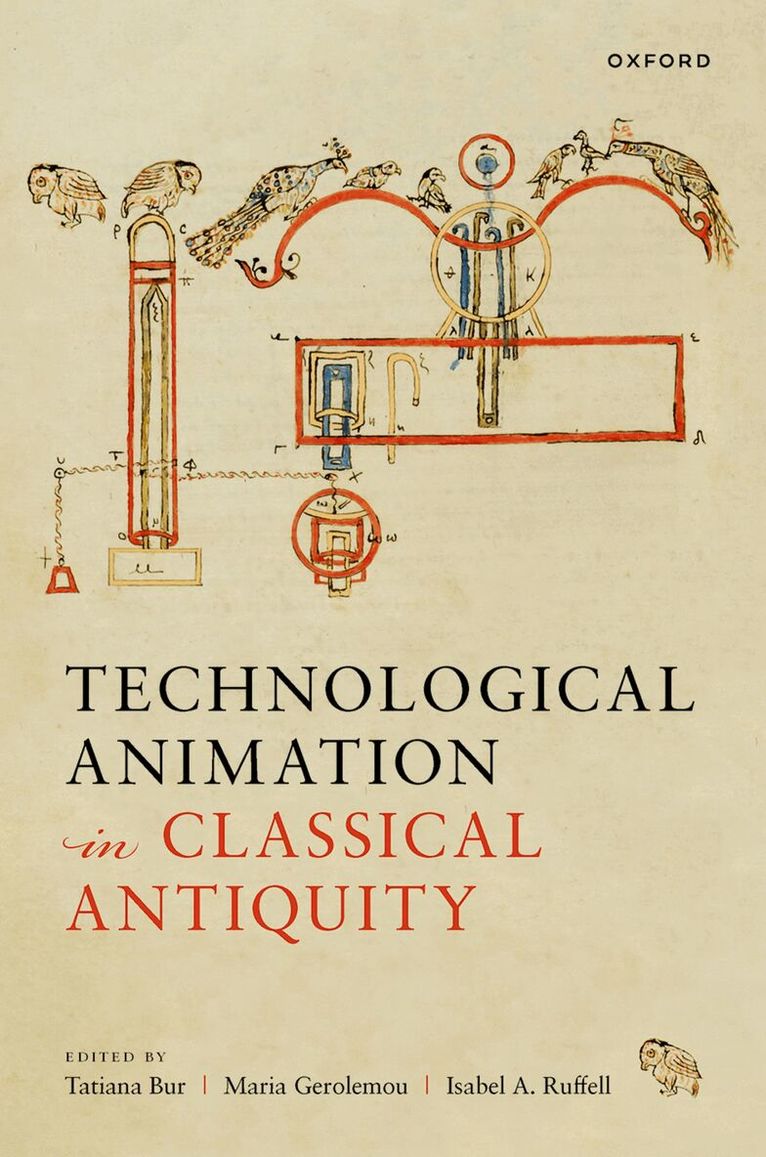
    The persistent desire to animate inanimate objects has been a recurring theme in European culture dating back to ancient Greek and Roman times. Technological Animation in Classical Antiquity aims to establish, for the first time, the significance of this aspiration and its practical realization within Greek and Roman societies. While certain aspects of this narrative have been explored previously, this study shifts the focus to place technological animation at the forefront. The sixteen chapters examine the tangible existence of such devices across various media and considers their roles in diverse contexts, delving into the reciprocal relationship between technological and material realities, and its influence on the concept of animation and vice versa. By adopting this perspective, technological animation not only provides a new understanding of the processes behind animation but also lends a fresh perspective to the animated artifact. In contrast to other types of animation, where the technologically animated artifact is often dismissed as a perceptual error induced, for instance, by rhetoric or magic, this study separates technological animation from notions of rhetorical or magical skills, theurgy, or divine intervention. Specifically, it concentrates on a subset of artificial animation solely produced through technical procedures, exploring how various motive forces actively contributed to giving objects agency and impacting their viewers, illuminating how the material conditions of the artifacts themselves played a role in the process of technological animation--whether through the distinctive materiality of bronze or the design of a statuette's hinge.

    Produktinformation

    • Utgivningsdatum:2024-10-31
    • Mått:162 x 242 x 25 mm
    • Vikt:864 g
    • Format:Inbunden
    • Språk:Engelska
    • Antal sidor:432
    • Förlag:OUP OXFORD
    • ISBN:9780192857552

    Utforska kategorier

    • Konsthistoria inom Kultur
    • Forntidens historia inom Historia och arkeologi
    • Naturvetenskapens historia inom Naturvetenskap och teknik

    Mer om författaren

    Tatiana Bur is Lecturer in Classics at the Australian National University. Prior to this, she was the Moses and Mary Finley Research Fellow at Darwin College, University of Cambridge.Maria Gerolemou is a Visiting Assistant Professor in the Classics Department at Johns Hopkins University. She has been a Fellow at the Centre for Hellenic Studies, Harvard University and a Margo Tytus Fellow at the University of Cincinnati. She has held teaching positions at the University of Exeter, the University of Cyprus, and the University of Munich.Isabel Ruffell is Professor of Greek Drama and Culture at the University of Glasgow, where she has worked since 2001.

    Innehållsförteckning

    • Maria Gerolemou: Introducing the Technology of Animation in Classical Antiquity I. Theories 1: The Axe's Heart Work: On Craft Similes, Techna, and Animation in the iliad 2: Richard Seaford†: The Ideology of Automata: From Mesopotamia to Aristotle 3: Jean De Groot: An Ancient Grammar of Animation and Technē 4: Gabriele Galluzzo: Automatic Puppets, Toy Carts, and Robots: Aristotle's Metaphysics of Artefacts and the Question of Automata 5: Courtney Roby: Strange Loops: Experiment and Program in Hero of Alexandria's Automata II. Contexts 6: Maya Muratov: From 'Dolls' to Puppets: Mechanisms and Purpose of Articulated Terracotta Figurines in Antiquity 7: Colin Webster: Manufacturing Motion in Aristotle's De Motu Animalium 8: Maria Gerolemou: Technolarynges in Classical Antiquity 9: Antje Wessels: Speaking Doors: Voice and Materiality in Ancient Literature 10: Francesco Grillo and Costas Panayotakis: Automata and other Technological Devices in Trimalchio's Dinner Party 11: Carol C. Mattusch: Dead or Alive? Giving Life to Bronze III. Audiences 12: Deborah Steiner: Affecting Artefacts: Interacting with Objects in Archaic and Early Classical Greece 13: Seungjung Kim: Visualising Time: The Lysippan Kairos in the Scientific Landscape of the Fourth Century BCE 14: Isabel A. Ruffell: Trains and Boats and Planes: Animating the Ship in Greek Culture 15: Tatiana Bur: The Importance of the Construct: Technological Animation in Ancient Religious Contexts 16: Sylvia Berryman: Devising Nature