• Fri frakt över 249 kr
  • •
  • Snabba leveranser
  • •
  • Billiga böcker
Kundservice

Du är på sajten för privatpersoner.

Företag, bibliotek eller offentlig verksamhet?

Du handlar på classic.bokus.com, där alla dina funktioner finns intakta.
Till classic.bokus.com
Bokus logotyp. Gå till startsidan.
  • Erbjudanden
  • Nyheter
  • Student
  • Topplistor
  • Barn & ungdom
  • Bokus Play
  • E-böcker
  • Pocketböcker
  • Spel & pussel

10% rabatt på allt med kod: NYSTART10 →

Sidfot

Mina sidor

    Hjälp

    • Kundservice
    • Vanliga frågor och svar
    • Frakt och leverans
    • Retur vid ångerrätt
    • Reklamera vara
    • Betalning
    • Köpvillkor
    • Allmänna villkor
    • Information om webbplatsens tillgänglighet

    Om Bokus

    • Om oss
    • Pressrum
    • För studenter
    • För företag
    • För bibliotek och offentlig verksamhet
    • För leverantörer
    • Hållbarhet

    Populärt

    • Aktuella erbjudanden
    • Presentkort
    • Studentlitteratur
    • Nya böcker
    • Topplistor
    • Signerade böcker
    • Engelska böcker

    Inspiration

    • Boktips
    • BookTok
    • Populära bokserier
    • Barnbokskaraktärer
    • Populära författare
    Logotyp för Bokus
    Följ oss på Facebook (extern länk)Följ oss på Instagram (extern länk)Följ oss på YouTube (extern länk)Följ oss på TikTok (extern länk)
    bokus @ CookiesAnpassa cookiesIntegritetspolicyKöpvillkor
    Till Citymail hemsida (extern länk)Till Budbee hemsida (extern länk)Till Postnord hemsida (extern länk)Till Schenker hemsida (extern länk)Till Early Bird hemsida (extern länk)Till Walleys hemsida (extern länk)
    1. Naturvetenskap och teknik
    2. Matematik och naturvetenskap
    3. Naturvetenskap:allmänt
    4. Populärvetenskap

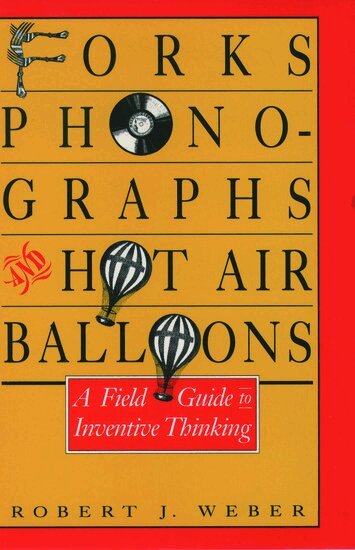
    Forks, Phonographs, and Hot Air Balloons

    A Field Guide to Inventive Thinking

    AvRobert J. Weber

    Inbunden, Engelska, 1993

    902 kr

    Beställningsvara. Skickas inom 5-8 vardagar. Fri frakt över 249 kr.

    Fler format och utgåvor

    E-bok

    462 kr

    Beskrivning

    Wheels, doorknobs, forks, and sewing needles are such everyday items that we rarely bother to wonder how they were invented. But where did the idea for the tea bag come from? Or the waterscrew, synthesizers, or genetic engineering? Drawing on hundreds of examples, this intriguing book sheds new light on human ingenuity from the Stone Age to the present day. Arguing that all inventions are the result of the same basic principles rather than random inspiration, cognitive psychologist Robert Weber reveals our mind's amazing capacity for problem-solving, and encourages us to take a fresh look at the world around us and tap into our own creativity.

    Produktinformation

    • Utgivningsdatum:1993-04-29
    • Mått:162 x 241 x 27 mm
    • Vikt:608 g
    • Format:Inbunden
    • Språk:Engelska
    • Antal sidor:296
    • Förlag:OUP USA
    • ISBN:9780195064025

    Utforska kategorier

    • Populärvetenskap inom Naturvetenskap och teknik
    • Psykologisk metod inom Psykologi och pedagogik
    • Naturvetenskap:allmänt inom Naturvetenskap och teknik

    Mer om författaren

    About the Author: Robert J. Weber is Professor of Psychology at Oklahoma State University. He is the coeditor with David Perkins of Inventive Minds: Creativity in Technology.

    Recensioner i media

    'It is difficult to evaluate how well Weber's ideas would work as predictors of future developments, but as explanations of past events, his arguments have a sense of logic and insight. Even if his hindsight is better than his foresight, this is an interesting and entertaining work.'Hilary D. Barton, Lawrence Livermore National Lab, Library Journal

    Innehållsförteckning

    • THE HIDDEN INTELLIGENCE OF INVENTION: A context for invention; Novice invention and a problem-based diary; Expert invention and the turn of the screw; AN INVENTION FRAMEWORK: Describing an invention; Evaluating and comparing inventions; Understanding the created world; THE HEURISTICS OF INVENTION: Heuristics as the engine of variation; Single-invention heuristics; Multiple-invention heuristics: linking; Multiple-invention heuristics: joining; Transformational heuristics; Discovering heuristics; Applting heuristics; inventions after their time?; COMMON INVENTION THEMES: A material world; The interface's from; The art of containment; Procedure's way; Transgenic myth to transgenic mouse; Epilogue: Invention through the looking glass; Notes; References; Index.