• Fri frakt över 249 kr
  • •
  • Snabba leveranser
  • •
  • Billiga böcker
Kundservice

Du är på sajten för privatpersoner.

Företag, bibliotek eller offentlig verksamhet?

Du handlar på classic.bokus.com, där alla dina funktioner finns intakta.
Till classic.bokus.com
Bokus logotyp. Gå till startsidan.
  • Erbjudanden
  • Nyheter
  • Student
  • Topplistor
  • Barn & ungdom
  • Bokus Play
  • E-böcker
  • Pocketböcker
  • Spel & pussel

10% rabatt på allt med kod: NYSTART10 →

Sidfot

Mina sidor

    Hjälp

    • Kundservice
    • Vanliga frågor och svar
    • Frakt och leverans
    • Retur vid ångerrätt
    • Reklamera vara
    • Betalning
    • Köpvillkor
    • Allmänna villkor
    • Information om webbplatsens tillgänglighet

    Om Bokus

    • Om oss
    • Pressrum
    • För studenter
    • För företag
    • För bibliotek och offentlig verksamhet
    • För leverantörer
    • Hållbarhet

    Populärt

    • Aktuella erbjudanden
    • Presentkort
    • Studentlitteratur
    • Nya böcker
    • Topplistor
    • Signerade böcker
    • Engelska böcker

    Inspiration

    • Boktips
    • BookTok
    • Populära bokserier
    • Barnbokskaraktärer
    • Populära författare
    Logotyp för Bokus
    Följ oss på Facebook (extern länk)Följ oss på Instagram (extern länk)Följ oss på YouTube (extern länk)Följ oss på TikTok (extern länk)
    bokus @ CookiesAnpassa cookiesIntegritetspolicyKöpvillkor
    Till Citymail hemsida (extern länk)Till Budbee hemsida (extern länk)Till Postnord hemsida (extern länk)Till Schenker hemsida (extern länk)Till Early Bird hemsida (extern länk)Till Walleys hemsida (extern länk)
    1. Naturvetenskap och teknik
    2. Geovetenskap
    3. Miljövetenskap och miljöpolitik

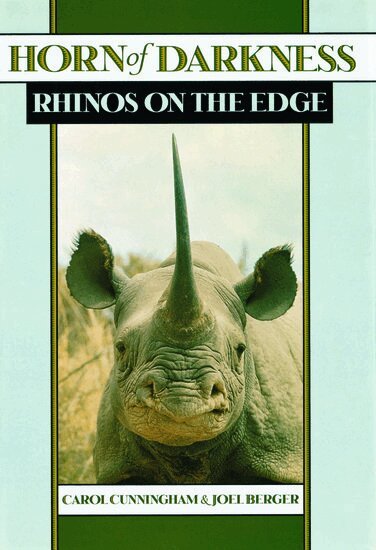
    Horn of Darkness

    Rhinos on the Edge

    AvCarol Cunningham,Joel Berger

    Häftad, Engelska, 2000

    756 kr

    Beställningsvara. Skickas inom 5-8 vardagar. Fri frakt över 249 kr.

    Fler format och utgåvor

    Inbunden

    456 kr

    Beskrivning

    The world's rhinoceroses face extinction because a part of their anatomy is valued too much. Poachers hunt and slaughter them because their horns are treasured. Once an estimated 100,000 black rhinos roamed from the Sahara to the Cape of Good Hope but onw less than 3% remain. In all of Africa, there is but a single unfenced population numbering more than 100 individuals, in the inhospitable barrens of the Namib Desert. In 1989 a radical strategy was developed - cutting the horns. The rationale is simple. If a rhino has no horns, the incentive to kill it should disappear. What has since unfolded is a biological and political drama. Carol Cunningham and Joel Berger describe their quest to help conserve Africa's black rhinos in a book that is both an adventure story and virtual guidebook to the challenges and experience of field biology. The authors present such a multifaceted and rich account of the complicated mix of scientific, political, economic, social, and moral concerns affecting any effort to preserve an endangered species. It moves beyond the typical nature study by bringing in real world components of conservation - the delicate mix of western science, politics and economics, and personal despair and hope.

    Produktinformation

    • Utgivningsdatum:2000-03-30
    • Mått:114 x 76 x 12 mm
    • Vikt:431 g
    • Format:Häftad
    • Språk:Engelska
    • Antal sidor:272
    • Förlag:OUP USA
    • ISBN:9780195138801

    Utforska kategorier

    • Miljövetenskap och miljöpolitik inom Naturvetenskap och teknik
    • Zoologi inom Naturvetenskap och teknik
    • Djurböcker inom Djur och Natur

    Mer om författaren

    Carol Cunningham and Joel Berger have worked as a team for fifteen years studying conservation and wildlife issues from Africa and Alaska to the Great Basin Desert. They both work at the University of Nevada, in Reno, and live up in the Sierras.

    Recensioner i media

    "In Namibia a radical solution [to stop the wholesale slaughter of rhinos] has been tried--removing the rhino's horns to remove the poacher's desire to kill. The two authors ... and their young daughter ... spent 3 seasons in Namibia ... dehorning rhino and researching the wildlife biology of this species. The book is a narrative of their time in Namibia. It reads like a novel, starting with their first tentative steps in the country and following theirscientific and social interaction with the people of the country. Through their writing you can feel the heat and sweat, the exhilaration of the work and their reaction to feeling like unwanted invaders ofprivacy when meeting with remote tribes people. When their fourth session of work is stopped before it really starts because of politics, the reader gets and object lesson about the politics of conservation. This book is every bit as good as 'Out of Africa' but with a lot more good ecology in it."--Bulletin of the British Ecology SocietyReviews from the cloth edition: "Horn of Darkness, a fast-moving adventure about field studies in the Namib desert, is also an object lesson about the politics of conservation. When the Namibian government began to de-horn black rhinos in the early 1990s as a deterrent to poachers, Berger and Cunningham were welcomed as guest scientists to examine the biological consequences. Their gypsy-like quest for data contains humor, understanding, andthe insight that the human dimension, rather than biology, poses the greatest challenges to wildlife conservation." --Chris Wemmer, Smithsonian Institution"Horn of Darkness accomplishes an important purpose. Though happily devoid of preachments or rhapsodic sighs about the wonders of nature, it conveys the importance of conservation, even as it dispels any illusions that the task is easy. One reads Horn of Darkness and wishes its authors and their brethren success for the sake of all of us, rhinoceroses included."--The New York Times"These remarkable authors, Carol Cunningham and Joel Berger, show that the process of Science is subject to the distortions of political agendas, of whimsical authority. Yet their trials are described with sensitivity, emotion, humor and a deeply felt commitment to the future of humankind and their fellow species and environments." --A. R. E. Sinclair, Professor of Ecology and Director, Centre for Biodiversity Research"A compelling tale of how scientists work under physically and politically challenging conditions in an attempt to determine if radical management can help conserve one of the world's most critically endangered mammals in one of the world's wildest places. The reader is treated to a blend of science with a unique personal perspective into the family life of field biologists."--Steven R. Beissinger, Division of Ecosystem Sciences, Department of EnvironmentalScience, Policy and Management, University of California, Berkeley"More than a nature study or adventure story, Horn of Darkness is a melange of politics, economics, hope, despair, and intestinal fortitude. It's a great read, because it's real."--Dr. Andy Phillips, Deputy Director, Center for Reproduction of Endangered Species, Zoological Society of San Diego"Few would have had the courage to take their families into the harsh and lonely landscape of the Namib; even fewer would have returned with so much for science, humanity and the wildlife they studied.... This book is a must read for anyone seeking insight into the lives of those who struggle to conserve endangered species and those who want to know more about the desperate plight of the black rhinoceros."--Mark Dykes, Administrative Director, Owens Foundationfor Wildlife Conservation"In alternating chapters, the two authors plait their days afield into a delightful memoir: how they learned to track, to dodge rhino charges, to overcome all the logistical problems of cameras and auto mechanics and night-vision and life without a tossed salad."--Kirkus Reviews"It is, finally, the variety of subjects touched on that makes these researchers' lives vividly real to young adults."--School Library Journal"In Namibia a radical solution [to stop the wholesale slaughter of rhinos] has been tried--removing the rhino's horns to remove the poacher's desire to kill. The two authors ... and their young daughter ... spent 3 seasons in Namibia ... dehorning rhino and researching the wildlife biology of this species. The book is a narrative of their time in Namibia. It reads like a novel, starting with their first tentative steps in the country and following theirscientific and social interaction with the people of the country. Through their writing you can feel the heat and sweat, the exhilaration of the work and their reaction to feeling like unwanted invaders ofprivacy when meeting with remote tribes people. When their fourth session of work is stopped before it really starts because of politics, the reader gets and object lesson about the politics of conservation. This book is every bit as good as 'Out of Africa' but with a lot more good ecology in it."--Bulletin of the British Ecology SocietyReviews from the cloth edition: "Horn of Darkness, a fast-moving adventure about field studies in the Namib desert, is also an object lesson about the politics of conservation. When the Namibian government began to de-horn black rhinos in the early 1990s as a deterrent to poachers, Berger and Cunningham were welcomed as guest scientists to examine the biological consequences. Their gypsy-like quest for data contains humor, understanding, andthe insight that the human dimension, rather than biology, poses the greatest challenges to wildlife conservation." --Chris Wemmer, Smithsonian Institution"Horn of Darkness accomplishes an important purpose. Though happily devoid of preachments or rhapsodic sighs about the wonders of nature, it conveys the importance of conservation, even as it dispels any illusions that the task is easy. One reads Horn of Darkness and wishes its authors and their brethren success for the sake of all of us, rhinoceroses included."--The New York Times"These remarkable authors, Carol Cunningham and Joel Berger, show that the process of Science is subject to the distortions of political agendas, of whimsical authority. Yet their trials are described with sensitivity, emotion, humor and a deeply felt commitment to the future of humankind and their fellow species and environments." --A. R. E. Sinclair, Professor of Ecology and Director, Centre for Biodiversity Research"A compelling tale of how scientists work under physically and politically challenging conditions in an attempt to determine if radical management can help conserve one of the world's most critically endangered mammals in one of the world's wildest places. The reader is treated to a blend of science with a unique personal perspective into the family life of field biologists."--Steven R. Beissinger, Division of Ecosystem Sciences, Department of EnvironmentalScience, Policy and Management, University of California, Berkeley"More than a nature study or adventure story, Horn of Darkness is a melange of politics, economics, hope, despair, and intestinal fortitude. It's a great read, because it's real."--Dr. Andy Phillips, Deputy Director, Center for Reproduction of Endangered Species, Zoological Society of San Diego"Few would have had the courage to take their families into the harsh and lonely landscape of the Namib; even fewer would have returned with so much for science, humanity and the wildlife they studied.... This book is a must read for anyone seeking insight into the lives of those who struggle to conserve endangered species and those who want to know more about the desperate plight of the black rhinoceros."--Mark Dykes, Administrative Director, Owens Foundationfor Wildlife Conservation"In alternating chapters, the two authors plait their days afield into a delightful memoir: how they learned to track, to dodge rhino charges, to overcome all the logistical problems of cameras and auto mechanics and night-vision and life without a tossed salad."--Kirkus Reviews"It is, finally, the variety of subjects touched on that makes these researchers' lives vividly real to young adults."--School Library Journal

    Innehållsförteckning

    • A Black Rhino Time Line Map I. YEAR OF THE MOPANE FLY [1991] 1: In the Rhino's Path 2: Bumbling around in the Bush 3: Trial by Fire 4: Etosha 5: Dark Nights and Moonlight 6: Mom 7: The Unforgiving Desert 8: A Tracker Appears 9: It Depends on Your Perspective 10: Through the Eyes of a Poacher 11: "The Missus" II. YEAR OF THE TSONGOLOLO [1992] 12: A Caprivi Crossing 13: Rhino Illusions 14: Namib Edge 15: Buried in Sand 16: Lions and Hyenas 17: The Dead and the Brave 18: Concrete Corridors 19: Of Science and Ecology III. YEAR OF THE SCORPION [1993] 20: The Europa Hof 21: Trails of Dust 22: Of Moths and Maggots 23: The Zimbabwe Massacre 24: Missing Calves 25: The Witch Doctor's Revenge 26: The Pelvis and the Lion 27: Horn Traders IV. YEAR OF THE HUMAN [1994] 28: Rhino Rhetoric 29: Xenophobia Epilogue Postscript Acknowledgments Glossary Selected Bibliography Index