• Fri frakt över 249 kr
  • •
  • Snabba leveranser
  • •
  • Billiga böcker
Kundservice

Du är på sajten för privatpersoner.

Företag, bibliotek eller offentlig verksamhet?

Du handlar på classic.bokus.com, där alla dina funktioner finns intakta.
Till classic.bokus.com
Bokus logotyp. Gå till startsidan.
  • Erbjudanden
  • Nyheter
  • Student
  • Topplistor
  • Barn & ungdom
  • Bokus Play
  • E-böcker
  • Pocketböcker
  • Spel & pussel

10% rabatt på allt med kod: NYSTART10 →

Sidfot

Mina sidor

    Hjälp

    • Kundservice
    • Vanliga frågor och svar
    • Frakt och leverans
    • Retur vid ångerrätt
    • Reklamera vara
    • Betalning
    • Köpvillkor
    • Allmänna villkor
    • Information om webbplatsens tillgänglighet

    Om Bokus

    • Om oss
    • Pressrum
    • För studenter
    • För företag
    • För bibliotek och offentlig verksamhet
    • För leverantörer
    • Hållbarhet

    Populärt

    • Aktuella erbjudanden
    • Presentkort
    • Studentlitteratur
    • Nya böcker
    • Topplistor
    • Signerade böcker
    • Engelska böcker

    Inspiration

    • Boktips
    • BookTok
    • Populära bokserier
    • Barnbokskaraktärer
    • Populära författare
    Logotyp för Bokus
    Följ oss på Facebook (extern länk)Följ oss på Instagram (extern länk)Följ oss på YouTube (extern länk)Följ oss på TikTok (extern länk)
    bokus @ CookiesAnpassa cookiesIntegritetspolicyKöpvillkor
    Till Citymail hemsida (extern länk)Till Budbee hemsida (extern länk)Till Postnord hemsida (extern länk)Till Schenker hemsida (extern länk)Till Early Bird hemsida (extern länk)Till Walleys hemsida (extern länk)
    1. Psykologi och pedagogik
    2. Psykologi
    3. Genuspsykologi

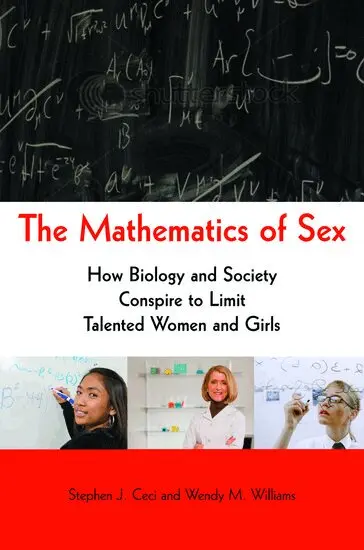
    The Mathematics of Sex

    How Biology and Society Conspire to Limit Talented Women and Girls

    AvStephen J. Ceci,Wendy M. Williams

    Inbunden, Engelska, 2009

    796 kr

    Beställningsvara. Skickas inom 5-8 vardagar. Fri frakt över 249 kr.

    Beskrivning

    Even though women consistently receive better grades in math and science, men excel on math aptitude tests and are greatly overrepresented in the so-called hard sciences. The Mathematics of Sex explores why males are overrepresented in mathematically intensive professions such as physics, computer science, chemistry, mathematics, and engineering. Bringing together for the first time important research from such diverse fields as endocrinology, economics, sociology, education, genetics, and psychology, the authors show that two factors--the parenting choices women (but not men) have to make, and the tendency of bright women to choose people-oriented fields like medicine--largely account for the under-representation of women in the hard sciences. Further, research shows that biology itself--differences in hormones or brain organization--does not fully account for the problem. Compressing an enormous amount of information--over 400 studies--into a readable, engaging account suitable for parents, educators, and policymakers, this book advances the debate about women in science unlike any other book before it.

    Produktinformation

    • Utgivningsdatum:2009-09-17
    • Mått:160 x 236 x 30 mm
    • Vikt:567 g
    • Format:Inbunden
    • Språk:Engelska
    • Antal sidor:288
    • Förlag:OUP USA
    • ISBN:9780195389395

    Utforska kategorier

    • Genuspsykologi inom Psykologi och pedagogik
    • Socialpsykologi och gruppsykologi inom Psykologi och pedagogik
    • Teknik: allmänt inom Naturvetenskap och teknik

    Mer om författaren

    Stephen J. Ceci is Carr Professor of Developmental Psychology at Cornell University. Wendy M. Williams is a Professor in the Department of Human Development at Cornell University.

    Innehållsförteckning

    • Preface: Setting the Stage ; 1. Why Care About Women in Science? ; 2. A Multidimensional Problem ; 3. Opening Arguments: Environment ; 4. Opening Arguments: Biology ; 5. Challenges to the Environmental Position ; 6. Challenges to the Biological Position ; 7. Background and Trend Data ; 8. Comparisons Across Societies, Cultures, and Developmental Stages ; 9. Conclusions and Synthesis ; 10. What Next? Research and Policy Recommendations ; Epilogue ; References