• Fri frakt över 249 kr
  • •
  • Snabba leveranser
  • •
  • Billiga böcker
Kundservice

Du är på sajten för privatpersoner.

Företag, bibliotek eller offentlig verksamhet?

Du handlar på classic.bokus.com, där alla dina funktioner finns intakta.
Till classic.bokus.com
Bokus logotyp. Gå till startsidan.
  • Erbjudanden
  • Nyheter
  • Student
  • Topplistor
  • Barn & ungdom
  • Bokus Play
  • E-böcker
  • Pocketböcker
  • Spel & pussel

Må bättre, för mindre! Upp till 50% rabatt på hälsoböcker

Sidfot

Mina sidor

    Hjälp

    • Kundservice
    • Vanliga frågor och svar
    • Frakt och leverans
    • Retur vid ångerrätt
    • Reklamera vara
    • Betalning
    • Köpvillkor
    • Allmänna villkor
    • Information om webbplatsens tillgänglighet

    Om Bokus

    • Om oss
    • Pressrum
    • För studenter
    • För företag
    • För bibliotek och offentlig verksamhet
    • För leverantörer
    • Hållbarhet

    Populärt

    • Aktuella erbjudanden
    • Presentkort
    • Studentlitteratur
    • Nya böcker
    • Topplistor
    • Signerade böcker
    • Engelska böcker

    Inspiration

    • Boktips
    • BookTok
    • Populära bokserier
    • Barnbokskaraktärer
    • Populära författare
    Logotyp för Bokus
    Följ oss på Facebook (extern länk)Följ oss på Instagram (extern länk)Följ oss på YouTube (extern länk)Följ oss på TikTok (extern länk)
    bokus @ CookiesAnpassa cookiesIntegritetspolicyKöpvillkor
    Till Citymail hemsida (extern länk)Till Budbee hemsida (extern länk)Till Postnord hemsida (extern länk)Till Schenker hemsida (extern länk)Till Early Bird hemsida (extern länk)Till Walleys hemsida (extern länk)
    1. Kultur
    2. Musikböcker

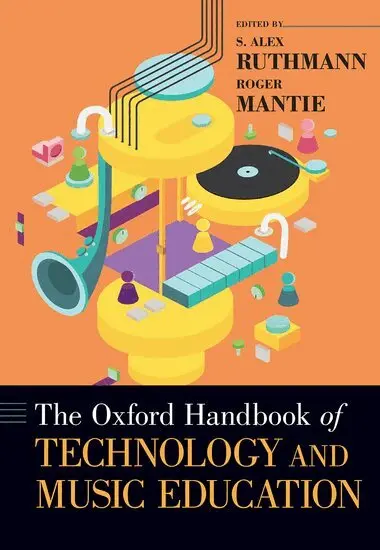
    The Oxford Handbook of Technology and Music Education

    AvS. Alex Ruthmann,Roger Mantie

    Häftad, Engelska, 2020

    Del i serien Oxford Handbooks

    755 kr

    Beställningsvara. Skickas inom 7-10 vardagar. Fri frakt över 249 kr.

    Beskrivning

    Few aspects of daily existence are untouched by technology. Learning and teaching music are no exceptions and arguably have been impacted as much or more than other areas of life. Digital technologies have come to affect music learning and teaching in profound ways, influencing how we create, listen, share, consume, interact, and conceptualize musical practices and the musical experience. For a discipline as entrenched in tradition as music education, this has brought forth myriad views on what does and should constitute music learning and teaching.To tease out and elucidate some of the salient problems, interests, and issues, The Oxford Handbook of Technology and Music Education critically situates technology in relation to music education from a variety of perspectives: historical; philosophical; socio-cultural; pedagogical; musical; economic; policy, organized around four broad themes: Emergence and Evolution; Locations and Contexts: Social and Cultural Issues; Experiencing, Expressing, Learning and Teaching; and Competence, Credentialing, and Professional Development. Chapters from a highly diverse group of junior and senior scholars provide analyses of technology and music education through intersections of gender, theoretical perspective, geographical distribution, and relationship to the field. The Oxford Handbook of Technology and Music Education's dedication to diversity and forward-facing discussion promotes contrasting perspectives and conversational voices rather than reinforce traditional narratives and prevailing discourses.

    Produktinformation

    • Utgivningsdatum:2020-04-30
    • Mått:168 x 241 x 41 mm
    • Vikt:1 158 g
    • Format:Häftad
    • Språk:Engelska
    • Serie:Oxford Handbooks
    • Antal sidor:736
    • Förlag:OUP USA
    • ISBN:9780197502983

    Utforska kategorier

    • Musikböcker inom Kultur
    • Material och digital teknik i undervisningen inom Psykologi och pedagogik

    Mer om författaren

    S. Alex Ruthmann is Associate Professor of Music Education and Music Technology at New York University Steinhardt, Director of the NYU Music Experience Design Lab, and Associate Editor of the Journal of Music, Technology &Education.Roger Mantie is Associate Professor of Music Education at Arizona State University and co-editor of The Oxford Handbook of Music Making and Leisure.

    Recensioner i media

    Representing eight different countries, authors offering core perspectives bring expertise in school and community music, industry, research, teacher education, and other related fields. These authors and 19 others contribute further perspectives that expound on and sometimes differ from core perspectives. Authors explore music education and technology broadly, both inside and outside of the traditional school setting; consider benefits of interdisciplinary activity; and question the discrete roles of composer, performer, and producer that become increasingly blurred by social networking and inexpensive software and hardware...Readers are invited to enter the conversation through an online forum at the Oxford website.

    Innehållsförteckning

    • CONTENTS Foreword - Peter Webster and David B. WilliamsIntroduction - Roger Mantie and Alex Ruthmann SECTION 1: EMERGENCE AND EVOLUTION What constitutes a technology in music and music education?In what ways as technology been used, and how has technology affected music education in different times and places? Core Perspectives 1A1. Thinking about Music and TechnologyRoger Mantie2. Technology in Music and Music Education in England and Across Europe Marina Gall Further Perspectives 1A3. Savoring the Artistic Experience in an Age of Commodification Chee Hoo Lum4. Music Technology in Ethnomusicology Gabriel Solis5. The Role of "Place" and Context Janice Waldron 6. Slow Music Rena Upitis7. Then and Now David A. Williams How have music educators negotiated the role of technology within the broader terrain of educational policy and practice?What is the role and what are the effects of commerce and industry on learning, teaching, and technology within schools? Core Perspectives 1B 8. Globalization and Technology in 21st Century Education Samuel Leong 9. Technology in the Music Classroom in Greece Smaragda Chrysostomu Further Perspectives 1B10. Building a Broad view of Technology in Music Teacher Education Heidi Partti 11. Technology in the Music Classroom in Kenya Emily Akuno 12. Pondering an End to Technology in Music Education Joe Pignato 13. A Software Creator's Perspective Joe Berkovitz 14. Where Might We Be Going? Jonathan Savage15. Loaded Questions for an Emerging World John-Morgan Bush 16. Music Learning in Music Education Jason Chen SECTION 2: LOCATIONS AND CONTEXTS: SOCIAL AND CULTURAL ISSUES What are the impacts of technology (positive and negative) on different communities, socio-economic areas, and parts of the World?What can be done to mitigate the negative effects of technology while accentuating the positive? Core Perspectives 2A 17. Critical Perspectives from Africa Benon Kigozi 18. Interest-driven Music Education Kylie Peppler 19. Situating Technology Within and Without Music Education Joe Pignato Further Perspectives 2A20. Human Potential, Technology and Music Education Smaragda Chrysostomu21. "Placing" Technology within Music Education Communities Ailbhe Kenny 22. The Promise and Pitfalls of the Digital Studio Ethan Hein 23. Musicking and Technology in Sweden Bo Nilsson24. Exploring Intersections of Technology and Music Education Gillian Howell How are technology and music technology changing use? How are we changing technology?How are music educators responding to social, cultural, and economic issues? How should they? Core Perspectives 2B25. Pedagogical Fundamentalism to Radical Pedagogy in Music Education Heidi Partti 26. Society, Schools, and Music Learning Valerie Peters 27. Locating Technology within Music Education Evan Tobias Further Perspectives 2B 28. Technology in Perspective: Who is in Control? Patricia Gonzales 29. The Curious Musician Leah Kardos30. On Becoming Musical: Technology, Possibilities and Transformation Gena Greher 31. The Role of Music in Public Health Education Carlos Chirinos 32. Thinking and Talking about Change in Music Education Roger Mantie33. A Sociological Perspective on Technology in Music Education Ruth Wright SECTION 3: EXPERIENCING, EXPRESSING, LEARNING, AND TEACHING What are the ramifications of technological change on music teaching and learning in the classroom? What can technology do for music education?In what ways has technology forced us to re-evaluate definitions of musicality? Of musicianship? Of who is and is not a musician?In what ways has technology transformed our understandings of creativity? What are some of the untapped potentials in this area? Core Perspectives 3A34. Power and Choice in the Teaching and Learning of Music Chee-Hoo Lum 35. Music Fluency for Music Creation and Composition Barbara Freedman 36. Playing (in) the Digital Studio Ethan Hein Further Perspectives 3A 37. Considering Music Technology and Literacy Jay Dorfman38. Technology and Collaboration for People with Significant DisabilitiesDonald DeVito 39. Prosumer Learners and Digital Arts Pedagogy Samuel Leong 40. A Pluralist Approach to Music Education James Humberstone41. Augmenting Music Teaching and Learning with Technology and Digital Media Evan Tobias42. Possibilities for Inclusion with Music TechnologiesDeborah Vanderlinde What are examples of effective uses of technology? Under what conditions might technology be inappropriate or ineffectice?What are familiar challenges to implementation and what strategies have thus far proven effective?Are there limits to what technology affords? Core Perspectives 3B 43. Limitations of Technology in Community Music Gillian Howell 44. Meaningful and Relevant Technology Integration Michael Medvinsky45. The Convergence of Networked Technologies in MusicTeaching and Learning. Janice Waldron Further Perspectives 3B 46. Narcissim, Romanticism, and Technology Evangelos Himonides47. Pedagogical Decision Making Ryan Bledsoe48. Equity and Access in Out-of-School Music Making Kylie Peppler49. Technology, Sound, and the Tuning of Place Sandy Stauffer SECTION 4: COMPETENCE, CREDENTIALING, AND PROFESSIONAL DEVELOPMENT Should music technology be taught as an independent subject, or should it serve existing curriculum and instruction? How might technology best serve the needs of students and teachers?How can music educators develop and maintain skills beyond their teacher education programs?What sorts of canonized practices have emerged, and how might these impact on music teacher education? Core Perspectives 4A50. Traditions and Ways Forward in the United States Jay Dorfman51. Technology and Invisibility in Music Teacher Education Gena Greher52. Authentic Approaches to Music Education with Technology Jonathan Savage Further Perspectives 4A 53. Technology in Music Initial Teacher Education Marina Gall54. Using Mobile Technologies and Problem-Seeking Pedagogies to Bridge Universities and Workplaces Julie Ballantyne55. Applications of Technology in Music Education from Selected Countries Benon Kigozi56. Defining and Acknowledging Music Education Technology in Music Teacher Training Lauri Väkevä 57. Learner Engagement and Technology Integration Michael Medvinsky What are the ramifications of technology and technological change on music teacher education programs?What tensions exist in terms of credentialing and accreditation? Whose responsibility is it for professional development and certification? Core Perspectives 4B 58. Faculty Development in and through the Use of ICT Patricia Gonzalez 59. Educators' Roles and Professional Development Evangelos Himonides 60. Music Technology Pedagogy and Curricula David A. Williams Further Perspectives 4B61. Why Isn't Music Education in the US more 21st Century PC? Barbara Freedman62. Generating Intersections between Music and Technology Matthew Hitchcock63. Preparing for Change and UncertaintyValerie Peters