• Fri frakt över 249 kr
  • •
  • Snabba leveranser
  • •
  • Billiga böcker
Kundservice

Du är på sajten för privatpersoner.

Företag, bibliotek eller offentlig verksamhet?

Du handlar på classic.bokus.com, där alla dina funktioner finns intakta.
Till classic.bokus.com
Bokus logotyp. Gå till startsidan.
  • Erbjudanden
  • Nyheter
  • Student
  • Topplistor
  • Barn & ungdom
  • Bokus Play
  • E-böcker
  • Pocketböcker
  • Spel & pussel

Må bättre, för mindre! Upp till 50% rabatt på hälsoböcker

Sidfot

Mina sidor

    Hjälp

    • Kundservice
    • Vanliga frågor och svar
    • Frakt och leverans
    • Retur vid ångerrätt
    • Reklamera vara
    • Betalning
    • Köpvillkor
    • Allmänna villkor
    • Information om webbplatsens tillgänglighet

    Om Bokus

    • Om oss
    • Pressrum
    • För studenter
    • För företag
    • För bibliotek och offentlig verksamhet
    • För leverantörer
    • Hållbarhet

    Populärt

    • Aktuella erbjudanden
    • Presentkort
    • Studentlitteratur
    • Nya böcker
    • Topplistor
    • Signerade böcker
    • Engelska böcker

    Inspiration

    • Boktips
    • BookTok
    • Populära bokserier
    • Barnbokskaraktärer
    • Populära författare
    Logotyp för Bokus
    Följ oss på Facebook (extern länk)Följ oss på Instagram (extern länk)Följ oss på YouTube (extern länk)Följ oss på TikTok (extern länk)
    bokus @ CookiesAnpassa cookiesIntegritetspolicyKöpvillkor
    Till Citymail hemsida (extern länk)Till Budbee hemsida (extern länk)Till Postnord hemsida (extern länk)Till Schenker hemsida (extern länk)Till Early Bird hemsida (extern länk)Till Walleys hemsida (extern länk)
    1. Naturvetenskap och teknik
    2. Matematik och naturvetenskap
    3. Astronomi

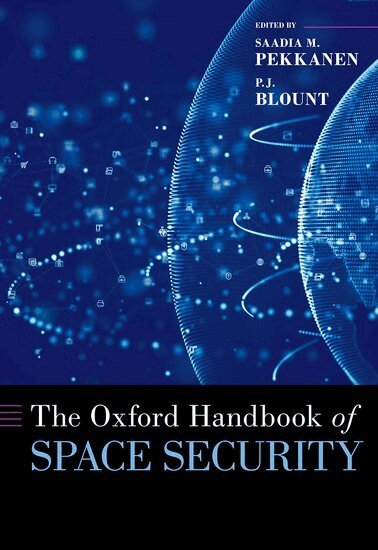
    The Oxford Handbook of Space Security

    AvSaadia M. Pekkanen,P.J. Blount

    Inbunden, Engelska, 2024

    Del i serien Oxford Handbooks

    2 334 kr

    Beställningsvara. Skickas inom 5-8 vardagar. Fri frakt över 249 kr.

    Beskrivning

    Space security is a complex assemblage of societal risks and benefits that result from space-based capabilities and is currently in a period of transformation as innovative processes are rapidly changing the underlying assumptions about stability in the space domain. New space-based technologies are emerging at an accelerating rate, and both established and emerging states are actively and openly pursuing weapons to negate other states' space capabilities. Many states have set up dedicated military space units in order to preemptively counter such threats. In addition, a number of major private companies with a transnational presence are also investing heavily in extraterrestrially-based technology. The Oxford Handbook of Space Security focuses on the interaction between space technology and international and national security processes from an international relations (IR) theory perspective. Saadia M. Pekkanen and P.J. Blount have gathered a group of key scholars who bring a range of analytical and theoretical IR perspectives to assessing space security. The volume theorizes the development and governance of space security and analyzes the specific pressure points currently challenging that regime. Further, it builds an analytically-eclectic understanding of space security, infused with the theory and practice of IR and advances analysis of key states and regions as well as specific capabilities. Space security is currently in a period of great transition as new technologies are emerging and states openly pursue counterspace capabilities. Bringing together scholarship from a group of leading experts, this volume explains how these contemporary changes will affect future security in, from, and through space.Applying lessons from international relations theory and practice and drawing from a range of social science subfields, the Handbook is a definitive work for scholars who study the topic of space security.

    Produktinformation

    • Utgivningsdatum:2024-06-19
    • Mått:165 x 239 x 50 mm
    • Vikt:1 633 g
    • Format:Inbunden
    • Språk:Engelska
    • Serie:Oxford Handbooks
    • Antal sidor:904
    • Förlag:OUP USA
    • Medarbetare:SaadiaM. Pekkanen
    • ISBN:9780197582671

    Utforska kategorier

    • Astronomi inom Naturvetenskap och teknik
    • Internationella relationer inom Samhälle och politik

    Mer om författaren

    Saadia M. Pekkanen is the Job and Gertrud Tamaki Endowed Professor at the University of Washington in Seattle. In addition to this appointment in The Henry M. Jackson School of International Studies, she is Adjunct Professor in the Department of Political Science and Adjunct Professor at the School of Law, where she also teaches courses. She is a member of the International Institute of Space Law. At the University of Washington, she is the founding director of the Qualitative Multi-Method Program (QUAL), and the founding director of the Space Law, Data and Policy Program (SPACE LDP). P.J. Blount is a Lecturer in Law in the School of Law and Politics at Cardiff University. He is the author of Reprogramming the World: Cyberspace and the Geography of Global Order (2019), an editor of the Proceedings of the International Institute of Space Law, and, formerly, the Editor-in-Chief of the Journal of Space Law. He currently serves as the Executive Secretary of the InternationalInstitute of Space Law and is a licensed attorney with the State Bar of Georgia.

    Innehållsförteckning

    • Overview Chapter 1: International Relations Theory and the Evolution of Peaceful Purposes in Outer Space -Saadia M. Pekkanen and P.J. BlountChapter 2: A Short History of Space Security -Stephen Buono and Aaron BatemanChapter 3: Legal Frameworks for Space Security -Setsuko Aoki Theoretical Approaches and Perspectives Chapter 4: The Discourse of Space Securitization -P.J. BlountChapter 5: Critical Space Security: Space is Not Special -Carl Graefe and Raymond DuvallChapter 6: Commercial Space Peace Theory: Economic Interdependence and Conflict in Space -Wendy Whitman-CobbChapter 7: Soft Power and Cooperation for Space Security -Pavel LuzinChapter 8: Techno-Security Space Innovation -Tai Ming Cheung and Yasuhito FukushimaChapter 9: The Interplay of Domestic Policy and International Space Security -Xiaodan WuChapter 10: The Next Frontier: Strategic Theory for the Space Domain -Tim Sweijs and Davis EllisonChapter 11: Unbundling Threats: Balancing and Alliances in the Space Domain -Saadia M. Pekkanen Chapter 12: Deterring Attacks on Space Systems -Forrest E. MorganChapter 13: Arms Control and the Myth of Peaceful Uses in Outer Space -Jessica WestChapter 14: Ethics in Space Security: Virtue and the Future of Cosmopolitanism -Koji Tachibana Statecraft and Strategy Chapter 15: U.S. National Security Interests in Space -Scott PaceChapter 16: Neoclassical Realism as a Framework for Understanding China's Rise as a Space Power-Kevin PollpeterChapter 17: Russia's Integrated Statecraft in the Space Domain -Florian VidalChapter 18: Japan's Grand Strategy in Outer Space -Saadia M. PekkanenChapter 19: India's Space Program: Its Evolution and Future Trajectory -Rajeswari Pillai Rajagopalan and %Sumit Ganguly Chapter 20: French Space Security in Historical Perspective: Balancing Strategic Autonomy and Cooperation -Xavier PascoChapter 21: UK Space Policy: A Quest for Coherence -Mark HilborneChapter 22: The European Union's Deepening Engagement in Space Security: Hedging Through Strategic Autonomy -Tomas Hrozensky and Mathieu BatailleChapter 23: Perspectives on Membership in the Space Club in West Asia: Israel and UAE -Deganit PaikowskyChapter 24: Military Space Strategies and African Realism: Egypt, South Africa, and Nigeria -Samuel OyewoleChapter 25: Space Security in Latin American Perspectives -Olavo de O. Bittencourt Neto and Jairo BecerraChapter 26: Southeast Asia Space Security and Strategy: Development, Drivers, and Dynamics-Prashanth ParameswaranChapter 27: The Dynamics of South Korea's Space Trajectories -Su-Mi Lee and Hanbeom Jeong Chapter 28: From Passive to Active Space Powers: Australia and Aotearoa New Zealand -Matthew Stubbs and Desislava Gancheva Strategic Implications of Capabilities Chapter 29: Anti-Satellite and Space Weapons: Risks and Paths to Peace -Laura GregoChapter 30: The Greatest Transformation: How Cyber is Defining Security in the Space Domain -Larry F. MartinezChapter 31: The "AI Wave" in Space Operations: Implications for Future Warfare -Michael Raska and Malcolm DavisChapter 32: Security Dilemma, Debris, and the Future of Space Operations -Brad TownsendChapter 33: Space Sustainability: Balanced Space Security Global Governance -Guoyu WangChapter 34: Norm-Formation and Space Traffic Management -P. J. Blount Chapter 35: Space Resources and Prospects for Contested Governance -Alanna Krowlikowski and Martin ElvisChapter 36: Space-Based Data and Human Security -Mariel BorowitzChapter 37: Enabling National Security Through Space: Intelligence and Communications -Peter L. Hays and James J. Wirtz Chapter 38: The State, Development, and Human Security in Space -Mohamed Amara and Sagee Geetha SethuChapter 39: The Geopolitics of Global Navigation Satellite Systems -Paul B. LarsenChapter 40: Newspace and New Risks in Space Security -John J. Klein and Nickolas J. BoenschChapter 41: Planetary Defense: A Unique Opportunity to Practice Cosmopolitan Security Principles in National Foreign Policies -Nikola Schmidt Prospects Chapter 42: The Future of Global Space Governance -Natália ArchinardChapter 43: The Future of Space Security: Assessing the Prospects for Peaceful Outcomes -James Clay MoltzChapter 44: The Future of Cooperation in Space: Irreconcilable Differences? -Zhou Bo and Wang Guoyu