• Fri frakt över 249 kr
  • •
  • Snabba leveranser
  • •
  • Billiga böcker
Kundservice

Du är på sajten för privatpersoner.

Företag, bibliotek eller offentlig verksamhet?

Du handlar på classic.bokus.com, där alla dina funktioner finns intakta.
Till classic.bokus.com
Bokus logotyp. Gå till startsidan.
  • Erbjudanden
  • Student
  • Topplistor
  • Barn & ungdom
  • Bokus Play
  • E-böcker
  • Ljudböcker
  • Pocketböcker
  • Spel och pussel

Pocketfynda! Hundratals böcker för 49 kr/st →

Sidfot

Mina sidor

    Hjälp

    • Kundservice
    • Vanliga frågor och svar
    • Frakt och leverans
    • Retur vid ångerrätt
    • Reklamera vara
    • Betalning
    • Köpvillkor
    • Allmänna villkor
    • Information om webbplatsens tillgänglighet

    Om Bokus

    • Om oss
    • Pressrum
    • För studenter
    • För företag
    • För bibliotek och offentlig verksamhet
    • För leverantörer
    • Hållbarhet

    Populärt

    • Aktuella erbjudanden
    • Presentkort
    • Studentlitteratur
    • Nya böcker
    • Topplistor
    • Signerade böcker
    • Engelska böcker

    Inspiration

    • Boktips
    • BookTok
    • Barnbokskaraktärer
    • Populära författare
    Logotyp för Bokus
    Följ oss på Facebook (extern länk)Följ oss på Instagram (extern länk)Följ oss på YouTube (extern länk)Följ oss på TikTok (extern länk)
    bokus @ CookiesAnpassa cookiesIntegritetspolicyKöpvillkor
    Till Citymail hemsida (extern länk)Till Budbee hemsida (extern länk)Till Postnord hemsida (extern länk)Till Schenker hemsida (extern länk)Till Early Bird hemsida (extern länk)Till Walleys hemsida (extern länk)
    1. Data och IT
    2. Systemvetenskap och AI
    3. Artificiell intelligens

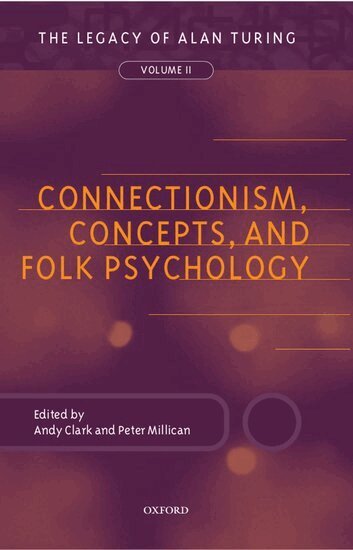
    Connectionism, Concepts, and Folk Psychology

    The Legacy of Alan Turing, Volume II

    AvAndy Clark,Peter Millican

    Häftad, Engelska, 1999

    Del i serien Mind Association Occasional Series

    956 kr

    Beställningsvara. Skickas inom 5-8 vardagar. Fri frakt över 249 kr.

    Beskrivning

    This is the second of two volumes of essays in commemoration of Alan Turing; it celebrates his intellectual legacy within the philosophy of mind and cognitive science. A distinguished international cast of contributors focus on the relationship beteen a scientific, computational image of the mind and a common-sense picture of the mind as an inner arena populated by concepts, beliefs, intentions, and qualia. Topics covered include the causal potency of folk-psychological states, the connectionist reconception of learning and concept formation, the understanding of the notion of computation itself, and the relation between philosophical and psychological theories of concepts. Also available in paperback is the companion volume, Machines and Thought, edited by Peter Millican and Andy Clark, which focuses on Turing's main innovations in artificial intelligence.

    Produktinformation

    • Utgivningsdatum:1999-03-18
    • Mått:138 x 216 x 17 mm
    • Vikt:349 g
    • Format:Häftad
    • Språk:Engelska
    • Serie:Mind Association Occasional Series
    • Antal sidor:292
    • Förlag:OUP OXFORD
    • ISBN:9780198238751

    Utforska kategorier

    • Artificiell intelligens inom Data och IT
    • Psykologiska teorier och skolor inom Psykologi och pedagogik
    • Filosofiska discipliner inom Filosofi och religion

    Mer om författaren

    Andy Clark is Professor of Philosophy and Director of the Philosophy/Neuroscience/Psychology Project at Washington University, St Louis Missouri. Peter Millican is Senior Lecturer in Philosophy and Computer Studies at the University of Leeds.

    Recensioner i media

    A fascinating series of essays on computation by contributors in various fields.

    Innehållsförteckning

    • Introduction ; 1. Learning and Conceptual Change: The View from the Neurons ; 2. Remarks on the Paradigms of Connectionism ; 3. Remarks on the Impact of Connectionism on our Thinking about Concepts ; 4. Causation in the Philosophy of Mind ; 5. Altered States and Virtual Beliefs ; 6. The Relation between Philosophical and Psychological Theories of Concepts ; 7. How Simple is the Simple Account? ; 8. Modularity and Logical Cognitivism ; 9. Folk Learning and Naive Physics ; 10. Why Concept Learning is a Good Idea ; 11. Analogy-Making, Fluid Concepts, and Brain Mechanisms ; 12. Encoding Psychological Knowledge ; 13. Does Belief Exist?