• Fri frakt över 249 kr
  • •
  • Snabba leveranser
  • •
  • Billiga böcker
Kundservice

Du är på sajten för privatpersoner.

Företag, bibliotek eller offentlig verksamhet?

Du handlar på classic.bokus.com, där alla dina funktioner finns intakta.
Till classic.bokus.com
Bokus logotyp. Gå till startsidan.
  • Erbjudanden
  • Nyheter
  • Student
  • Topplistor
  • Barn & ungdom
  • Bokus Play
  • E-böcker
  • Pocketböcker
  • Spel & pussel

10% studentrabatt med kod TERM26

Sidfot

Mina sidor

    Hjälp

    • Kundservice
    • Vanliga frågor och svar
    • Frakt och leverans
    • Retur vid ångerrätt
    • Reklamera vara
    • Betalning
    • Köpvillkor
    • Allmänna villkor
    • Information om webbplatsens tillgänglighet

    Om Bokus

    • Om oss
    • Pressrum
    • För studenter
    • För företag
    • För bibliotek och offentlig verksamhet
    • För leverantörer
    • Hållbarhet

    Populärt

    • Aktuella erbjudanden
    • Presentkort
    • Studentlitteratur
    • Nya böcker
    • Topplistor
    • Signerade böcker
    • Engelska böcker

    Inspiration

    • Boktips
    • BookTok
    • Populära bokserier
    • Barnbokskaraktärer
    • Populära författare
    Logotyp för Bokus
    Följ oss på Facebook (extern länk)Följ oss på Instagram (extern länk)Följ oss på YouTube (extern länk)Följ oss på TikTok (extern länk)
    bokus @ CookiesAnpassa cookiesIntegritetspolicyKöpvillkor
    Till Citymail hemsida (extern länk)Till Budbee hemsida (extern länk)Till Postnord hemsida (extern länk)Till Schenker hemsida (extern länk)Till Early Bird hemsida (extern länk)Till Walleys hemsida (extern länk)
    1. Naturvetenskap och teknik
    2. Matematik och naturvetenskap
    3. Naturvetenskap:allmänt
    4. Populärvetenskap

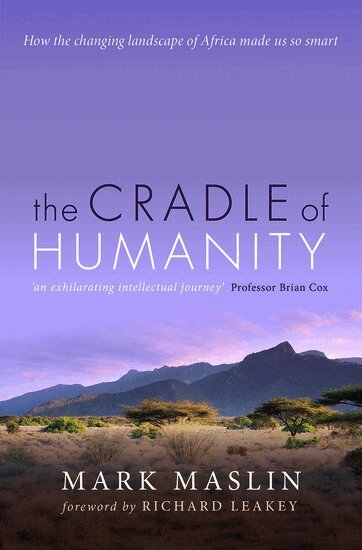
    The Cradle of Humanity

    How the changing landscape of Africa made us so smart

    AvMark Maslin

    Häftad, Engelska, 2019

    140 kr

    Skickas . Fri frakt över 249 kr.

    Fler format och utgåvor

    Inbunden

    667 kr

    Beskrivning

    Humans are rather weak when compared with many other animals. We are not particularly fast and have no natural weapons. Yet Homo sapiens currently number nearly 7.5 billion and are set to rise to nearly 10 billion by the middle of this century. We have influenced almost every part of the Earth system and as a consequence are changing the global environmental and evolutionary trajectory of the Earth. So how did we become the worlds apex predator and take over the planet? Fundamental to our success is our intelligence, not only individually but more importantly collectively. But why did evolution favour the brainy ape? Given the calorific cost of running our large brains, not to mention the difficulties posed for childbirth, this bizarre adaptation must have given our ancestors a considerable advantage. In this book Mark Maslin brings together the latest insights from hominin fossils and combines them with evidence of the changing landscape of the East African Rift Valley to show how all these factors led to selection pressures that favoured our ultrasocial brains. Astronomy, geology, climate, and landscape all had a part to play in making East Africa the cradle of humanity and allowing us to dominate the planet.

    Produktinformation

    • Utgivningsdatum:2019-01-24
    • Mått:127 x 193 x 20 mm
    • Vikt:204 g
    • Format:Häftad
    • Språk:Engelska
    • Antal sidor:272
    • Förlag:OUP OXFORD
    • ISBN:9780198704539

    Utforska kategorier

    • Populärvetenskap inom Naturvetenskap och teknik
    • Biovetenskap inom Naturvetenskap och teknik
    • Människans biologi inom Naturvetenskap och teknik

    Mer om författaren

    Mark Maslin is Professor of Palaeoclimatology at University College London. He is a Royal Society Wolfson Research Merit Award holder, a Royal Society Industry Fellow, and a Fellow of the Royal Geographic Society. Maslin has published over 160 papers in journals such as Science and Nature on past and future climate change and its effects on the carbon cycle, human health, biodiversity, and human evolution. He is the author of Climate: A Very Short Introduction (OUP, 2013), and Climate Change: A Very Short Introduction (OUP, 2014), now in its third editon.

    Recensioner i media

    This book offers far more than a palaeoanthropological cocktail with a twist ... In synthesising the most recent research in palaeoanthropology and giving the ecology of our ancestors a climatological twist, Maslin has produced a book that is fascinating, humbling and informative.

    Innehållsförteckning

    • 1: Introduction2: Early Human Evolution3: Tectonics and Climate4: Cradle of Humanity5: Global Climate Change6: Celestial Mechanics7: African Climate Pulses8: The Social Brain9: The Future of HumanityFurther ReadingIndex

    Betyg & recensioner

    4/5