• Fri frakt över 249 kr
  • •
  • Snabba leveranser
  • •
  • Billiga böcker
Kundservice

Du är på sajten för privatpersoner.

Företag, bibliotek eller offentlig verksamhet?

Du handlar på classic.bokus.com, där alla dina funktioner finns intakta.
Till classic.bokus.com
Bokus logotyp. Gå till startsidan.
  • Erbjudanden
  • Nyheter
  • Student
  • Topplistor
  • Barn & ungdom
  • Bokus Play
  • E-böcker
  • Pocketböcker
  • Spel & pussel

10% rabatt på allt med kod: NYSTART10 →

Sidfot

Mina sidor

    Hjälp

    • Kundservice
    • Vanliga frågor och svar
    • Frakt och leverans
    • Retur vid ångerrätt
    • Reklamera vara
    • Betalning
    • Köpvillkor
    • Allmänna villkor
    • Information om webbplatsens tillgänglighet

    Om Bokus

    • Om oss
    • Pressrum
    • För studenter
    • För företag
    • För bibliotek och offentlig verksamhet
    • För leverantörer
    • Hållbarhet

    Populärt

    • Aktuella erbjudanden
    • Presentkort
    • Studentlitteratur
    • Nya böcker
    • Topplistor
    • Signerade böcker
    • Engelska böcker

    Inspiration

    • Boktips
    • BookTok
    • Populära bokserier
    • Barnbokskaraktärer
    • Populära författare
    Logotyp för Bokus
    Följ oss på Facebook (extern länk)Följ oss på Instagram (extern länk)Följ oss på YouTube (extern länk)Följ oss på TikTok (extern länk)
    bokus @ CookiesAnpassa cookiesIntegritetspolicyKöpvillkor
    Till Citymail hemsida (extern länk)Till Budbee hemsida (extern länk)Till Postnord hemsida (extern länk)Till Schenker hemsida (extern länk)Till Early Bird hemsida (extern länk)Till Walleys hemsida (extern länk)
    1. Samhälle och politik
    2. Samhälle och kultur
    3. Kultur och medier
    4. Kulturvetenskap

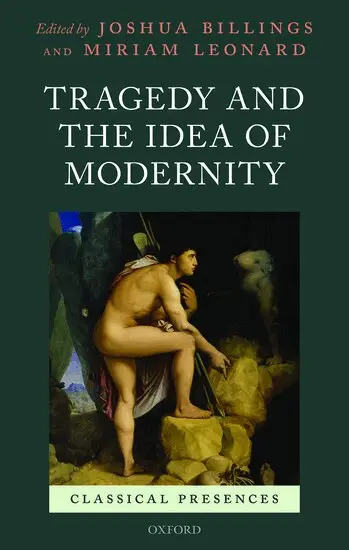
    Tragedy and the Idea of Modernity

    AvLEONARD BILLINGS,Joshua Billings

    Inbunden, Engelska, 2015

    Del i serien Classical Presences

    2 722 kr

    Beställningsvara. Skickas inom 5-8 vardagar. Fri frakt över 249 kr.

    Beskrivning

    From around 1800, particularly in Germany, Greek tragedy has been privileged in popular and scholarly discourse for its relation to apparently timeless metaphysical, existential, ethical, aesthetic, and psychological questions. As a major concern of modern philosophy, it has fascinated thinkers including Hegel, Kierkegaard, Nietzsche, Freud, and Heidegger. Such theories have arguably had a more profound influence on modern understanding of the genre than works of classical scholarship or theatrical performances. Tragedy and the Idea of Modernity considers this tradition of philosophy in relation to the ancient Greek works themselves, and mediates between the concerns of classicists and those of intellectual historians and philosophers. The volume is organized into sections treating issues of poetics, politics and culture, and canonicity, and contributions by an interdisciplinary range of scholars consider themes of catharsis, the sublime, politics, and reconciliation, spanning 2,500 years of literature and philosophy. Although firmly anchored in the classical tradition, the volume suggests that the tradition of philosophical thought concerning tragedy has a major place in understandings both of ancient tragedy and of modernity itself.

    Produktinformation

    • Utgivningsdatum:2015-05-21
    • Mått:155 x 223 x 28 mm
    • Vikt:570 g
    • Format:Inbunden
    • Språk:Engelska
    • Serie:Classical Presences
    • Antal sidor:368
    • Förlag:OUP OXFORD
    • ISBN:9780198727798

    Utforska kategorier

    • Kulturvetenskap inom Samhälle och politik
    • Dramatik inom Skönlitteratur
    • Forntidens historia inom Historia och arkeologi

    Mer om författaren

    Joshua Billings is Assistant Professor of Classics and Humanities at Yale University.Miriam Leonard is Professor of Greek Literature and its Reception at University College London.

    Recensioner i media

    Leonard is excellent at highlighting the importance of a philosophical reading of tragedy in modernity. -Daisy Dunn, The Times Literary Supplement

    Innehållsförteckning

    • PART 1: TRAGIC POETICS ; PART 2: TRAGIC CULTURES ; PART 3: TRAGIC CANONS