• Fri frakt över 249 kr
  • •
  • Snabba leveranser
  • •
  • Billiga böcker
Kundservice

Du är på sajten för privatpersoner.

Företag, bibliotek eller offentlig verksamhet?

Du handlar på classic.bokus.com, där alla dina funktioner finns intakta.
Till classic.bokus.com
Bokus logotyp. Gå till startsidan.
  • Erbjudanden
  • Nyheter
  • Student
  • Topplistor
  • Barn & ungdom
  • Bokus Play
  • E-böcker
  • Pocketböcker
  • Spel & pussel

10% rabatt på allt med kod: NYSTART10 →

Sidfot

Mina sidor

    Hjälp

    • Kundservice
    • Vanliga frågor och svar
    • Frakt och leverans
    • Retur vid ångerrätt
    • Reklamera vara
    • Betalning
    • Köpvillkor
    • Allmänna villkor
    • Information om webbplatsens tillgänglighet

    Om Bokus

    • Om oss
    • Pressrum
    • För studenter
    • För företag
    • För bibliotek och offentlig verksamhet
    • För leverantörer
    • Hållbarhet

    Populärt

    • Aktuella erbjudanden
    • Presentkort
    • Studentlitteratur
    • Nya böcker
    • Topplistor
    • Signerade böcker
    • Engelska böcker

    Inspiration

    • Boktips
    • BookTok
    • Populära bokserier
    • Barnbokskaraktärer
    • Populära författare
    Logotyp för Bokus
    Följ oss på Facebook (extern länk)Följ oss på Instagram (extern länk)Följ oss på YouTube (extern länk)Följ oss på TikTok (extern länk)
    bokus @ CookiesAnpassa cookiesIntegritetspolicyKöpvillkor
    Till Citymail hemsida (extern länk)Till Budbee hemsida (extern länk)Till Postnord hemsida (extern länk)Till Schenker hemsida (extern länk)Till Early Bird hemsida (extern länk)Till Walleys hemsida (extern länk)
    1. Historia och arkeologi
    2. Historia
    3. Historia: särskilda händelser och ämnen
    4. Socialhistoria och kulturhistoria

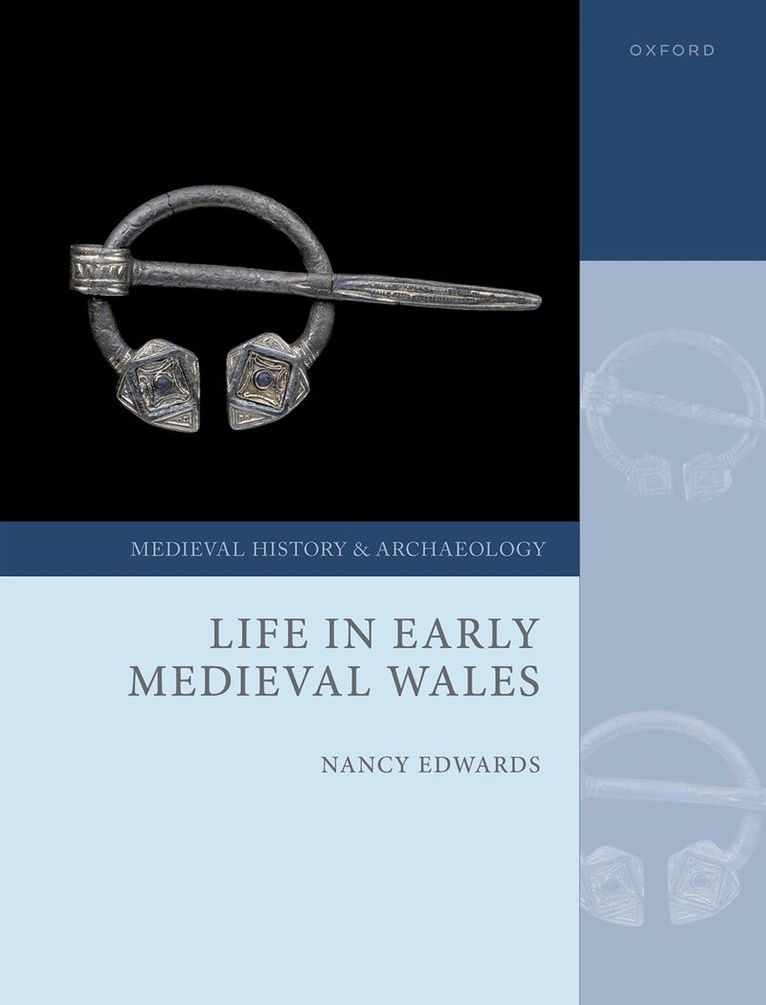
    Life in Early Medieval Wales

    AvNancy Edwards

    Inbunden, Engelska, 2023

    Del i serien Medieval History and Archaeology

    1 862 kr

    Skickas . Fri frakt över 249 kr.

    Fler format och utgåvor

    E-bok

    1 371 kr

    E-bok

    1 408 kr

    Beskrivning

    Research for and the writing of this book was funded by the award of a Leverhulme Trust Major Research Fellowship.The period c. AD300--1050, spanning the collapse of Roman rule to the coming of the Normans, was formative in the development of Wales. Life in Early Medieval Wales considers how people lived in late Roman and early medieval Wales, and how their lives and communities changed over the course of this period. It uses a multidisciplinary approach, focusing on the growing body of archaeological evidence set alongside the early medieval written sources together with place-names and personal names. It begins by analysing earlier research and the range of sources, the significance of the environment and climate change, and ways of calculating time. Discussion of the fourth, fifth, and sixth centuries focuses on the disintegration of the Roman market economy, fragmentation of power, and the emergence of new kingdoms and elites alongside evidence for changing identities, as well as important threads of continuity, notably Latin literacy, Christianity, and the continuation of small-scale farming communities. Early medieval Wales was an entirely rural society. Analysis of the settlement archaeology includes key sites such as hillforts, including Dinas Powys, the royal crannog at Llangorse, and the Viking Age and earlier estate centre at Llanbedrgoch alongside the development, from the seventh century onwards, of new farming and other rural settlements. Consideration is given to changes in the mixed farming economy reflecting climate deterioration and a need for food security, as well as craft working and the roles of exchange, display, and trade reflecting changing outside contacts. At the same time cemeteries and inscribed stones, stone sculpture and early church sites chart the course of conversion to Christianity, the rise of monasticism, and the increasing power of the Church. Finally, discussion of power and authority analyses emerging evidence for sites of assembly, the rise of Mercia, and increasing English infiltration, together with the significance of Offa's and Wat's Dykes, and the Viking impact. Throughout the evidence is placed within a wider context enabling comparison with other parts of Britain and Ireland and, where appropriate, with other parts of Europe to see broader trends, including the impacts of climate, economic, and religious change.

    Produktinformation

    • Utgivningsdatum:2023-08-22
    • Mått:195 x 252 x 33 mm
    • Vikt:1 g
    • Format:Inbunden
    • Språk:Engelska
    • Serie:Medieval History and Archaeology
    • Antal sidor:528
    • Förlag:OUP OXFORD
    • ISBN:9780198733218
    • Utmärkelser:Shortlisted for the Archaeology Book of the Year 2025

    Utforska kategorier

    • Socialhistoria och kulturhistoria inom Historia och arkeologi
    • Arkeologiska perioder och områden inom Historia och arkeologi
    • Medeltiden inom Historia och arkeologi

    Mer om författaren

    Nancy Edwards is an early medieval archaeologist with wider interests in early medieval history and art history. Her research and writing are focused on the early medieval archaeology of western Britain and Ireland, particularly inscribed stones and stone sculpture and the Church. She is Professor Emerita at Bangor University where she was formerly Professor of Medieval Archaeology and is also Honorary Professor at Cardiff and Durham Universities. She chairs the Royal Commission on the Ancient and Historical Monuments of Wales and is a Fellow of the British Academy, the Learned Society of Wales, and the Society of Antiquaries.

    Recensioner i media

    Nancy Edwards has achieved a publication that evaluates the story so far in which academic, commercial, governmental, and museum archaeology, but also community archaeology projects, are providing an evergrowing body of knowledge. This book thus sets the foundation for research on the archaeology of early medieval Wales for decades to come.

    Innehållsförteckning

    • 1: Rediscovering the early medieval past in Wales: approaches and sources 2: Space and time 3: Continuity and collapse 4: The legacy of Rome, Irish settlement, and changing identities 5: Hearth and home 6: Food, farming, and the agricultural economy 7: Craft, display, and trade 8: Christianity: identifying the evidence 9: Conversion, commemoration, and burial 10: Christian sites and Christian landscapes 11: Ritual and belief 12: Power and authority 13: Conclusion