• Fri frakt över 249 kr
  • •
  • Snabba leveranser
  • •
  • Billiga böcker
Kundservice

Du är på sajten för privatpersoner.

Företag, bibliotek eller offentlig verksamhet?

Du handlar på classic.bokus.com, där alla dina funktioner finns intakta.
Till classic.bokus.com
Bokus logotyp. Gå till startsidan.
  • Erbjudanden
  • Nyheter
  • Student
  • Topplistor
  • Barn & ungdom
  • Bokus Play
  • E-böcker
  • Pocketböcker
  • Spel & pussel

10% rabatt på allt med kod NYSTART10 →

Sidfot

Mina sidor

    Hjälp

    • Kundservice
    • Vanliga frågor och svar
    • Frakt och leverans
    • Retur vid ångerrätt
    • Reklamera vara
    • Betalning
    • Köpvillkor
    • Allmänna villkor
    • Information om webbplatsens tillgänglighet

    Om Bokus

    • Om oss
    • Pressrum
    • För studenter
    • För företag
    • För bibliotek och offentlig verksamhet
    • För leverantörer
    • Hållbarhet

    Populärt

    • Aktuella erbjudanden
    • Presentkort
    • Studentlitteratur
    • Nya böcker
    • Topplistor
    • Signerade böcker
    • Engelska böcker

    Inspiration

    • Boktips
    • BookTok
    • Populära bokserier
    • Barnbokskaraktärer
    • Populära författare
    Logotyp för Bokus
    Följ oss på Facebook (extern länk)Följ oss på Instagram (extern länk)Följ oss på YouTube (extern länk)Följ oss på TikTok (extern länk)
    bokus @ CookiesAnpassa cookiesIntegritetspolicyKöpvillkor
    Till Citymail hemsida (extern länk)Till Budbee hemsida (extern länk)Till Postnord hemsida (extern länk)Till Schenker hemsida (extern länk)Till Early Bird hemsida (extern länk)Till Walleys hemsida (extern länk)
    1. Samhälle och politik
    2. Samhälle och kultur
    3. Kultur och medier
    4. Kulturvetenskap

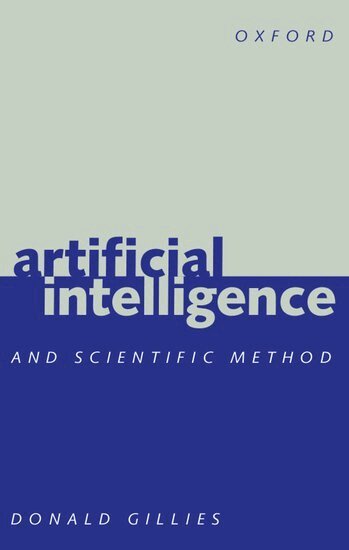
    Artificial Intelligence and Scientific Method

    AvDonald Gillies

    Häftad, Engelska, 1996

    600 kr

    Beställningsvara. Skickas inom 5-8 vardagar. Fri frakt över 249 kr.

    Fler format och utgåvor

    Inbunden

    2 500 kr

    Beskrivning

    Artificial Intelligence and Scientific Method examines the remarkable advances made in the field of AI over the past twenty years, discussing their profound implications for philosophy.Taking a clear, non-technical approach, Donald Gillies focuses on two key topics within AI: machine learning in the Turing tradition and the development of logic programming and its connection with non-monotonic logic. Demonstrating how current views on scientific method are challenged by this recent research, he goes on to suggest a new framework for the study of logic. Finally, Professor Gillies draws on work by such seminal thinkers as Bacon, Gödel, Popper, Penrose, and Lucas to address the hotly contested question of whether computers might become intellectually superior to human beings.

    Produktinformation

    • Utgivningsdatum:1996-09-05
    • Mått:136 x 216 x 11 mm
    • Vikt:236 g
    • Format:Häftad
    • Språk:Engelska
    • Antal sidor:192
    • Förlag:OUP OXFORD
    • ISBN:9780198751595

    Utforska kategorier

    • Kulturvetenskap inom Samhälle och politik
    • Artificiell intelligens inom Data och IT
    • Filosofiska discipliner inom Filosofi och religion

    Mer om författaren

    Donald Gillies is Professor of the Philosophy of Science and Mathematics at King's College, London. His books include An Objective Theory of Probability (1973), Revolutions in Mathematics (1992), and Philosophy of Science in the Twentieth Century (1993). He was the editor of the British Journal for the Philosophy of Science from 1982 to 1985.

    Recensioner i media

    An old-fashioned monograph: tightly argued, heavily referenced.

    Innehållsförteckning

    • Preface ; Acknowledgements ; Chapter 1: The Inductivist Controversy, or Bacon versus Popper ; 1.1 Bacon's Inductivism ; 1.2 Popper's Falsificationism ; 1.3 Kepler's Discovery of the Laws of Planetary Motion ; 1.4 The Discovery of the Sulphonamide Drugs ; Chapter 2: Machine Learning in the Turing Tradition ; 2.1 The Turing Tradition ; 2.2 The Practical Problem: Expert Systems and Feigenbaum's Bottleneck ; 2.3 Attribute-based Learning, Decision Trees, and Quinlan's ID3 ; 2.4 GOLEM as an example of Relational Learning ; 2.5 Bratko's summary of the successes of Machine Learning in the Turing Tradition, 1992 ; 2.6 GOLEM's Discovery of a Law of Nature ; Chapter 3: How Advances in Machine Learning affect the Inductivist Controversy ; 3.1 Bacon's Example of Heat ; 3.2 The Importance of Falsification ; 3.3 Bacon's Method has only recently come to be used ; 3.4 The Need for Background Knowledge ; Chapter 4: Logic and Programming and a New Framework for Logic ; 4.1 The Development of PROLOG ; 4.2 PROLOG as a Non-Monotonic Logic ; 4.3 Two Examples of Translations from One Logical System to Another ; 4.4 Logic = Inference + Control ; 4.5 PROLOG introduces Control into Deductive Logic ; 4.6 PROLOG and Certainty. Is Logic a priori or empirical? ; Chapter 5: Can there be an Inductive Logic? ; 5.1 The Divergence between Deductive and Inductive Logic (up to the early 1970s) ; 5.2 Inductive Logic as Inference + Control ; 5.3 Confirmation Values as Control in a Deductive Logic ; 5.4 The Empirical Testing of Rival Logics ; Chapter 6: Do Godel's Incompleteness Theorems place a Limit on Artificial Intelligence? ; 6.1 Anxieties caused by Advances in AI ; 6.2 Informal Exposition of Godel's Incompleteness Theorems ; 6.3 The Lucas Argument ; 6.4 Objections to the Lucas Argument: i) Possible Limitations on Self-Knowledge ; 6.5 Objections to the Lucas Argument: ii) Possible Additions of Learning Systems ; 6.6 Why Advances in Computing are more likely to Stimulate Human Thinking than to Render it Superfluous ; Notes References Index