• Fri frakt över 249 kr
  • •
  • Snabba leveranser
  • •
  • Billiga böcker
Kundservice

Du är på sajten för privatpersoner.

Företag, bibliotek eller offentlig verksamhet?

Du handlar på classic.bokus.com, där alla dina funktioner finns intakta.
Till classic.bokus.com
Bokus logotyp. Gå till startsidan.
  • Erbjudanden
  • Nyheter
  • Student
  • Topplistor
  • Barn & ungdom
  • Bokus Play
  • E-böcker
  • Pocketböcker
  • Spel & pussel

10% rabatt på allt med kod: NYSTART10 →

Sidfot

Mina sidor

    Hjälp

    • Kundservice
    • Vanliga frågor och svar
    • Frakt och leverans
    • Retur vid ångerrätt
    • Reklamera vara
    • Betalning
    • Köpvillkor
    • Allmänna villkor
    • Information om webbplatsens tillgänglighet

    Om Bokus

    • Om oss
    • Pressrum
    • För studenter
    • För företag
    • För bibliotek och offentlig verksamhet
    • För leverantörer
    • Hållbarhet

    Populärt

    • Aktuella erbjudanden
    • Presentkort
    • Studentlitteratur
    • Nya böcker
    • Topplistor
    • Signerade böcker
    • Engelska böcker

    Inspiration

    • Boktips
    • BookTok
    • Populära bokserier
    • Barnbokskaraktärer
    • Populära författare
    Logotyp för Bokus
    Följ oss på Facebook (extern länk)Följ oss på Instagram (extern länk)Följ oss på YouTube (extern länk)Följ oss på TikTok (extern länk)
    bokus @ CookiesAnpassa cookiesIntegritetspolicyKöpvillkor
    Till Citymail hemsida (extern länk)Till Budbee hemsida (extern länk)Till Postnord hemsida (extern länk)Till Schenker hemsida (extern länk)Till Early Bird hemsida (extern länk)Till Walleys hemsida (extern länk)
    1. Samhälle och politik
    2. Politik och statsskick
    3. Statsskick och politiska processer
    4. Statsskick: demokrati

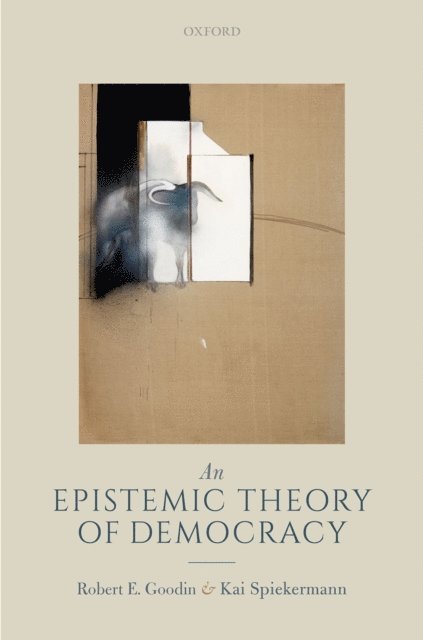
    An Epistemic Theory of Democracy

    AvRobert E. Goodin,Kai Spiekermann

    Inbunden, Engelska, 2018

    2 189 kr

    Beställningsvara. Skickas inom 5-8 vardagar. Fri frakt över 249 kr.

    Beskrivning

    Democracy has many attractive features. Among them is its tendency to track the truth, at least under certain idealized assumptions. That basic result has been known since 1785, when Condorcet published his famous jury theorem. But that theorem has typically been dismissed as little more than a mathematical curiosity, with assumptions too restrictive for it to apply to the real world. In An Epistemic Theory of Democracy, Goodin and Spiekermann propose different ways of interpreting voter independence and competence to make jury theorems more generally applicable. They go on to assess a wide range of familiar political practices and alternative institutional arrangements, to determine what constellation of them might most fully exploit the truth-tracking potential of majoritarian democracy. The book closes with a discussion of how epistemic democracy might be undermined, using as case studies the Trump and Brexit campaigns.

    Produktinformation

    • Utgivningsdatum:2018-05-03
    • Mått:164 x 242 x 33 mm
    • Vikt:876 g
    • Format:Inbunden
    • Språk:Engelska
    • Antal sidor:470
    • Förlag:OUP OXFORD
    • ISBN:9780198823452
    • Utmärkelser:Winner of the American Political Science Association's Ideas, Knowledge, and Politics Section Best Book Award

    Utforska kategorier

    • Statsskick: demokrati inom Samhälle och politik
    • Statsvetenskap och politisk teori inom Samhälle och politik
    • Filosofiska discipliner inom Filosofi och religion

    Mer om författaren

    Bob Goodin is Distinguished Professor of Philosophy at Australian National University. He is Founding Editor of the Journal of Political Philosophy and was General Editor of the eleven-volume series of Oxford Handbooks of Political Science. Goodin's work centres on political theory and public policy. He is co-author of, most recently, On Complicity and Compromise and Explaining Norms, both published by OUP in 2013. Kai Spiekermann is Associate Professor of Political Philosophy at the London School of Economics. Among his research interests are normative and positive political theory, philosophy of the social sciences, social epistemology and environmental change. He is particularly interested in applying formal methods, computational simulations, and experiments to problems in political philosophy. His recent publications have focused on mechanisms of norm avoidance, strategic ignorance and moral knowledge, on information aggregation, jury theorems and epistemic democracy, and on reductionism and holism in the social sciences.

    Recensioner i media

    "Let me just say this is an excellent, comprehensive study, systematically arragned by theme, of results that pertain to CJT.As well as bringing together old results and presenting some novel ones, the authors also deploy a mized method approach that combines analytical proofs and simulation analyses to shed light ont heir subject matter."

    Innehållsförteckning

    • 1: Introduction Part I: The Condorcet Jury Theorem 2: The Classic Framework 3: Extensions 4: Limitations 5: Independence Revisited Part II: Epistemic Enhancement 6: Improving Individual Competence 7: Diversity 8: Division of Epistemic Labour 9: Discussion and Deliberation Part III: Political Practices 10: Respecting Tradition 11: Following Leaders 12: Taking Cues 13: Pluralism: Differing Values & Priorities 14: Factionalism: Differing Interests Part IV: Structures of Government 15: Epistocracy or Democracy 16: Direct versus Representative Democracy 17: Institutional Hindrances to Epistemic Success 18: Institutional Aids to Epistemic Success Part V: Conclusions 19: The Relation Between Truth and Politics, Once Again 20: Headline Findings, Central Implications 21: Epilogue: What About Trump and Brexit? Appendices A1: Key to Notation A2: Estimating Group Competence by Monte Carlo Simulation