• Fri frakt över 249 kr
  • •
  • Snabba leveranser
  • •
  • Billiga böcker
Kundservice

Du är på sajten för privatpersoner.

Företag, bibliotek eller offentlig verksamhet?

Du handlar på classic.bokus.com, där alla dina funktioner finns intakta.
Till classic.bokus.com
Bokus logotyp. Gå till startsidan.
  • Erbjudanden
  • Nyheter
  • Student
  • Topplistor
  • Barn & ungdom
  • Bokus Play
  • E-böcker
  • Pocketböcker
  • Spel & pussel

10% rabatt på allt med kod: NYSTART10 →

Sidfot

Mina sidor

    Hjälp

    • Kundservice
    • Vanliga frågor och svar
    • Frakt och leverans
    • Retur vid ångerrätt
    • Reklamera vara
    • Betalning
    • Köpvillkor
    • Allmänna villkor
    • Information om webbplatsens tillgänglighet

    Om Bokus

    • Om oss
    • Pressrum
    • För studenter
    • För företag
    • För bibliotek och offentlig verksamhet
    • För leverantörer
    • Hållbarhet

    Populärt

    • Aktuella erbjudanden
    • Presentkort
    • Studentlitteratur
    • Nya böcker
    • Topplistor
    • Signerade böcker
    • Engelska böcker

    Inspiration

    • Boktips
    • BookTok
    • Populära bokserier
    • Barnbokskaraktärer
    • Populära författare
    Logotyp för Bokus
    Följ oss på Facebook (extern länk)Följ oss på Instagram (extern länk)Följ oss på YouTube (extern länk)Följ oss på TikTok (extern länk)
    bokus @ CookiesAnpassa cookiesIntegritetspolicyKöpvillkor
    Till Citymail hemsida (extern länk)Till Budbee hemsida (extern länk)Till Postnord hemsida (extern länk)Till Schenker hemsida (extern länk)Till Early Bird hemsida (extern länk)Till Walleys hemsida (extern länk)
    1. Samhälle och politik
    2. Samhälle och kultur
    3. Kultur och medier
    4. Kulturvetenskap

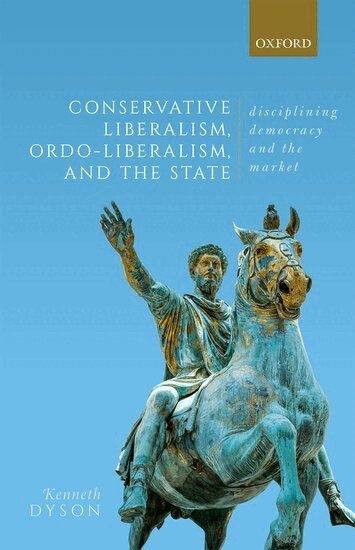
    Conservative Liberalism, Ordo-liberalism, and the State

    Disciplining Democracy and the Market

    AvKenneth Dyson

    Inbunden, Engelska, 2021

    2 766 kr

    Beställningsvara. Skickas inom 5-8 vardagar. Fri frakt över 249 kr.

    Fler format och utgåvor

    E-bok

    1 727 kr

    E-bok

    1 727 kr

    Beskrivning

    This book uses extensive original archival and elite interview research to examine the attempt to rejuvenate liberalism as a means of disciplining democracy and the market through a new rule-based economic and political order. This rebirth took the form of conservative liberalism and, in its most developed form, Ordo-liberalism. It occurred against the historical background of the great transformational crisis of liberalism in the first part of the twentieth century. Conservative liberalism evolved as a cross-national phenomenon. It included such eminent and cultured liberal economists as James Buchanan, Frank Knight, Henry Simons, Ralph Hawtrey, Jacques Rueff, Luigi Einaudi, Walter Eucken, Friedrich Hayek, Alfred Müller-Armack, Wilhelm Röpke, Alexander Rüstow, and Paul van Zeeland, as well as leading lawyers like Louis Brandeis, Franz Böhm, and Maurice Hauriou. Conservative liberals also played a formative role in establishing new international networks, notably the Mont Pèlerin Society. The book investigates the rich intellectual inheritance of this variant of new liberalism from aristocratic liberalism, ethical philosophy, and religious thought. It also locates the social basis of conservative liberalism and Ordo-liberalism in the cultivated bourgeois intelligentsia. The book goes on to examine the attempts to embed this new disciplinary form of liberalism in Britain, France, Germany, Italy, and the United States, and to consider the determinants of its varying significance across space and over time. It concludes by assessing the historical significance and contemporary relevance of conservative liberalism and Ordo-liberalism as liberalism confronts a new transformational crisis at the beginning of the new millennium. Is their promise of disciplining democracy and the market a hollow one?

    Produktinformation

    • Utgivningsdatum:2021-01-26
    • Mått:166 x 241 x 36 mm
    • Vikt:1 002 g
    • Format:Inbunden
    • Språk:Engelska
    • Antal sidor:584
    • Förlag:OUP OXFORD
    • ISBN:9780198854289

    Utforska kategorier

    • Kulturvetenskap inom Samhälle och politik
    • Ekonomisk politik inom Ekonomi och Ledarskap
    • Statsvetenskap och politisk teori inom Samhälle och politik

    Mer om författaren

    Kenneth Dyson is Visiting Professor of European Political Studies, School of Law and Politics, Cardiff University. His publications include States, Debt and Power (OUP, 2015), Architects of the Euro (co-edited with I Maes, OUP, 2016), and European Economic Governance and Policies (two volumes, with L Quaglia, OUP, 2010).

    Recensioner i media

    ... the final part of Dyson's book explores the conditions of its success or failure as an economic doctrine and as a policy practice in comparative perspective. This transnational investigation, based on rich sources, is in itself a great strength of the book.

    Innehållsförteckning

    • Part I: The Origins of Conservative Liberalism and Ordo-liberalism 1: Ordo-liberalism in Comparative and Historical Perspective 2: Conservative Liberalism and Ordo-liberalism: From Child to Midwife of Crisis in Capitalism and Democracy 3: Conservative Liberalism as a Disciplinary Revolution Part II: Patron Saints of Conservative Liberalism and Ordo-liberalism 4: Ordo-liberalism as Tradition, Ideology, and Model of Citizenship: Memorializing, Reinventing, Forgetting 5: Patron Saints: (1) The European Tradition of Aristocratic Liberalism 6: Patron Saints: (2) Continental European Ethical Philosophy 7: Patron Saints: (3) Theological Foundations of Ordo and Religious Traces Part III: The Significance of Conservative Liberalism and Ordo-liberalism 8: Just a Germanic Tradition? The Cross-National Significance of Conservative Liberalism 9: Conservative Liberalism in American and British Political Economy 10: Conservative Liberalism in French and Italian Political Economy 11: How Ordo-liberal is Germany? Ordo-liberalism in Post-War National Unifying Mythology 12: The Historical Significance and Contemporary Relevance of Conservative Liberalism and Ordo-liberalism: A Hollow Promise?