Inbunden, Engelska, 2024
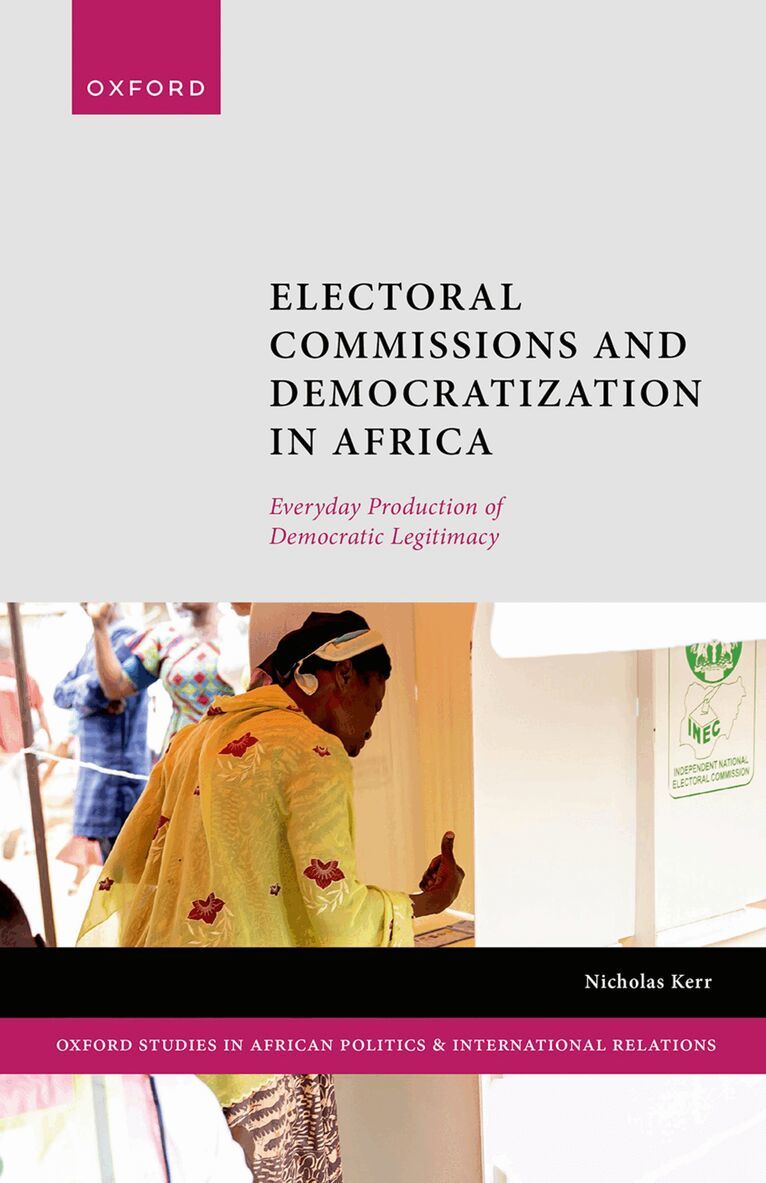
Electoral Commissions and Democratization in Africa
1659 kr
Beställningsvara. Skickas inom 5-8 vardagar. Fri frakt över 249 kr.
Beskrivning
Why do some countries hold elections that meet global democratic standards, while other countries do not? Electoral Commissions and Democratization in Africa makes a novel contribution to this question. In a departure from the typical story about the “boring” administrative tasks that electoral commissions carry out and their impact on international observers' assessments of election quality, Kerr aruges that electoral commissions provide valuable information that helps politicians and citizens resolve uncertainties about electoral fraud and administrative irregularities. Whereas previous research focuses on the institutional design of electoral commissions, this book privileges their actual performance and focuses on two attributes: autonomy and capacity. By serving an informational role, the autonomy and capacity of electoral commissions influences how citizens and elites think about and behave during elections. This includes whether political elites and citizens participate in elections, engage in electoral fraud and violence, accept electoral outcomes, and express confidence in elections. These attitudes and behaviors, in turn, influence whether elections meet democratic standards (election quality) and whether political elites and citizens regard election processes as acceptable (election legitimacy). This book brings together evidence from public opinion surveys, elite surveys, field research, and cross-national databases to give an unusually rich empirical exploration of the dynamics of elections and democracy in sub-Saharan Africa since the 1990s, with a focused case study of Nigeria. Electoral Commissions and Democratization in Africa will be appealing to scholars and policymakers interested in democratization and elections.Oxford Studies in African Politics and International Relations is a series for scholars and students working on African politics and International Relations and related disciplines. Volumes concentrate on contemporary developments in African political science, political economy, and International Relations, such as electoral politics, democratization, decentralization, gender and political representation, the political impact of natural resources, the dynamics and consequences of conflict, comparative political thought, and the nature of the continent's engagement with the East and West. Comparative and mixed methods work is particularly encouraged, as is interdisciplinary research and work that considers ethical issues relating to the study of Africa. Case studies are welcomed but should demonstrate the broader theoretical and empirical implications of the study and its wider relevance to contemporary debates. The focus of the series is on sub-Saharan Africa, although proposals that explain how the region engages with North Africa and other parts of the world are of interest.Series Editors: Nic Cheeseman, Professor of Democracy and International Development, University of Birmingham; Peace Medie, Senior Lecturer in Gender and International Politics, University of Bristol; and Ricardo Soares de Oliveira, Professor of the International Politics of Africa, University of Oxford.
Produktinformation
- Utgivningsdatum: 2024-09-19
- Mått: 160 x 240 x 25 mm
- Vikt: 694 g
- Format: Inbunden
- Språk: Engelska
- Serie: Oxford Studies in African Politics and International Relations
- Antal sidor: 384
- Förlag: OUP OXFORD
- ISBN: 9780198895367
Utforska kategorier
Betyg & recensioner
0 recensioner
Inga recensioner tillgängliga.