• Fri frakt över 249 kr
  • •
  • Snabba leveranser
  • •
  • Billiga böcker
Kundservice

Du är på sajten för privatpersoner.

Företag, bibliotek eller offentlig verksamhet?

Du handlar på classic.bokus.com, där alla dina funktioner finns intakta.
Till classic.bokus.com
Bokus logotyp. Gå till startsidan.
  • Erbjudanden
  • Nyheter
  • Student
  • Topplistor
  • Barn & ungdom
  • Bokus Play
  • E-böcker
  • Pocketböcker
  • Spel & pussel

10% studentrabatt med kod TERM26

Sidfot

Mina sidor

    Hjälp

    • Kundservice
    • Vanliga frågor och svar
    • Frakt och leverans
    • Retur vid ångerrätt
    • Reklamera vara
    • Betalning
    • Köpvillkor
    • Allmänna villkor
    • Information om webbplatsens tillgänglighet

    Om Bokus

    • Om oss
    • Pressrum
    • För studenter
    • För företag
    • För bibliotek och offentlig verksamhet
    • För leverantörer
    • Hållbarhet

    Populärt

    • Aktuella erbjudanden
    • Presentkort
    • Studentlitteratur
    • Nya böcker
    • Topplistor
    • Signerade böcker
    • Engelska böcker

    Inspiration

    • Boktips
    • BookTok
    • Populära bokserier
    • Barnbokskaraktärer
    • Populära författare
    Logotyp för Bokus
    Följ oss på Facebook (extern länk)Följ oss på Instagram (extern länk)Följ oss på YouTube (extern länk)Följ oss på TikTok (extern länk)
    bokus @ CookiesAnpassa cookiesIntegritetspolicyKöpvillkor
    Till Citymail hemsida (extern länk)Till Budbee hemsida (extern länk)Till Postnord hemsida (extern länk)Till Schenker hemsida (extern länk)Till Early Bird hemsida (extern länk)Till Walleys hemsida (extern länk)
    1. Samhälle och politik
    2. Samhälle och kultur
    3. Kultur och medier
    4. Kulturvetenskap

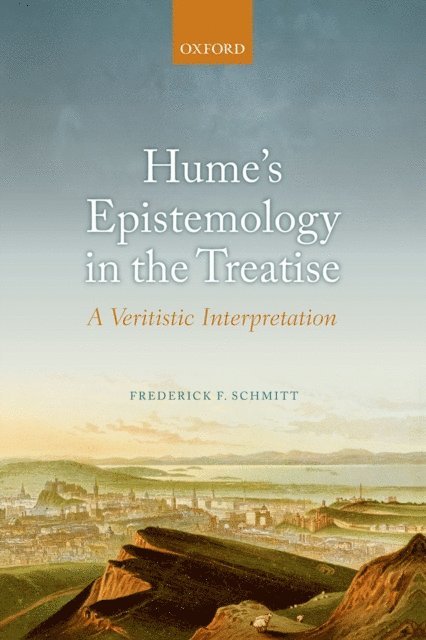
    Hume's Epistemology in the Treatise

    A Veritistic Interpretation

    AvFrederick F. Schmitt

    Inbunden, Engelska, 2014

    Del i serien Oxford University Press (UK)

    1 670 kr

    Beställningsvara. Skickas inom 5-8 vardagar. Fri frakt över 249 kr.

    Fler format och utgåvor

    E-bok

    923 kr

    Beskrivning

    Frederick F. Schmitt offers a systematic interpretation of David Hume's epistemology, as it is presented in the indispensable A Treatise of Human Nature. Hume's text alternately manifests scepticism, empiricism, and naturalism in epistemology. Interpretations of his epistemology have tended to emphasise one of these apparently conflicting positions over the others. But Schmitt argues that the positions can be reconciled by tracing them to a single underlying epistemology of knowledge and probability quietly at work in the text, an epistemology according to which truth is the chief cognitive merit of a belief, and knowledge and probable belief are species of reliable belief. Hume adopts Locke's dichotomy between knowledge and probability and reassigns causal inference from its traditional place in knowledge to the domain of probability--his most significant departure from earlier accounts of cognition. This shift of causal inference to an associative and imaginative operation raises doubts about the merit of causal inference, suggesting the counterintuitive consequence that causal inference is wholly inferior to knowledge-producing demonstration. To defend his associationist psychology of causal inference from this suggestion, Hume must favourably compare causal inference with demonstration in a manner compatible with associationism. He does this by finding an epistemic status shared by demonstrative knowledge and causally inferred beliefs--the status of justified belief. On the interpretation developed here, he identifies knowledge with infallible belief and justified belief with reliable belief, i.e., belief produced by truth-conducive belief-forming operations. Since infallibility implies reliable belief, knowledge implies justified belief. He then argues that causally inferred beliefs are reliable, so share this status with knowledge. Indeed Hume assumes that causally inferred beliefs enjoy this status in his very argument for associationism. On the reliability interpretation, Hume's accounts of knowledge and justified belief are part of a broader veritistic epistemology making true belief the chief epistemic value and goal of science. The veritistic interpretation advanced here contrasts with interpretations on which the chief epistemic value of belief is its empirical adequacy, stability, or fulfilment of a natural function, as well as with the suggestion that the chief value of belief is its utility for common life. Veritistic interpretations are offered of the natural function of belief, the rules of causal inference, scepticism about body and matter, and the criteria of justification. As Schmitt shows, there is much attention to Hume's sources in Locke and to the complexities of his epistemic vocabulary.
    Produktinformation

    • Utgivningsdatum:2014-01-30
    • Mått:163 x 237 x 32 mm
    • Vikt:814 g
    • Format:Inbunden
    • Språk:Engelska
    • Serie:Oxford University Press (UK)
    • Antal sidor:444
    • Förlag:OUP OXFORD
    • ISBN:9780199683116

    Utforska kategorier

    • Kulturvetenskap inom Samhälle och politik
    • Filosofiska discipliner inom Filosofi och religion

    Mer om författaren

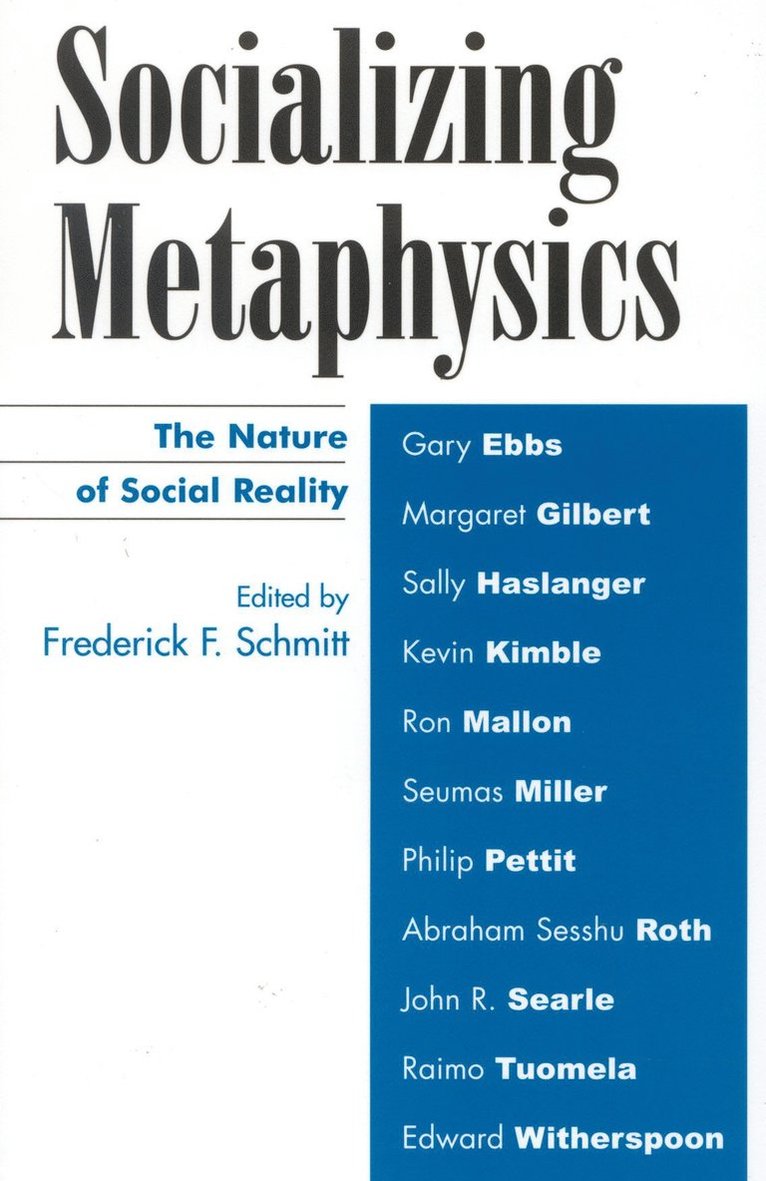
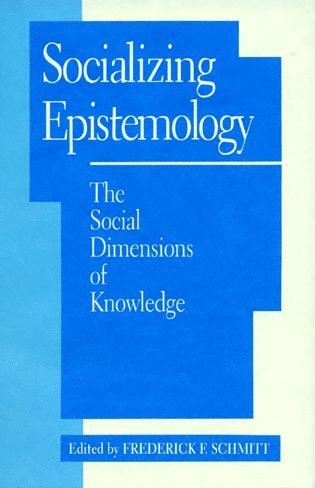
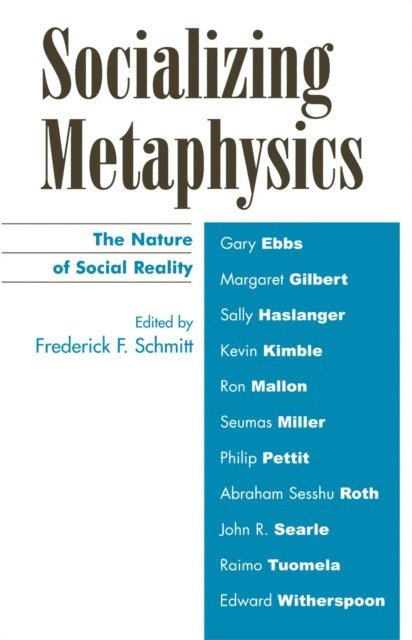
    Frederick F. Schmitt is Professor of Philosophy at Indiana University. He specialises in epistemology, metaphysics, and the history of those subjects, especially British empiricism. He has worked on reliability and naturalistic epistemology, as well as internalism and externalism about justified belief; social epistemology, especially testimony and group justification (editing a volume on the subject, Socializing Epistemology, Rowman & Littlefield, 1994); and the metaphysics of collectivities (editing Socializing Metaphysics, Rowman & Littlefield, 2003). He is the author of an introductory book, Truth: A Primer (Westview Press, 1995), and editor of Theories of Truth (Blackwell, 2004). He has written articles on the epistemology of Descartes and Peirce. Recently, he has examined the epistemology of cognitive capacities and dispositions (specifically, intelligence and and curiosity) and the philosophy of David Hume. He is an associate editor of Episteme.

    Recensioner i media

    Frederick F. Schmitt's Hume's Epistemology in the Treatise: A Veritistic Interpretation is a formidable work. It offers a careful, rich, and detailed interpretation of Hume's epistemology, which Schmitt then uses to illuminate some of the more perplexing aspects of Hume's masterpiece... Schmitt's research is impeccable and strikes an excellent balance between philosophical interpretation and historical contextualization... the familiar reviewer's refrain that it is impossible to do justice to the work under review was never truer than in this case.

    Innehållsförteckning

    • DIVISION I. KNOWLEDGE, BELIEF, AND JUSTIFICATION; DIVISION II. CAUSAL INFERENCE; DIVISION III. SCEPTICISM ABOUT EXTERNAL EXISTENCES; DIVISION IV. SCEPTICISM ABOUT REASON