• Fri frakt över 249 kr
  • •
  • Snabba leveranser
  • •
  • Billiga böcker
Kundservice

Du är på sajten för privatpersoner.

Företag, bibliotek eller offentlig verksamhet?

Du handlar på classic.bokus.com, där alla dina funktioner finns intakta.
Till classic.bokus.com
Bokus logotyp. Gå till startsidan.
  • Erbjudanden
  • Nyheter
  • Student
  • Topplistor
  • Barn & ungdom
  • Bokus Play
  • E-böcker
  • Pocketböcker
  • Spel & pussel

10% rabatt på allt med kod NYSTART10 →

Sidfot

Mina sidor

    Hjälp

    • Kundservice
    • Vanliga frågor och svar
    • Frakt och leverans
    • Retur vid ångerrätt
    • Reklamera vara
    • Betalning
    • Köpvillkor
    • Allmänna villkor
    • Information om webbplatsens tillgänglighet

    Om Bokus

    • Om oss
    • Pressrum
    • För studenter
    • För företag
    • För bibliotek och offentlig verksamhet
    • För leverantörer
    • Hållbarhet

    Populärt

    • Aktuella erbjudanden
    • Presentkort
    • Studentlitteratur
    • Nya böcker
    • Topplistor
    • Signerade böcker
    • Engelska böcker

    Inspiration

    • Boktips
    • BookTok
    • Populära bokserier
    • Barnbokskaraktärer
    • Populära författare
    Logotyp för Bokus
    Följ oss på Facebook (extern länk)Följ oss på Instagram (extern länk)Följ oss på YouTube (extern länk)Följ oss på TikTok (extern länk)
    bokus @ CookiesAnpassa cookiesIntegritetspolicyKöpvillkor
    Till Citymail hemsida (extern länk)Till Budbee hemsida (extern länk)Till Postnord hemsida (extern länk)Till Schenker hemsida (extern länk)Till Early Bird hemsida (extern länk)Till Walleys hemsida (extern länk)
    1. Språk och ordböcker
    2. Språkvetenskap och lingvistik

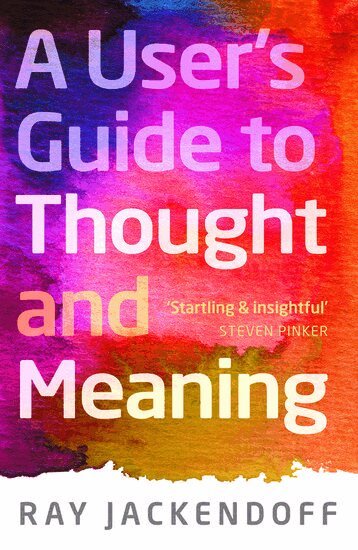
    A User's Guide to Thought and Meaning

    AvRay Jackendoff

    Inbunden, Engelska, 2012

    597 kr

    Beställningsvara. Skickas inom 3-6 vardagar. Fri frakt över 249 kr.

    Fler format och utgåvor

    Häftad

    405 kr

    Beskrivning

    A User's Guide to Thought and Meaning presents a profound and arresting integration of the faculties of the mind - of how we think, speak, and see the world. Ray Jackendoff starts out by looking at languages and what the meanings of words and sentences actually do. He shows that meanings are more adaptive and complicated than they're commonly given credit for, and he is led to some basic questions: How do we perceive and act in the world? How do we talk about it? And how can the collection of neurons in the brain give rise to conscious experience? As it turns out, the organization of language, thought, and perception does not look much like the way we experience things, and only a small part of what the brain does is conscious. Jackendoff concludes that thought and meaning must be almost completely unconscious. What we experience as rational conscious thought - which we prize as setting us apart from the animals - in fact rides on a foundation of unconscious intuition. Rationality amounts to intuition enhanced by language.Written with an informality that belies both the originality of its insights and the radical nature of its conclusions, A User's Guide to Thought and Meaning is the author's most important book since the groundbreaking Foundations of Language in 2002.

    Produktinformation

    • Utgivningsdatum:2012-02-23
    • Mått:155 x 236 x 25 mm
    • Vikt:545 g
    • Format:Inbunden
    • Språk:Engelska
    • Antal sidor:288
    • Förlag:OUP OXFORD
    • ISBN:9780199693207

    Utforska kategorier

    • Språkvetenskap och lingvistik inom Språk och ordböcker
    • Filosofiska discipliner inom Filosofi och religion
    • Biovetenskap inom Naturvetenskap och teknik

    Mer om författaren

    Ray Jackendoff is Seth Merrin Professor of Philosophy and Co-Director of the Center for Cognitive Studies at Tufts University. His books include Semantics and Cognition (MIT 1983), Consciousness and the Computational Mind (MIT 1987), The Architecture of the Language Faculty (MIT 1997), Foundations of Language (OUP 2002), Simpler Syntax (with Peter Culicover, OUP 2005), Language, Consciousness, Culture: Essays on Mental Structure (MIT 2007), and Meaning and the Lexicon: The Parallel Architecture, 1975-2010 (OUP, 2010). He is the 2014 recipient of the David E. Rumelhart Prize, the premier award in the field of cognitive science.

    Recensioner i media

    Ray Jackendoff has an uncanny ability to ask interesting and pressing questions. Anyone interested in language and thought should ask such questions. The asking itself is the primary intellectual act - that, and of course the ordering of the asking, which is by no means obvious and constantly problematical, as he well knows and kindly informs the reader. As for providing answers, pivotal questions may have answers, but they are complex and never simple and thus require extremely careful expression. In his effort to treat his readers in a way that is warm and friendly, he sometimes employs phrases ("kind of," "sort of," "well, like," and other things relaxed speakers tend to say) which I do not find essential, but which for others will surely have the effect of making the issues clear and comprehensible.

    Innehållsförteckning

    • PART ONE: LANGUAGE, WORDS, AND MEANING; PART TWO: CONSCIOUSNESS AND PERCEPTION; PART THREE: REFERENCE, TRUTH, AND THOUGHT; PART IV: A LARGER VIEW