• Fri frakt över 249 kr
  • •
  • Snabba leveranser
  • •
  • Billiga böcker
Kundservice

Du är på sajten för privatpersoner.

Företag, bibliotek eller offentlig verksamhet?

Du handlar på classic.bokus.com, där alla dina funktioner finns intakta.
Till classic.bokus.com
Bokus logotyp. Gå till startsidan.
  • Erbjudanden
  • Nyheter
  • Student
  • Topplistor
  • Barn & ungdom
  • Bokus Play
  • E-böcker
  • Pocketböcker
  • Spel & pussel

10% rabatt på allt med kod NYSTART10 →

Sidfot

Mina sidor

    Hjälp

    • Kundservice
    • Vanliga frågor och svar
    • Frakt och leverans
    • Retur vid ångerrätt
    • Reklamera vara
    • Betalning
    • Köpvillkor
    • Allmänna villkor
    • Information om webbplatsens tillgänglighet

    Om Bokus

    • Om oss
    • Pressrum
    • För studenter
    • För företag
    • För bibliotek och offentlig verksamhet
    • För leverantörer
    • Hållbarhet

    Populärt

    • Aktuella erbjudanden
    • Presentkort
    • Studentlitteratur
    • Nya böcker
    • Topplistor
    • Signerade böcker
    • Engelska böcker

    Inspiration

    • Boktips
    • BookTok
    • Populära bokserier
    • Barnbokskaraktärer
    • Populära författare
    Logotyp för Bokus
    Följ oss på Facebook (extern länk)Följ oss på Instagram (extern länk)Följ oss på YouTube (extern länk)Följ oss på TikTok (extern länk)
    bokus @ CookiesAnpassa cookiesIntegritetspolicyKöpvillkor
    Till Citymail hemsida (extern länk)Till Budbee hemsida (extern länk)Till Postnord hemsida (extern länk)Till Schenker hemsida (extern länk)Till Early Bird hemsida (extern länk)Till Walleys hemsida (extern länk)
    1. Samhälle och politik
    2. Samhälle och kultur
    3. Kultur och medier
    4. Referensverk och tvärvetenskap

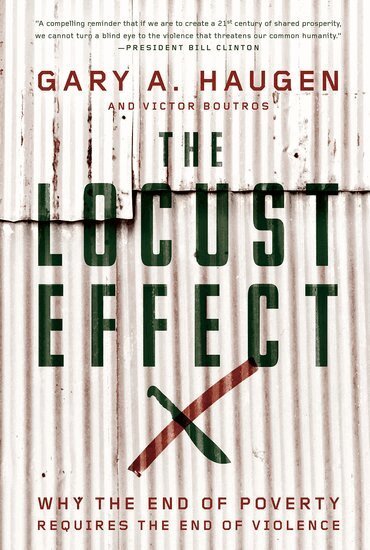
    The Locust Effect

    Why the End of Poverty Requires the End of Violence

    AvGary A. Haugen,Victor Boutros

    Inbunden, Engelska, 2014

    242 kr

    Beställningsvara. Skickas inom 5-8 vardagar. Fri frakt över 249 kr.

    Fler format och utgåvor

    Häftad

    181 kr

    Beskrivning

    World poverty is both an intractable and ever-mutable problem. It has afflicted humanity since the earliest times, but its basic features -- aside from the constant, want -- have evolved as history has moved from epoch to epoch. Today, there is broad recognition that a significant segment of the global population (the 'bottom billion,' to use Paul Collier's term) is impoverished despite the globalization of the world economy. Two questions -- why destitution is so persistent despite massive global economic growth and what can be done about it -- have animated debates among development scholars and poverty researchers for decades. Those who concentrate on the first question focus on the failure of anti-poverty efforts and typically stress why particular solutions on offer have not worked. Those addressing the second question have focused on either improving material conditions or on creating institutional frameworks (economic, social and political) that will allow the masses in poor countries to escape from poverty. Yet until now, virtually no one has addressed in a substantial way the most basic precondition for alleviating poverty: human safety. In most poverty-stricken areas of the world, violence is endemic. Whether it is generated by criminals who operate with complete abandon or by the state itself via predatory police forces, violence and threat of it have locked hundreds of millions of people into poverty. Gary Haugen and Victor Boutros's The Locust Effect focuses on the central role of violence in perpetuating poverty, and shows that if any headway is to be made, this issue has to become a top priority for policymakers. Simply put, if people aren't safe, nothing else matters. Shipping grain to the poor, helping them vote, or assisting their efforts to start a farm is irrelevant. Whatever material improvements we provide will simply wash away in the face of the corrupt police forces, out-of-control, armies, private militias, organized criminals, and -- not least -- failed justice systems that plague poor countries. Throughout, the book will feature real-world stories ranging from Thailand to Bolivia to India to Nigeria that vividly depict how violence undercuts antipoverty efforts. While they argue that this violence is the fundamental issue facing the antipoverty movement, they do not merely identify the problem. They also draw from their experience running the International Justice Mission to show that ground-up efforts to reform legal and public justice systems can generate real, positive results. Sweeping in geographical scope and filled with unforgettable stories of individuals trapped within the mutually reinforcing cycle of poverty and violence, The Locust Effect will force us to rethink everything we know about the causes of poverty and why it is so difficult to root out.

    Produktinformation

    • Utgivningsdatum:2014-03-13
    • Mått:163 x 239 x 33 mm
    • Vikt:612 g
    • Format:Inbunden
    • Språk:Engelska
    • Antal sidor:368
    • Förlag:OUP USA
    • ISBN:9780199937875
    • Utmärkelser:2016 Grawemeyer Award for Ideas Improving World Order

    Utforska kategorier

    • Referensverk och tvärvetenskap inom Samhälle och politik
    • Folkrätt inom Juridik
    • Politiskt förtryck inom Samhälle och politik

    Mer om författaren

    Gary Haugen is President and CEO of International Justice Mission and Lecturer at the University of Chicago Law SchoolVictor Boutros serves a federal prosecutor who investigates and tries international human trafficking, official misconduct, and hate crimes cases around the country on behalf of the U.S. Department of Justice. He holds degrees from Baylor, Harvard, Oxford, and the University of Chicago. He has written on human rights and foreign affairs and has been a lecturer on the faculty of the University of Chicago Law School.

    Recensioner i media

    The most powerful book I've read in years

    Innehållsförteckning

    • I. The Deeper Waters of Violence ; Chapter One: The Desperate Drama Beneath the Surface ; Chapter Two: Five Nightmares that Destroy the Dream ; II. If You're Not Safe, Nothing Else Matters ; Chapter Three: The Poor Have No Protection and The Emperor Has No Clothes Chapter Four: No Medical Remedy for Violence ; Chapter Five: Violence and the Dream of Universal Human Rights ; Chapter Six: Interesting But Not Helpful ; III. The Invisible Oxygen the Global Poor Don't Get to Breathe ; Chapter Seven: Impunity Not Poverty ; Chapter Eight: The Invisible Oxygen of Law and Order ; Chapter Nine: Inside the Public Justice Pipeline ; IV. Why So Broken? Three Surprising Stories ; Chapter Ten: The Absurdity that Makes Sense ; Chapter Eleven: Private Substitutes for Public Justice ; Chapter Twelve: You Get What You Pay For ; Chapter Thirteen: Threats to the Status Quo ; V. Justice is Possible for the Poor: The Problem that Simply Must-and Can-be Solved ; Chapter Fourteen: Hope and the Recovery of a Lost History ; Chapter Fifteen: Lessons of Hope from an Emerging Methodology ; Chapter Sixteen: A Way Forward: What We All Need to Do Now