• Fri frakt över 249 kr
  • •
  • Snabba leveranser
  • •
  • Billiga böcker
Kundservice

Du är på sajten för privatpersoner.

Företag, bibliotek eller offentlig verksamhet?

Du handlar på classic.bokus.com, där alla dina funktioner finns intakta.
Till classic.bokus.com
Bokus logotyp. Gå till startsidan.
  • Erbjudanden
  • Nyheter
  • Student
  • Topplistor
  • Barn & ungdom
  • Bokus Play
  • E-böcker
  • Pocketböcker
  • Spel & pussel

Må bättre, för mindre! Upp till 50% rabatt på hälsoböcker

Sidfot

Mina sidor

    Hjälp

    • Kundservice
    • Vanliga frågor och svar
    • Frakt och leverans
    • Retur vid ångerrätt
    • Reklamera vara
    • Betalning
    • Köpvillkor
    • Allmänna villkor
    • Information om webbplatsens tillgänglighet

    Om Bokus

    • Om oss
    • Pressrum
    • För studenter
    • För företag
    • För bibliotek och offentlig verksamhet
    • För leverantörer
    • Hållbarhet

    Populärt

    • Aktuella erbjudanden
    • Presentkort
    • Studentlitteratur
    • Nya böcker
    • Topplistor
    • Signerade böcker
    • Engelska böcker

    Inspiration

    • Boktips
    • BookTok
    • Populära bokserier
    • Barnbokskaraktärer
    • Populära författare
    Logotyp för Bokus
    Följ oss på Facebook (extern länk)Följ oss på Instagram (extern länk)Följ oss på YouTube (extern länk)Följ oss på TikTok (extern länk)
    bokus @ CookiesAnpassa cookiesIntegritetspolicyKöpvillkor
    Till Citymail hemsida (extern länk)Till Budbee hemsida (extern länk)Till Postnord hemsida (extern länk)Till Schenker hemsida (extern länk)Till Early Bird hemsida (extern länk)Till Walleys hemsida (extern länk)
    1. Skönlitteratur
    2. Litteraturvetenskap
    3. Litteraturteori

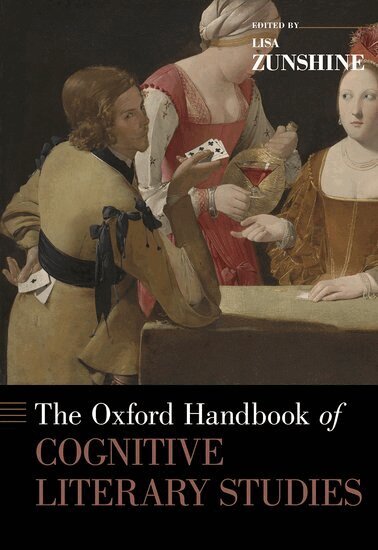
    The Oxford Handbook of Cognitive Literary Studies

    AvLisa Zunshine

    Inbunden, Engelska, 2015

    Del i serien Oxford Handbooks

    3 487 kr

    Beställningsvara. Skickas inom 5-8 vardagar. Fri frakt över 249 kr.

    Beskrivning

    The Oxford Handbook of Cognitive Literary Studies applies developments in cognitive science to a wide range of literary texts that span multiple historical periods and numerous national literary traditions. The volume is divided into five parts: (1) Narrative, History, Imagination; (2) Emotions and Empathy; (3) The New Unconscious; (4) Empirical and Qualitative Studies of Literature; and (5) Cognitive Theory and Literary Experience. Most notably, the volume features case studies representing not just North American and British literary traditions, but also Argentinian (Jorge Luis Borges, Julio Cortázar), Chinese (Cao Xueqin), Colombian (García Márquez), Dominican (Junot Díaz), German (Theodore Fontane), French (Marcel Proust, Gustave Flaubert), Indian (Mirabai, Rabindranath Tagore, Kamala Markandaya, Mani Ratnam, Tito Mukhopadhyay), Mexican (Fernando del Paso), Polish (Krystof Kieslowski), Puerto Rican (Giannina Braschi), Russian (Lev Tolstoi), South African (J. M. Coetzee), and Spanish (Leopoldo Alas). Moreover, the volume will cover a variety of periods (e.g., Renaissance, Eighteenth century, Romantic, Victorian, and Modernist, and post-modern periods) and genres, including those associated with popular culture, such as science fiction (China Mieville), fantasy (Anne Rice), and graphic narratives (Rius's Los supermachos and Gilbert Hernandez's Troublemakers).

    Produktinformation

    • Utgivningsdatum:2015-02-12
    • Mått:175 x 249 x 45 mm
    • Vikt:1 270 g
    • Format:Inbunden
    • Språk:Engelska
    • Serie:Oxford Handbooks
    • Antal sidor:680
    • Förlag:OUP USA
    • ISBN:9780199978069

    Utforska kategorier

    • Litteraturteori inom Skönlitteratur
    • Litteraturvetenskap inom Skönlitteratur
    • Referensverk och tvärvetenskap inom Samhälle och politik

    Mer om författaren

    Lisa Zunshine is Bush-Holbrook Professor of English at the University of Kentucky. She is the author or editor of ten books, including Why We Read Fiction: Theory of Mind and the Novel (Ohio State UP, 2006), Strange Concepts and the Stories They Make Possible: Cognition, Culture, Narrative (Johns Hopkins UP, 2008), Introduction to Cognitive Cultural Studies (Johns Hopkins UP, 2010) and Getting Inside Your Head: What Cognitive Science Can Tell Us About Popular Culture (Johns Hopkins UP, forthcoming in 2012).

    Innehållsförteckning

    • Lisa Zunshine, "Introduction to Cognitive Literary Studies" ; Part I: Narrative, History, Imagination ; Cognitive Historicism ; 1. Mary Thomas Crane, "Cognitive Historicism: Intuition in Early Modern Thought" ; 2. Ellen Spolsky, "The Biology of Failure, the Forms of Rage, and the Equity of Revenge" ; 3. Natalie M. Phillips, "Literary Neuroscience and History of Mind: An Interdisciplinary fMRI Study of Attention and Jane Austen" ; Cognitive Narratology ; 4. Peter Rabinowitz, "Toward a Narratology of Cognitive Flavor" ; 5. H. Porter Abbott, "How Do We Read What Isn't There to Be Read? Shadow Stories and Permanent Gaps" ; 6. James Phelan, "Rhetorical Theory, Cognitive Theory, and Morrison's 'Recitatif': From Parallel Play to Productive Collaboration" ; 7. Alan Palmer, "Listen to the Stories!:" Narrative, Cognition and Country and Western Music" ; 8. Monika Fludernik, "Blending in Cartoons: The Production of Comedy" ; 9. Lisa Zunshine, "From the Social to the Literary: Approaching Cao Xueqin's The Story of the Stone from a Cognitive Perspective" ; Cognitive Queer Theory ; 10. J. Keith Vincent, "Sex on the Mind: Queer Theory Meets Cognitive Theory" ; Neuroaesthetics ; 11. Alan Richardson, "Imagination: Literary and Cognitive Intersections" ; 12. Gabrielle Starr, "Theorizing Imagery, Aesthetics and Doubly-Directed States" ; Part II: Emotions and Empathy ; Emotions in Literature, Film, and Theater ; 13. Patrick Colm Hogan, "What Literature Teaches Us About Emotion: Synthesizing Affective Science and Literary Study" ; 14. Carl Plantinga, "Facing Others: Close-ups of Faces in Narrative Film and in The Silence of the Lambs" ; 15. Noel Carroll, "Theater and the Emotion" ; Cognitive Postcolonial Studies ; 16. Patrick Colm Hogan, "The Psychology of Colonialism and Postcolonialism: Cognitive Approaches to Identity and Empathy" ; 17. Suzanne Keen, "Human Rights Discourse and Universals of Cognition and Emotion: Postcolonial Fiction" ; Decision Theory and Fiction ; 18. William Flesch, "Reading and Bargaining" ; Cognitive Disability Studies ; 19. Ralph James Savarese, "What Some Autistics Can Teach Us About Poetry: A Neurocosmopolitan Approach" ; Moral Emotions ; 20. Margrethe Bruun Vaage, "On the Repulsive Rapist, and the Difference Between Morality in Fiction and Real Life" ; 21. Fritz Alwin Breithaupt, "Empathic Sadism. How Readers Get Implicated" ; Part III: The New Unconscious ; 22. Blakey Vermeule, "The New Unconscious: A Literary Guided Tour" ; 23. Jeff Smith, "Filmmakers as Folk Psychologists: How Filmmakers Exploit Cognitive Biases as an Aspect of Film Narration, Characterization and Spectatorship" ; Part IV: Empirical and Qualitative Studies of Literature ; 24. Laura Otis, "The Value of Qualitative Research for Cognitive Literary Studies" ; 25. Marisa Bortolussi and Peter Dixon, "Revisiting the Metaphor of 'Transportation'" ; 26. Peter Dixon and Marisa Bortolusi, "Fluctuation in Literary Reading: The Neglected Dimension of Time" ; Part V: Cognitive Theory and Literary Experience ; 27. Joshua Landy, "Mental Calisthenics and Self-Reflexive Fiction" ; 28. Elaine Auyoung, "Rethinking the Reality Effect: Detail and the Novel" ; 29. Mark Bruhn, "Time as Space in the Structure of (Literary) Experience: The Prelude" ; 30. Nancy Easterlin, "Thick Context: Novelty in Cognition and Literature"