• Fri frakt över 249 kr
  • •
  • Snabba leveranser
  • •
  • Billiga böcker
Kundservice

Du är på sajten för privatpersoner.

Företag, bibliotek eller offentlig verksamhet?

Du handlar på classic.bokus.com, där alla dina funktioner finns intakta.
Till classic.bokus.com
Bokus logotyp. Gå till startsidan.
  • Erbjudanden
  • Nyheter
  • Student
  • Topplistor
  • Barn & ungdom
  • Bokus Play
  • E-böcker
  • Pocketböcker
  • Spel & pussel

10% rabatt på allt med kod NYSTART10 →

Sidfot

Mina sidor

    Hjälp

    • Kundservice
    • Vanliga frågor och svar
    • Frakt och leverans
    • Retur vid ångerrätt
    • Reklamera vara
    • Betalning
    • Köpvillkor
    • Allmänna villkor
    • Information om webbplatsens tillgänglighet

    Om Bokus

    • Om oss
    • Pressrum
    • För studenter
    • För företag
    • För bibliotek och offentlig verksamhet
    • För leverantörer
    • Hållbarhet

    Populärt

    • Aktuella erbjudanden
    • Presentkort
    • Studentlitteratur
    • Nya böcker
    • Topplistor
    • Signerade böcker
    • Engelska böcker

    Inspiration

    • Boktips
    • BookTok
    • Populära bokserier
    • Barnbokskaraktärer
    • Populära författare
    Logotyp för Bokus
    Följ oss på Facebook (extern länk)Följ oss på Instagram (extern länk)Följ oss på YouTube (extern länk)Följ oss på TikTok (extern länk)
    bokus @ CookiesAnpassa cookiesIntegritetspolicyKöpvillkor
    Till Citymail hemsida (extern länk)Till Budbee hemsida (extern länk)Till Postnord hemsida (extern länk)Till Schenker hemsida (extern länk)Till Early Bird hemsida (extern länk)Till Walleys hemsida (extern länk)
    1. Psykologi och pedagogik
    2. Psykologi
    3. Psykologi: känslor

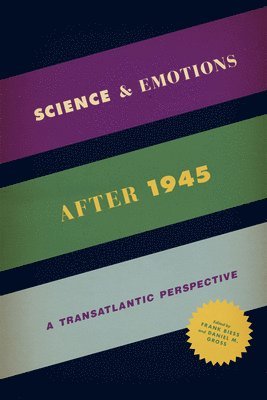
    Science and Emotions after 1945

    A Transatlantic Perspective

    AvFrank Biess,Daniel M. Gross

    Häftad, Engelska, 2014

    357 kr

    Beställningsvara. Skickas inom 5-8 vardagar. Fri frakt över 249 kr.

    Beskrivning

    Through the first half of the twentieth century, emotions were a legitimate object of scientific study across a variety of disciplines. After 1945, however, in the wake of Nazi irrationalism, emotions became increasingly marginalized and postwar rationalism took central stage. Emotion remained on the scene of scientific and popular study, but largely at the fringes as a behavioral reflex, or as a concern of the private sphere. So why, by the 1960s, had the study of emotions returned to the forefront of academic investigation? In Science and Emotions after 1945, Frank Biess and Daniel M. Gross chronicle the curious resurgence of emotion studies and show that it was fueled by two very different sources: social movements of the 1960s and brain science. A central claim of the book is that the relatively recent neuroscientific study of emotion did not initiate - but instead consolidated - the emotional turn by clearing the ground for multidisciplinary work on the emotions.Science and Emotions after 1945 tells the story of this shift by looking closely at scientific disciplines in which the study of emotions has featured prominently, including medicine, psychiatry, neuroscience, and the social sciences, viewed in each case from a humanities perspective.

    Produktinformation

    • Utgivningsdatum:2014-05-22
    • Mått:16 x 23 x 3 mm
    • Vikt:652 g
    • Format:Häftad
    • Språk:Engelska
    • Antal sidor:384
    • Förlag:The University of Chicago Press
    • ISBN:9780226126487

    Utforska kategorier

    • Psykologi: känslor inom Psykologi och pedagogik
    • Biovetenskap inom Naturvetenskap och teknik

    Mer om författaren

    Frank Biess is professor of history at the University of California, San Diego and the author of Homecomings: Returning POWs and the Legacies of Defeat in Postwar Germany. He lives in California. Daniel M. Gross is associate professor of English at the University of California, Irvine. He is the author of The Secret History of Emotion: From Aristotle's "Rhetoric" to Modern Brain Science. He lives in California.

    Recensioner i media

    "In this book of lively essays, the 1950s, with its cold war panic; the 1960s, with its women's movement; and the 1970s, with its totalizing market economies are here shown-along with many other historically salient moments-to be the unexpected catalysts of today's scientific culture. Science and Emotions after 1945 tells us not only why the sciences today are so interested in emotions but also how humanists can critique, use, and transform such insights in their own work on emotions." (Barbara H. Rosenwein, Loyola University Chicago)"