• Fri frakt över 249 kr
  • •
  • Snabba leveranser
  • •
  • Billiga böcker
Kundservice

Du är på sajten för privatpersoner.

Företag, bibliotek eller offentlig verksamhet?

Du handlar på classic.bokus.com, där alla dina funktioner finns intakta.
Till classic.bokus.com
Bokus logotyp. Gå till startsidan.
  • Erbjudanden
  • Nyheter
  • Student
  • Topplistor
  • Barn & ungdom
  • Bokus Play
  • E-böcker
  • Pocketböcker
  • Spel & pussel

10% rabatt på allt med kod NYSTART10 →

Sidfot

Mina sidor

    Hjälp

    • Kundservice
    • Vanliga frågor och svar
    • Frakt och leverans
    • Retur vid ångerrätt
    • Reklamera vara
    • Betalning
    • Köpvillkor
    • Allmänna villkor
    • Information om webbplatsens tillgänglighet

    Om Bokus

    • Om oss
    • Pressrum
    • För studenter
    • För företag
    • För bibliotek och offentlig verksamhet
    • För leverantörer
    • Hållbarhet

    Populärt

    • Aktuella erbjudanden
    • Presentkort
    • Studentlitteratur
    • Nya böcker
    • Topplistor
    • Signerade böcker
    • Engelska böcker

    Inspiration

    • Boktips
    • BookTok
    • Populära bokserier
    • Barnbokskaraktärer
    • Populära författare
    Logotyp för Bokus
    Följ oss på Facebook (extern länk)Följ oss på Instagram (extern länk)Följ oss på YouTube (extern länk)Följ oss på TikTok (extern länk)
    bokus @ CookiesAnpassa cookiesIntegritetspolicyKöpvillkor
    Till Citymail hemsida (extern länk)Till Budbee hemsida (extern länk)Till Postnord hemsida (extern länk)Till Schenker hemsida (extern länk)Till Early Bird hemsida (extern länk)Till Walleys hemsida (extern länk)
    1. Naturvetenskap och teknik
    2. Matematik och naturvetenskap
    3. Biologi
    4. Biovetenskap

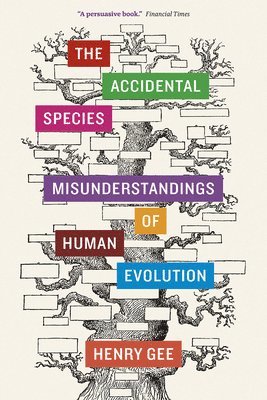
    Accidental Species

    Misunderstandings of Human Evolution

    AvHenry Gee

    Häftad, Engelska, 2015

    154 kr

    Beställningsvara. Skickas inom 5-8 vardagar. Fri frakt över 249 kr.

    Beskrivning

    The idea of a missing link between humanity and our animal ancestors predates evolution and popular science and actually has religious roots in the deist concept of the Great Chain of Being. Yet the metaphor has lodged itself in the contemporary imagination, and new fossil discoveries are often hailed in headlines as revealing the elusive transitional step, the moment when we stopped being "animal" and started being "human." In The Accidental Species, Henry Gee, longtime paleontology editor at Nature, takes aim at this misleading notion, arguing that it reflects a profound misunderstanding of how evolution works and, when applied to the evolution of our own species, supports mistaken ideas about our own place in the universe. Touring the many features of human beings that have recurrently been used to distinguish us from the rest of the animal world, Gee shows that our evolutionary outcome is one possibility among many, one that owes more to chance than to an organized progression to supremacy.The Accidental Species combines Gee's firsthand experience on the editorial side of many incredible paleontological findings with healthy skepticism and humor to create a book that aims to overturn popular thinking on human evolution - the key is not what's missing, but how we're linked.

    Produktinformation

    • Utgivningsdatum:2015-04-29
    • Mått:150 x 226 x 15 mm
    • Vikt:272 g
    • Format:Häftad
    • Språk:Engelska
    • Antal sidor:217
    • Förlag:The University of Chicago Press
    • ISBN:9780226271200

    Utforska kategorier

    • Biovetenskap inom Naturvetenskap och teknik
    • Människans biologi inom Naturvetenskap och teknik

    Mer om författaren

    Henry Gee is a senior editor at Nature and the author of such books as Jacob's Ladder, In Search of Deep Time, The Science of Middle-earth, and A Field Guide to Dinosaurs, the last with Luis V. Rey. He lives in Cromer, Norfolk, England, with his family and numerous pets.

    Recensioner i media

    "If you only read one book on evolution this year, make it this one. You will be dethroned. But you won't be disappointed." (Geoscientist) "A persuasive book.... Gee is good at explaining how fossil evidence has been (mis)interpreted to fit that famous picture of man rising from the ape, growing taller and wiser with each step before culminating in us. The reality, he points out, is very different: until recently (no later than 50,000 years ago) there were many species of humans across the world. Some, such as the Neanderthals, had brains at least as big as ours; while others, such as the diminutive 'hobbit' found on the Indonesian island of Flores, were more closely akin to the apes." (Financial Times)