• Fri frakt över 249 kr
  • •
  • Snabba leveranser
  • •
  • Billiga böcker
Kundservice

Du är på sajten för privatpersoner.

Företag, bibliotek eller offentlig verksamhet?

Du handlar på classic.bokus.com, där alla dina funktioner finns intakta.
Till classic.bokus.com
Bokus logotyp. Gå till startsidan.
  • Erbjudanden
  • Nyheter
  • Student
  • Topplistor
  • Barn & ungdom
  • Bokus Play
  • E-böcker
  • Pocketböcker
  • Spel & pussel

10% rabatt på allt med kod: NYSTART10 →

Sidfot

Mina sidor

    Hjälp

    • Kundservice
    • Vanliga frågor och svar
    • Frakt och leverans
    • Retur vid ångerrätt
    • Reklamera vara
    • Betalning
    • Köpvillkor
    • Allmänna villkor
    • Information om webbplatsens tillgänglighet

    Om Bokus

    • Om oss
    • Pressrum
    • För studenter
    • För företag
    • För bibliotek och offentlig verksamhet
    • För leverantörer
    • Hållbarhet

    Populärt

    • Aktuella erbjudanden
    • Presentkort
    • Studentlitteratur
    • Nya böcker
    • Topplistor
    • Signerade böcker
    • Engelska böcker

    Inspiration

    • Boktips
    • BookTok
    • Populära bokserier
    • Barnbokskaraktärer
    • Populära författare
    Logotyp för Bokus
    Följ oss på Facebook (extern länk)Följ oss på Instagram (extern länk)Följ oss på YouTube (extern länk)Följ oss på TikTok (extern länk)
    bokus @ CookiesAnpassa cookiesIntegritetspolicyKöpvillkor
    Till Citymail hemsida (extern länk)Till Budbee hemsida (extern länk)Till Postnord hemsida (extern länk)Till Schenker hemsida (extern länk)Till Early Bird hemsida (extern länk)Till Walleys hemsida (extern länk)
    1. Samhälle och politik
    2. Samhälle och kultur
    3. Kultur och medier
    4. Kulturvetenskap

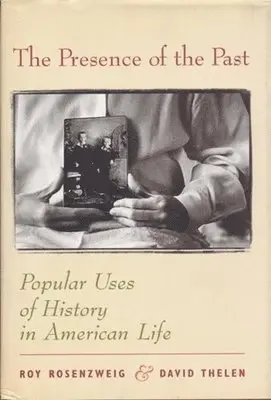
    Presence of the Past

    Popular Uses of History in American Life

    AvRoy Rosenzweig,David Thelen

    Inbunden, Engelska, 1998

    2 201 kr

    Beställningsvara. Skickas inom 3-6 vardagar. Fri frakt över 249 kr.

    Fler format och utgåvor

    Häftad

    597 kr

    Beskrivning

    Some people make photo albums, collect antiques, or visit historic battlefields. Others keep diaries, plan annual family gatherings, or stitch together patchwork quilts in a tradition learned from grandparents. Each of us has ways of communing with the past, and our reasons for doing so are as varied as our memories. In a sweeping survey, Roy Rosenzweig and David Thelen asked 1,500 Americans about their connection to the past and how it influences their daily lives and hopes for the future. The result is a surprisingly candid series of conversations and reflections on how the past infuses the present with meaning. Rosenzweig and Thelen found that people assemble their experiences into narratives that allow them to make sense of their personal histories, set priorities, project what might happen next, and try to shape the future. By using these narratives to mark change and create continuity, people chart the courses of their lives. A young woman from Ohio speaks of giving birth to her first child, which caused her to reflect upon her parents and the ways that their example would help her to become a good mother.An African American man from Georgia tells how he and his wife were drawn to each other by their shared experiences and lessons learned from growing up in the South in the 1950s. Others reveal how they personalize historical events, as in the case of a Massachusetts woman who traces much of her guarded attitude toward life to witnessing the assassination of John F. Kennedy on television when she was a child. While the past is omnipresent to Americans, "history" as it is usually defined in textbooks leaves many people cold. Rosenzweig and Thelen found that history as taught in school does not inspire a strong connection to the past. And they reveal how race and ethnicity affects how Americans perceive the past: while most white Americans tend to think of it as something personal, African Americans and American Indians are more likely to think in terms of broadly shared experiences--like slavery, the Civil Rights Movement, and the violation of Indian treaties."Rosenzweig and Thelen's conclusions about the ways people use their personal, family, and national stories have profound implications for anyone involved in researching or presenting history, as well as for all those who struggle to engage with the past in a meaningful way.
    Produktinformation

    • Utgivningsdatum:1998-10-26
    • Mått:165 x 240 x 25 mm
    • Vikt:609 g
    • Format:Inbunden
    • Språk:Engelska
    • Antal sidor:320
    • Förlag:Columbia University Press
    • ISBN:9780231111485

    Utforska kategorier

    • Kulturvetenskap inom Samhälle och politik
    • Antropologi inom Samhälle och politik
    • Amerikas historia inom Historia och arkeologi

    Mer om författaren

    Roy Rosenzweig is professor of history and Director of the Center for History and New Media at George Mason University. He is the author of several books including The Park and the People: A History of Central Park (with Elizabeth Blackmar). He is also the coauthor of Who Built America?, a two-volume multimedia CD-ROM. David Thelen is professor of history at Indiana University and editor of the Journal of American History. He is also the editor of Discovering America: Essays on the Search for an Identity, and the author of several books including Becoming Citizens in the Age of Television.

    Recensioner i media

    Rosenzweig and Thelen have raised imaginative and important questions. They have written an important book that all historians should read and debate. -- Richard White, Stanford University Journal of American History This book has less to do with history than popular sociology-- and seems to have begun with a thesis and then proved it. Journal of Popular Culture A fascinating study. Library Journal

    Innehållsförteckning

    • Introduction: Scenes from a Survey The Presence of the Past: Patterns of Popular Historymaking Using the Past to Live in the Present: Relationships, Identity, Immorality Using the Past to Shape the Future: Building Narratives, Taking Responsibility "Experience is the Best Teacher": Participation, Mediation, Authority, Trust Beyond the Intimate Past: Americans and Their Collective Pasts History in Black and Red: African Americans and American Indians and Their Collective Pasts Afterthoughts: Everyone a Historian, by Roy Rosenzweig Afterthoughts: A Participatory Historical Culture, by David Thelen Appendix 1: How We Did the Survey Appendix 2: Tables Notes Index