• Fri frakt över 249 kr
  • •
  • Snabba leveranser
  • •
  • Billiga böcker
Kundservice

Du är på sajten för privatpersoner.

Företag, bibliotek eller offentlig verksamhet?

Du handlar på classic.bokus.com, där alla dina funktioner finns intakta.
Till classic.bokus.com
Bokus logotyp. Gå till startsidan.
  • Erbjudanden
  • Nyheter
  • Student
  • Topplistor
  • Barn & ungdom
  • Bokus Play
  • E-böcker
  • Pocketböcker
  • Spel & pussel

10% rabatt på allt med kod: NYSTART10 →

Sidfot

Mina sidor

    Hjälp

    • Kundservice
    • Vanliga frågor och svar
    • Frakt och leverans
    • Retur vid ångerrätt
    • Reklamera vara
    • Betalning
    • Köpvillkor
    • Allmänna villkor
    • Information om webbplatsens tillgänglighet

    Om Bokus

    • Om oss
    • Pressrum
    • För studenter
    • För företag
    • För bibliotek och offentlig verksamhet
    • För leverantörer
    • Hållbarhet

    Populärt

    • Aktuella erbjudanden
    • Presentkort
    • Studentlitteratur
    • Nya böcker
    • Topplistor
    • Signerade böcker
    • Engelska böcker

    Inspiration

    • Boktips
    • BookTok
    • Populära bokserier
    • Barnbokskaraktärer
    • Populära författare
    Logotyp för Bokus
    Följ oss på Facebook (extern länk)Följ oss på Instagram (extern länk)Följ oss på YouTube (extern länk)Följ oss på TikTok (extern länk)
    bokus @ CookiesAnpassa cookiesIntegritetspolicyKöpvillkor
    Till Citymail hemsida (extern länk)Till Budbee hemsida (extern länk)Till Postnord hemsida (extern länk)Till Schenker hemsida (extern länk)Till Early Bird hemsida (extern länk)Till Walleys hemsida (extern länk)
    1. Samhälle och politik
    2. Sociologi och antropologi
    3. Antropologi

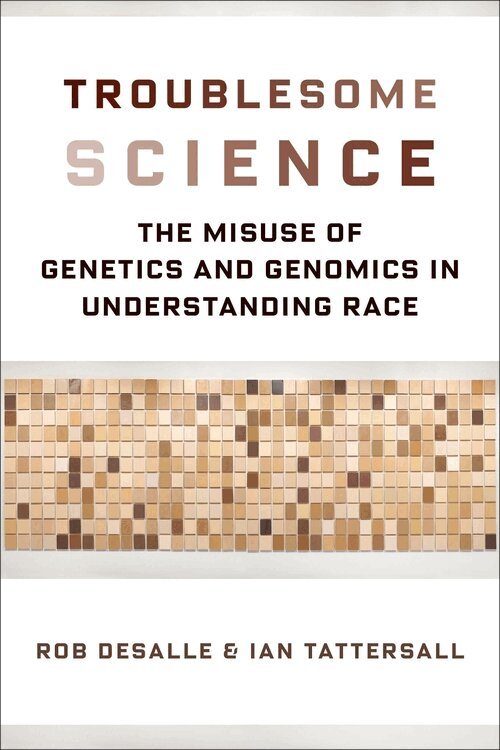
    Troublesome Science

    The Misuse of Genetics and Genomics in Understanding Race

    AvRob DeSalle,Ian Tattersall

    Inbunden, Engelska, 2018

    Del 2 i serien Race, Inequality, and Health

    566 kr

    Skickas . Fri frakt över 249 kr.

    Beskrivning

    It is well established that all humans today, wherever they live, belong to one single species. Yet even many people who claim to abhor racism take for granted that human “races” have a biological reality. In Troublesome Science, Rob DeSalle and Ian Tattersall provide a lucid and forceful critique of how scientific tools have been misused to uphold misguided racial categorizations.DeSalle and Tattersall argue that taxonomy, the scientific classification of organisms, provides an antidote to the myth of race’s biological basis. They explain how taxonomists do their science—how to identify a species and to understand the relationships among different species and the variants within them. DeSalle and Tattersall also detail the use of genetic data to trace human origins and look at how scientists have attempted to recognize discrete populations within Homo sapiens. Troublesome Science demonstrates conclusively that modern genetic tools, when applied correctly to the study of human variety, fail to find genuine differences. While the diversity that exists within our species is a real phenomenon, it nevertheless defeats any systematic attempt to recognize discrete units within it. The stark lines that humans insist on drawing between their own groups and others are nothing but a mixture of imagination and ideology. Troublesome Science is an important call for researchers, journalists, and citizens to cast aside the belief that race has a biological meaning, for the sake of social justice and sound science alike.

    Produktinformation

    • Utgivningsdatum:2018-06-19
    • Mått:152 x 229 x 26 mm
    • Vikt:488 g
    • Format:Inbunden
    • Språk:Engelska
    • Serie:Race, Inequality, and Health
    • Antal sidor:216
    • Förlag:Columbia University Press
    • ISBN:9780231185721

    Utforska kategorier

    • Antropologi inom Samhälle och politik
    • Biovetenskap inom Naturvetenskap och teknik
    • Diskriminering och rättvisa inom Samhälle och politik

    Mer om författaren

    Rob DeSalle is a curator in the Sackler Institute for Comparative Genomics and professor at the Richard Gilder Graduate School at the American Museum of Natural History. He is the author of The Science of Jurassic Park and the Lost World: Or How to Build a Dinosaur (with David Lindley, 1997) and the coauthor of Welcome to the Microbiome: Getting to Know the Trillions of Bacteria and Other Microbes In, On, and Around You (2015), among others.Ian Tattersall is curator emeritus in the Division of Anthropology at the American Museum of Natural History. His many books include Masters of the Planet: The Search for Our Human Origins (2012) and The Strange Case of the Rickety Cossack and Other Cautionary Tales from Human Evolution (2015).DeSalle and Tattersall’s previous books together include Human Origins: What Bones and Genomes Tell Us About Ourselves (2007); Race? Debunking a Scientific Myth (2011); and A Natural History of Wine (2015).

    Recensioner i media

    Why do we need another book on the refuted belief that human beings are naturally divided into biological races? Because this myth is recirculating in prestigious scientific journals and popular media, as well as on white nationalist websites, threatening to rationalize and reinforce persistent social inequities. By revealing the unscientific basis for contemporary racial claims, DeSalle and Tattersall leave no excuse for letting this dangerous fallacy continue to masquerade as science. Troublesome Science is an urgent and important defense against the modern resurgence of racial science.

    Innehållsförteckning

    • PrefaceAcknowledgments1. Evolutionary Lessons2. Species and How to Recognize Them3. Phylogenetic Trees4. The Name Game: Modern Zoological Nomenclature and the Rules of Naming Things 5. DNA Fingerprinting and Barcoding6. Early Biological Notions of Human Divergence 7. Mitochondrial Eve and Y-Chromosome Adam8. The Other 99 Percent of the Genome 9. ABBA/BABA and the Genomes of Our Ancient Relatives10. Human Migration and Neolithic Genomes 11. Gene Genealogies and Species Trees12. Clustering Humans?13. STRUCTUREing Humans?14. Mr. Murray Loses His BetEpilogue: Race and SocietyNotes and BibliographyIndex