• Fri frakt över 249 kr
  • •
  • Snabba leveranser
  • •
  • Billiga böcker
Kundservice

Du är på sajten för privatpersoner.

Företag, bibliotek eller offentlig verksamhet?

Du handlar på classic.bokus.com, där alla dina funktioner finns intakta.
Till classic.bokus.com
Bokus logotyp. Gå till startsidan.
  • Erbjudanden
  • Nyheter
  • Student
  • Topplistor
  • Barn & ungdom
  • Bokus Play
  • E-böcker
  • Pocketböcker
  • Spel & pussel

10% rabatt på allt med kod: NYSTART10 →

Sidfot

Mina sidor

    Hjälp

    • Kundservice
    • Vanliga frågor och svar
    • Frakt och leverans
    • Retur vid ångerrätt
    • Reklamera vara
    • Betalning
    • Köpvillkor
    • Allmänna villkor
    • Information om webbplatsens tillgänglighet

    Om Bokus

    • Om oss
    • Pressrum
    • För studenter
    • För företag
    • För bibliotek och offentlig verksamhet
    • För leverantörer
    • Hållbarhet

    Populärt

    • Aktuella erbjudanden
    • Presentkort
    • Studentlitteratur
    • Nya böcker
    • Topplistor
    • Signerade böcker
    • Engelska böcker

    Inspiration

    • Boktips
    • BookTok
    • Populära bokserier
    • Barnbokskaraktärer
    • Populära författare
    Logotyp för Bokus
    Följ oss på Facebook (extern länk)Följ oss på Instagram (extern länk)Följ oss på YouTube (extern länk)Följ oss på TikTok (extern länk)
    bokus @ CookiesAnpassa cookiesIntegritetspolicyKöpvillkor
    Till Citymail hemsida (extern länk)Till Budbee hemsida (extern länk)Till Postnord hemsida (extern länk)Till Schenker hemsida (extern länk)Till Early Bird hemsida (extern länk)Till Walleys hemsida (extern länk)
    1. Samhälle och politik
    2. Politik och statsskick
    3. Centralt styre och förvaltning

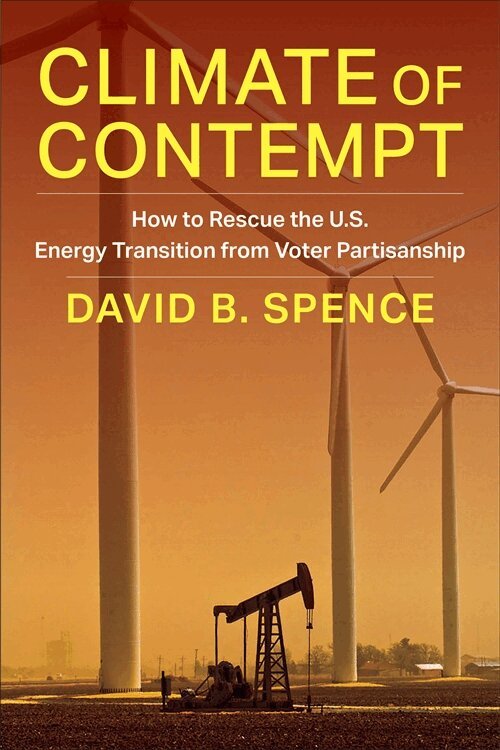
    Climate of Contempt

    How to Rescue the U.S. Energy Transition from Voter Partisanship

    AvDavid Spence

    Inbunden, Engelska, 2024

    Del i serien Center on Global Energy Policy Series

    946 kr

    Beställningsvara. Skickas inom 5-8 vardagar. Fri frakt över 249 kr.

    Fler format och utgåvor

    Häftad

    236 kr

    Beskrivning

    Winner, 2025 Robert W. Hamilton Book Award, Office of the Vice President for Research, The University of Texas at AustinWhy is the United States struggling to enact policies to reduce carbon emissions? Conventional wisdom holds that the wealthy and powerful are to blame, as the oligarchs and corporations that wield disproportionate sway over politicians prioritize their short-term financial interests over the climate’s long-term health. David B. Spence argues that this top-down narrative misses a more important culprit—with critical consequences for the energy transition.Climate of Contempt offers a voter-centric, bottom-up explanation of national climate and energy politics, one that pinpoints bitter partisanship as the key impediment to transitioning to a net zero carbon future. Members of Congress respond to voters whose animosity toward the opposing party makes compromise politically risky. The most powerful driver of polarization, in turn, is the mixture of ideology and social media that constitutes today’s information environment, which amplifies anger, spreads half truths and falsehoods, and sows division, distorting voters’ understandings of the energy transition and their fellow citizens.Spence explores the effects of polarization, partisanship, and propaganda on energy policy and considers how to build a broader climate coalition. He contends that cooperation on this crucial issue is still possible, but it will require sustained person-to-person engagement across ideological and partisan boundaries to foster a more productive dialogue. Providing a timely and incisive understanding of the politics of the energy transition, Climate of Contempt suggests new paths forward and offers hope for a net-zero future.

    Produktinformation

    • Utgivningsdatum:2024-08-06
    • Mått:152 x 229 x undefined mm
    • Format:Inbunden
    • Språk:Engelska
    • Serie:Center on Global Energy Policy Series
    • Antal sidor:400
    • Förlag:Columbia University Press
    • ISBN:9780231217095
    • Utmärkelser:Winner of Robert W. Hamilton Book Award, Office of the Vice President for Research, The University of Texas at Austin 2025 (United States)

    Utforska kategorier

    • Centralt styre och förvaltning inom Samhälle och politik
    • Politiska ideologier och rörelser inom Samhälle och politik
    • Miljövetenskap och miljöpolitik inom Naturvetenskap och teknik

    Mer om författaren

    David B. Spence is the Rex G. Baker Chair in Natural Resources Law in the School of Law and professor of business, government, and society in the McCombs School of Business at the University of Texas at Austin, where he teaches courses in energy and environmental regulation. He is a coauthor of a leading casebook, Energy, Economics, and the Environment.

    Recensioner i media

    David B. Spence’s urgent book comes at just the right time as we gear up for another contested election season and as we witness almost daily reminders of the accelerating climate crisis. Based on years of research and a deeply felt commitment to reasoned debate, Spence takes on the number one problem facing climate action: politics and polarization. In clear and compelling prose, backed up by detailed analysis, Spence shows us how we got to our current state and where we might look for resources to get beyond the tribalism and contempt that mark so much of contemporary climate politics. Although Spence has no illusions about the challenges we face in trying to build a more respectful politics, this is ultimately a hopeful book that recognizes the redemptive power of having authentic conversations across difference. It deserves to be widely read.

    Innehållsförteckning

    • List of Figures and TablesList of AbbreviationsPreface and AcknowledgmentsIntroductionPart I: The Evolution of the Energy-Regulatory State1. Republican Moments and the Creation of the Energy-Regulatory State2. Ideological Conservatism and Deregulation3. Partisan Tribalism and Climate PolicyPart II: Complexity, Centrifugal Forces, and the Energy Transition4. The Propaganda Machine5. Facing Energy-Transition Trade-offs6. Hope and ConversationNotesReferencesIndex