E-bok, Engelska, 2014
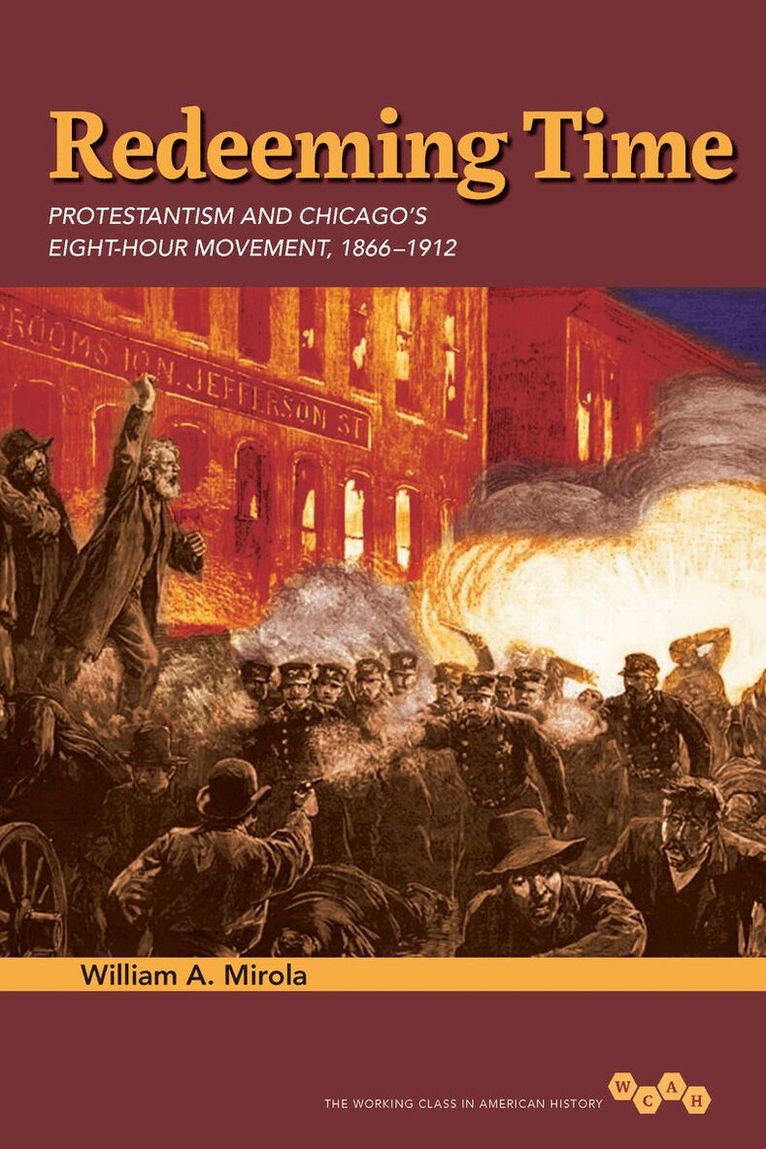
Redeeming Time
Protestantism and Chicago's Eight-Hour Movement, 1866-1912
852 kr
Läs direkt i Bokus Reader – eller ladda ned till din enhet
Beskrivning
William A. Mirola explores how the city''s eight-hour movement intersected with a Protestant religious culture that supported long hours to keep workers from idleness, intemperance, and secular leisure activities. Analyzing how both workers and clergy rewove working-class religious cultures and ideologies into strategic and rhetorical frames, Mirola shows how every faith-based appeal contested whose religious meanings would define labor conditions and conflicts. As he notes, the ongoing worker-employer tension transformed both how clergy spoke about the eight-hour movement and what they were willing to do, until intensified worker protest and employer intransigence spurred Protestant clergy to support the eight-hour movement even as political and economic arguments eclipsed religious framing.
A revealing study of an era and a movement, Redeeming Time illustrates the potential--and the limitations--of religious culture and religious leaders as forces in industrial reform.
Produktinformation
- Utgivningsdatum: 2014-12-30
- Språk: Engelska
- Antal sidor: 272
- Filformat: EPUB
- Kopieringsskydd: LCP
- ISBN: 9780252096792
- Förlag: University of Illinois Press
Utforska kategorier
Mer om författaren
William A. Mirola is a professor of sociology at Marian University in Indianapolis. He is the coauthor of Religion Matters: What Sociology Teaches Us about Religion in Our World.
Recensioner i media
"Mirola is able to articulate a nuanced, almost dialectical appreciation for the relationship between religion and social movements even when the churches and the labor movement activists were nearly always moving in opposite directions."--Middle West Review"Mirola offers a clearly argued and well-researched piece of scholarship. . . . Valuable for understanding turn-of-the-century Chicago."--H-Net Reviews"A careful examination of alliance-building between labor activists and Protestant clergy… Mirola does a fine job of keeping the perspectives of workers, clergy, and industrialists all in the mix--a balancing act that makes the book far more than a case study of the Social Gospel Movement."--American Historical Review
Betyg & recensioner
0 recensioner
Inga recensioner tillgängliga.