• Fri frakt över 249 kr
  • •
  • Snabba leveranser
  • •
  • Billiga böcker
Kundservice

Du är på sajten för privatpersoner.

Företag, bibliotek eller offentlig verksamhet?

Du handlar på classic.bokus.com, där alla dina funktioner finns intakta.
Till classic.bokus.com
Bokus logotyp. Gå till startsidan.
  • Erbjudanden
  • Nyheter
  • Student
  • Topplistor
  • Barn & ungdom
  • Bokus Play
  • E-böcker
  • Pocketböcker
  • Spel & pussel

10% rabatt på allt med kod NYSTART10 →

Sidfot

Mina sidor

    Hjälp

    • Kundservice
    • Vanliga frågor och svar
    • Frakt och leverans
    • Retur vid ångerrätt
    • Reklamera vara
    • Betalning
    • Köpvillkor
    • Allmänna villkor
    • Information om webbplatsens tillgänglighet

    Om Bokus

    • Om oss
    • Pressrum
    • För studenter
    • För företag
    • För bibliotek och offentlig verksamhet
    • För leverantörer
    • Hållbarhet

    Populärt

    • Aktuella erbjudanden
    • Presentkort
    • Studentlitteratur
    • Nya böcker
    • Topplistor
    • Signerade böcker
    • Engelska böcker

    Inspiration

    • Boktips
    • BookTok
    • Populära bokserier
    • Barnbokskaraktärer
    • Populära författare
    Logotyp för Bokus
    Följ oss på Facebook (extern länk)Följ oss på Instagram (extern länk)Följ oss på YouTube (extern länk)Följ oss på TikTok (extern länk)
    bokus @ CookiesAnpassa cookiesIntegritetspolicyKöpvillkor
    Till Citymail hemsida (extern länk)Till Budbee hemsida (extern länk)Till Postnord hemsida (extern länk)Till Schenker hemsida (extern länk)Till Early Bird hemsida (extern länk)Till Walleys hemsida (extern länk)
    1. Samhälle och politik
    2. Sociologi och antropologi
    3. Antropologi

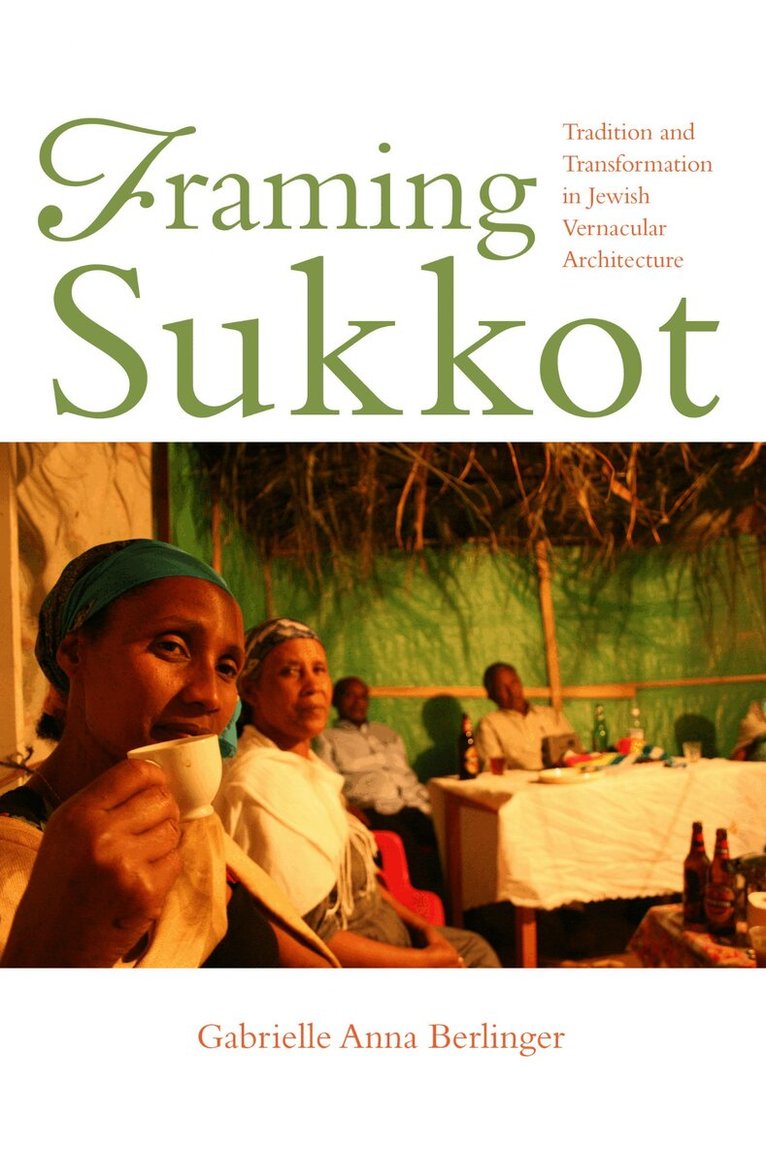
    Framing Sukkot

    Tradition and Transformation in Jewish Vernacular Architecture

    AvGabrielle Anna Berlinger

    Häftad, Engelska, 2017

    Del i serien Material Vernaculars

    377 kr

    Beställningsvara. Skickas inom 5-8 vardagar. Fri frakt över 249 kr.

    Fler format och utgåvor

    Inbunden

    939 kr

    Beskrivning

    The sukkah, the symbolic ritual home built during the annual Jewish holiday of Sukkot, commemorates the temporary structures that sheltered the Israelites as they journeyed across the desert after the exodus from Egypt. Despite the simple Biblical prescription for its design, the remarkable variety of creative expression in the construction, decoration, and use of the sukkah, in both times of peace and national upheaval, reveals the cultural traditions, political convictions, philosophical ideals, and individual aspirations that the sukkah communicates for its builders and users today. In this ethnography of contemporary Sukkot observance, Gabrielle Anna Berlinger examines the powerful role of ritual and vernacular architecture in the formation of self and society in three sharply contrasting Jewish communities: Bloomington, Indiana; South Tel Aviv, Israel; and Brooklyn, New York. Through vivid description and in-depth interviews, she demonstrates how constructing and decorating the sukkah and performing the weeklong holiday's rituals of hospitality provide unique circumstances for creative expression, social interaction, and political struggle. Through an exploration of the intersections between the rituals of Sukkot and contemporary issues, such as the global Occupy movement, Berlinger finds that the sukkah becomes a tangible expression of the need for housing and economic justice, as well as a symbol of the longing for home.

    Produktinformation

    • Utgivningsdatum:2017-09-20
    • Mått:152 x 229 x 17 mm
    • Vikt:490 g
    • Format:Häftad
    • Språk:Engelska
    • Serie:Material Vernaculars
    • Antal sidor:264
    • Förlag:Indiana University Press
    • ISBN:9780253031822

    Utforska kategorier

    • Antropologi inom Samhälle och politik
    • Sociala grupper och identitet inom Samhälle och politik
    • Judendom inom Filosofi och religion

    Mer om författaren

    Gabrielle Anna Berlinger is Assistant Professor of American Studies and Folklore and the Babette S. and Bernard J. Tanenbaum Fellow in Jewish History and Culture at The University of North Carolina at Chapel Hill.

    Recensioner i media

    "While providing fascinating and abundant ethnographic detail about sukkah builders, their families, and their daily lives,[Berlinger] raises important theoretical questions that merit additional attention."—Reading Religion"This is an important and timely book: important because it contributes significantly to the expanding literature on Jewish history and culture; and timely due to its arrival just as many are questioning the relationship folklore as a discipline has to the field of vernacular architecture studies."—Journal of Folklore Research"Berlinger's rich and nuanced ethnography sheds light on many sukkot from Bloomington to Tel Aviv, Jaffa, and Jerusalem, and back to Brooklyn; like the wandering in the Sinai desert, this journey is crucial, and although the Promised Land does not allow one to rest as it opens further questions, it is Berlinger's wandering that helps us in framing such wonderings."—Journal of American Folklore"The book is a clear and original contribution that considers Jewish folklore within wider sociopolitical contexts. It raises questions and offers insights previously unexplored in the field, within both Jewish Studies and vernacular architecture."—Western Folklore"...a compelling integration of the study of vernacular architecture and vernacular belief."—Michael Ann Williams, author of Homeplace: The Social Use and Meaning of the Folk Dwelling in Southwestern North Carolina

    Innehållsförteckning

    • AcknowledgmentsNote on Language UseIntroduction1. Translating Text: Sukkot in Bloomington, Indiana2. Shchunat Hatikva, Tel Aviv: A Geography of Difference3. Within Shchunat Hatikva: Values and Spaces4. Sukkot in Shchunat Hatikva5. Sukkot in Jaffa and Jerusalem6. The Right to House and Home7. Transcending Architecture: Sukkot in Brooklyn, New York8. ConclusionAppendix: Materials Chart and Sukkot Floor PlansBibliographyIndex