Häftad, Engelska, 2000
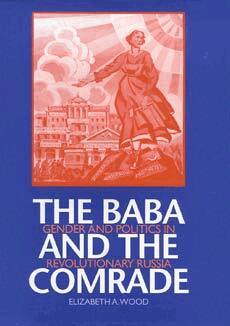
Baba and the Comrade
Gender and Politics in Revolutionary Russia
Del i serien Indiana-Michigan Series in Russian and East European Studies
342 kr
Beställningsvara. Skickas inom 10-15 vardagar. Fri frakt över 249 kr.
Beskrivning
Produktinformation
- Utgivningsdatum: 2000-07-22
- Mått: 156 x 235 x undefined mm
- Vikt: 454 g
- Format: Häftad
- Språk: Engelska
- Serie: Indiana-Michigan Series in Russian and East European Studies
- Antal sidor: 328
- Förlag: Indiana University Press
- ISBN: 9780253214300
Utforska kategorier
Mer om författaren
Elizabeth A. Wood is Associate Professor of History at the Massachusetts Institute of Technology.
Recensioner i media
" ... a highly persuasive, revealing, and well-documented account of early Bolshevik policy, practice, and language pertaining to the 'baba problem' and the unexpected ways female and male comrades responded to the party-state's tutelary role toward women." --Slavic Review "... a well-organised, sophisticated analysis of the difficulties involved in attempting to reconcile ideology with political, economic, and cultural realities." --The Russian Review "Meticulously researched, impressively documented, and engrossingly written, [the] work is much more than an examination of the successes, tribulations, and obstacles experienced by the zhenotdely (Soviet women's sections)... contributes to a long-overdue reconception of the New Economic Policy" Choice " ... a well-organised, sophisticated analysis of the difficulties involved in attempting to reconcile ideology with political, economic, and cultural realities." --The Russian Review " ... a highly persuasive, revealing, and well-documented account of early Bolshevik policy, practice, and language pertaining to the "baba problem" and the unexpected ways female and male comrades responded to the party-state's tutelary role toward women." --Slavic Review "This is a rich and densely argued study that embeds the story of the zhenotdel in the context of the political struggles and institutional structures of this formative period of the Russian Revolution. Wood demonstrates clearly the dilemma of whether women party activists should serve the party or their constituents." --American Historical Review "Wood's convincing work is a welcome addition to the growing literature on the gender-role traditionalism the Communists reinstitutionalized with their revolution." --The Women's Review of Books "Wood enriches the existing tradition of women's history by focusing not only on the experience of real women's lives, but also on 'gender as an organising principle.' ... This book will be of particular interest to specialists in and students of the early Soviet state and gender studies." --H- Russia
Betyg & recensioner
0 recensioner
Inga recensioner tillgängliga.