• Fri frakt över 249 kr
  • •
  • Snabba leveranser
  • •
  • Billiga böcker
Kundservice

Du är på sajten för privatpersoner.

Företag, bibliotek eller offentlig verksamhet?

Du handlar på classic.bokus.com, där alla dina funktioner finns intakta.
Till classic.bokus.com
Bokus logotyp. Gå till startsidan.
  • Erbjudanden
  • Nyheter
  • Student
  • Topplistor
  • Barn & ungdom
  • Bokus Play
  • E-böcker
  • Pocketböcker
  • Spel & pussel

10% rabatt på allt med kod NYSTART10 →

Sidfot

Mina sidor

    Hjälp

    • Kundservice
    • Vanliga frågor och svar
    • Frakt och leverans
    • Retur vid ångerrätt
    • Reklamera vara
    • Betalning
    • Köpvillkor
    • Allmänna villkor
    • Information om webbplatsens tillgänglighet

    Om Bokus

    • Om oss
    • Pressrum
    • För studenter
    • För företag
    • För bibliotek och offentlig verksamhet
    • För leverantörer
    • Hållbarhet

    Populärt

    • Aktuella erbjudanden
    • Presentkort
    • Studentlitteratur
    • Nya böcker
    • Topplistor
    • Signerade böcker
    • Engelska böcker

    Inspiration

    • Boktips
    • BookTok
    • Populära bokserier
    • Barnbokskaraktärer
    • Populära författare
    Logotyp för Bokus
    Följ oss på Facebook (extern länk)Följ oss på Instagram (extern länk)Följ oss på YouTube (extern länk)Följ oss på TikTok (extern länk)
    bokus @ CookiesAnpassa cookiesIntegritetspolicyKöpvillkor
    Till Citymail hemsida (extern länk)Till Budbee hemsida (extern länk)Till Postnord hemsida (extern länk)Till Schenker hemsida (extern länk)Till Early Bird hemsida (extern länk)Till Walleys hemsida (extern länk)
    1. Medicin
    2. Medicin: allmänt
    3. Den medicinska professionen
    4. Medicinsk etik och läkaretik

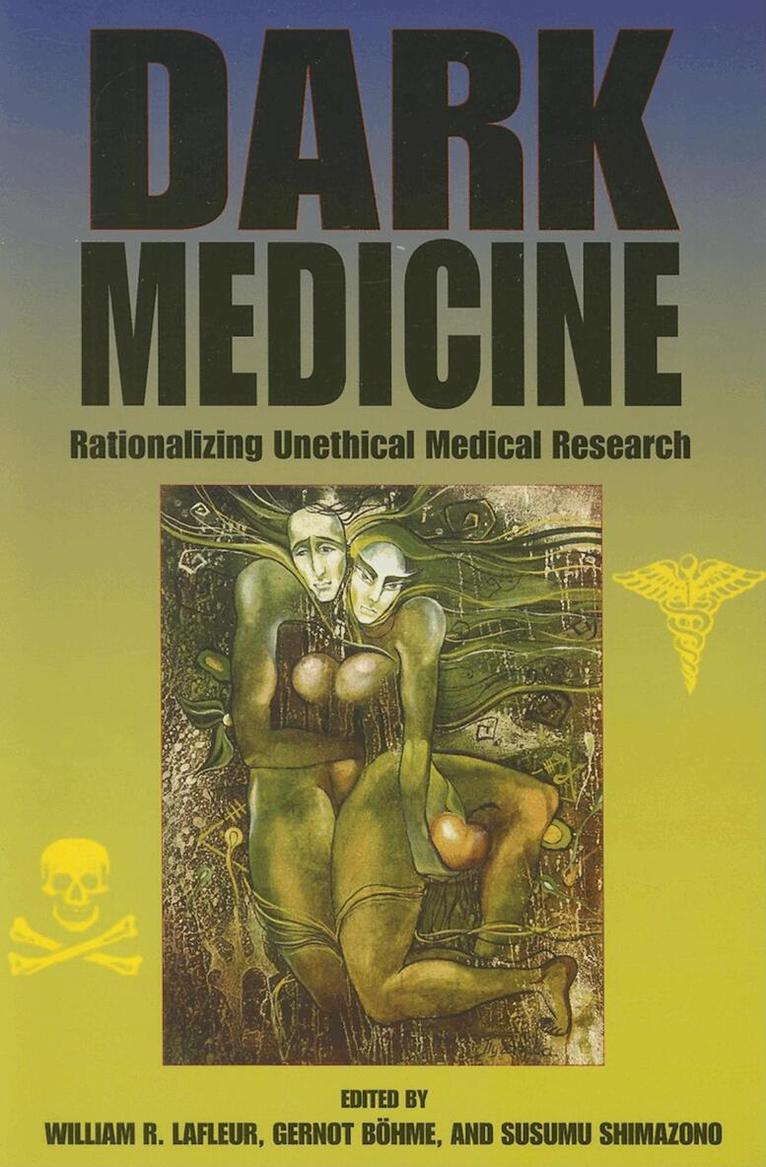
    Dark Medicine

    Rationalizing Unethical Medical Research

    AvWilliam R. LaFleur,Gernot Böhme

    Häftad, Engelska, 2008

    Del i serien Bioethics and the Humanities

    261 kr

    Beställningsvara. Skickas inom 5-8 vardagar. Fri frakt över 249 kr.

    Beskrivning

    The trial of the "German doctors" exposed atrocities of Nazi medical science and led to the Nuremberg Code governing human experimentation. In Japan, Unit 731 carried out hideous experiments on captured Chinese and downed American pilots. In the United States, stories linger of biological experimentation during the Korean War. This collection of essays looks at the dark medical research conducted during and after World War II. Contributors describe this research, how it was brought to light, and the rationalizations of those who perpetrated and benefited from it; look at the response to the revelations of this horrific research and its implications for present-day medicine and ethics; and offer lessons about human experimentation in an age of human embryo research and genetic engineering.

    Produktinformation

    • Utgivningsdatum:2008-07-17
    • Mått:156 x 235 x 25 mm
    • Vikt:435 g
    • Format:Häftad
    • Språk:Engelska
    • Serie:Bioethics and the Humanities
    • Antal sidor:280
    • Förlag:Indiana University Press
    • ISBN:9780253220417

    Utforska kategorier

    • Medicinsk etik och läkaretik inom Medicin
    • Medicinsk utrustning och medicinska tekniker inom Medicin

    Mer om författaren

    William R. LaFleur is the E. Dale Saunders Professor of Japanese Studies at the University of Pennsylvania and author of Liquid Life: Abortion and Buddhism in Japan.Gernot Böhme recently retired as Professor of Philosophy at the Technical University of Darmstadt. His books in English include Coping with Science and Ethics in Context: The Art of Dealing with Serious Questions.Susumu Shimazono is Professor in the Department of Religious Studies at the University of Tokyo and serves on the Japanese Prime Minister's Advisory Panel on Bioethics.

    Recensioner i media

    "Lafleur and his coeditors have assembled a very useful group of essays looking at the abuse of medical research in wartime Japan and Germany, as well as in postwar America. . . . Recommended."—Choice"A fascinating and timely new book . . . The take-home message of the 16 contributors to Dark Medicine is that a nation's books on past episodes of unethical practice should never be fully closed, and that ethical committees in science and medicine should never neglect the historical perspective of their own and other countries."—New Scientist". . . important issues are raised that should be considered by everyone who is interested in the history and ethics of medicine and medical research.August 2009"—Charles W. Lidz, Ph.D."[T]his volume raises some of the most profound issues in the history of medical research. . . . important issues are raised that should be considered by everyone who is interested in the history and ethics of medicine and medical research.August 1, 2009"—Charles W. Lidz, University of Massachusetts Medical School, Worcester". . . This collection of essays lends relevance to this dark history in a way no computerized module on human subjects protection can.2008"—Preeti N. Malani, MD, MSJ, Veterans Affairs Healthcare System Ann Arbor, UMI"Most of the articles were noteworthy insofar as they provoked the reader to ruminate on the underlying similarities between rationalizations. Since this is the first book of its kind, it provides a handy starting point for scholars working in bioethics and, in particular, research ethics. Each article is well documented with references, and the collection includes helpful introductory and concluding essays.Winter 2008"—Stephen Napier, National Catholic Bioethics Center"This set of powerful essays sheds light on medicine and its practitioners past, present and future and questions the headlong plunge of developed and developing societies into more and more aggressive technological attacks on illness to preserve life itself. It is truly worthwhile reading."—". . . Framed by the belief that unethical research is not simply a problem of the past, Dark Medicine lends thoughtful historical content to the discussion of modern-day dilemmas. The result is a unique fusion of philosophy, religion, history, and bioethics.2008; 300(10)"—John L. Zeller, MD, PhD, Contributing Editor"'Dark Medicine: Rationalizing Unethical Medical Research' explores the mystery of how apparently upstanding citizens can engage in appalling human research experiments. . . . The book's premise is that rationalization is at the heart of the problem. Physicians and scientists did not participate in the Nazi atrocities because of incompetence, madness or coercion; they participated because they convinced themselves that it was the right thing to do. . .August 2010"—Norman M. Goldfarb, Managing Director of First Clinical Research LLC"Certain books make you reconsider your views even though you really would rather not. This edited collection is one of those... It is truly worthwhile reading.2010, Volume 7"—Bioethical Inquiry"A great deal has been written in recent years about human subject research. This book is different and invaluable. Its focus is at once historical and international, bringing together commentators and scholars from a number of countries and a variety of disciplines. Human subject research raises one of the basic moral problems of modern medicine: in trying to do research to save the lives of the sick, how do we protect those whom we must use to carry out the research? This book deals richly and directly with a history of human subject research that has had many dark moments. This book will help us remember what many would prefer to forget."—Daniel Callahan, Director, International Program, The Hastings Center"By identifying and analyzing how the unethical was justified and rationalized, the authors draw moral and political lessons from this disturbing history that we have not yet really learned. —Nie Jin"—Bao, author of Medical Ethics in China

    Innehållsförteckning

    • PrefaceAcknowledgmentsIntroduction: The Knowledge Tree and Its Double FruitWilliam R. LaFleurPart 1. The Gruesome Past and Lessons Not Yet Learned1. Rationalizing Unethical Medical Research: Taking Seriously the Case of Viktor von WeizsäckerGernot Böhme2. Medical Research, Morality, and History: The German Journal Ethik and the Limits of Human ExperimentationAndreas Frewer3. Experimentation on Humans and Informed Consent: How We Arrived Where We AreRolf Winau4. The Silence of the ScholarsBenno Müller-Hill5. The Ethics of Evil: The Challenge and the Lessons of Nazi Medical ExperimentsArthur L. Caplan6. Unit 731 and the Human Skulls Discovered in 1989: Physicians Carrying Out Organized CrimesKei-ichi Tsuneishi7. Biohazard: Unit 731 in Postwar Japanese Politics of National "Forgetfulness"Frederick R. Dickinson8. Biological Weapons: The United States and the Korean WarG. Cameron Hurst III9. Experimental Injury: Wound Ballistics and Aviation Medicine in Mid-century AmericaSusan Lindee10. Stumbling Toward Bioethics: Human Experiments Policy and the Early Cold WarJonathan D. MorenoPart 2. The Conflicted Present and the Worrisome Future11. Toward an Ethics of IatrogenesisRenée C. Fox12. Strategies for Survival versus Accepting Impermanence: Rationalizing Brain Death and Organ Transplantation TodayTetsuo Yamaori13. The Age of a "Revolutionized Human Body" and the Right to DieYoshihiko Komatsu14. Why We Must Be Prudent in Research Using Human Embryos: Differing Views of Human DignitySusumu Shimazono15. Eugenics, Reproductive Technologies, and the Feminist Dilemma in JapanMiho Ogino16. Refusing Utopia's Bait: Research, Rationalizations, and Hans JonasWilliam R. LaFleurList of ContributorsIndex