• Fri frakt över 249 kr
  • •
  • Snabba leveranser
  • •
  • Billiga böcker
Kundservice

Du är på sajten för privatpersoner.

Företag, bibliotek eller offentlig verksamhet?

Du handlar på classic.bokus.com, där alla dina funktioner finns intakta.
Till classic.bokus.com
Bokus logotyp. Gå till startsidan.
  • Erbjudanden
  • Nyheter
  • Student
  • Topplistor
  • Barn & ungdom
  • Bokus Play
  • E-böcker
  • Pocketböcker
  • Spel & pussel

10% studentrabatt med kod TERM26

Sidfot

Mina sidor

    Hjälp

    • Kundservice
    • Vanliga frågor och svar
    • Frakt och leverans
    • Retur vid ångerrätt
    • Reklamera vara
    • Betalning
    • Köpvillkor
    • Allmänna villkor
    • Information om webbplatsens tillgänglighet

    Om Bokus

    • Om oss
    • Pressrum
    • För studenter
    • För företag
    • För bibliotek och offentlig verksamhet
    • För leverantörer
    • Hållbarhet

    Populärt

    • Aktuella erbjudanden
    • Presentkort
    • Studentlitteratur
    • Nya böcker
    • Topplistor
    • Signerade böcker
    • Engelska böcker

    Inspiration

    • Boktips
    • BookTok
    • Populära bokserier
    • Barnbokskaraktärer
    • Populära författare
    Logotyp för Bokus
    Följ oss på Facebook (extern länk)Följ oss på Instagram (extern länk)Följ oss på YouTube (extern länk)Följ oss på TikTok (extern länk)
    bokus @ CookiesAnpassa cookiesIntegritetspolicyKöpvillkor
    Till Citymail hemsida (extern länk)Till Budbee hemsida (extern länk)Till Postnord hemsida (extern länk)Till Schenker hemsida (extern länk)Till Early Bird hemsida (extern länk)Till Walleys hemsida (extern länk)
    1. Kultur
    2. Scenkonst och film
    3. Dansböcker

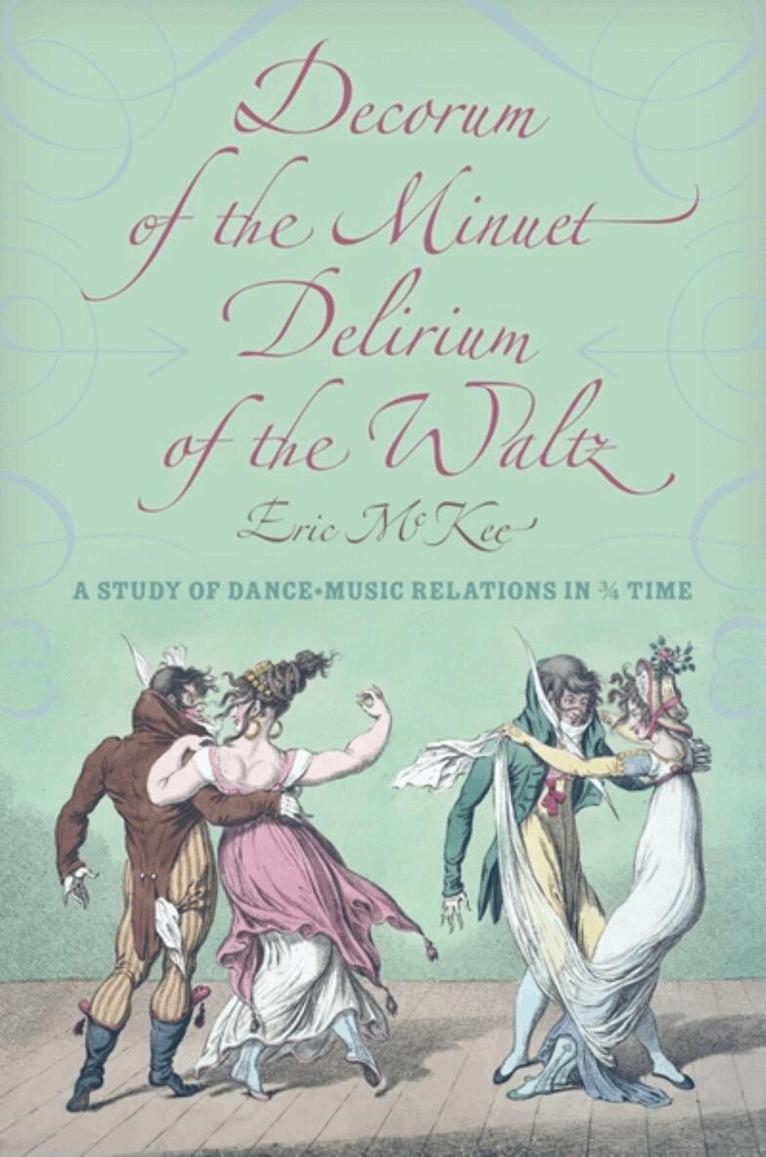
    Decorum of the Minuet, Delirium of the Waltz

    A Study of Dance-Music Relations in 3/4 Time

    AvEric J. McKee

    Inbunden, Engelska, 2011

    Del i serien Musical Meaning and Interpretation

    522 kr

    Beställningsvara. Skickas inom 10-15 vardagar. Fri frakt över 249 kr.

    Beskrivning

    Much music was written for the two most important dances of the 18th and 19th centuries, the minuet and the waltz. In Decorum of the Minuet, Delirium of the Waltz, Eric McKee argues that to better understand the musical structures and expressive meanings of this dance music, one must be aware of the social contexts and bodily rhythms of the social dances upon which it is based. McKee approaches dance music as a component of a multimedia art form that involves the interaction of physical motion, music, architecture, and dress. Moreover, the activity of attending a ball involves a dynamic network of modalities—sight, sound, bodily awareness, touch, and smell, which can be experienced from the perspectives of a dancer, a spectator, or a musician. McKee considers dance music within a larger system of signifiers and points-of-view that opens new avenues of interpretation.

    Produktinformation

    • Utgivningsdatum:2011-11-23
    • Mått:152 x 229 x 16 mm
    • Vikt:544 g
    • Format:Inbunden
    • Språk:Engelska
    • Serie:Musical Meaning and Interpretation
    • Antal sidor:272
    • Förlag:Indiana University Press
    • ISBN:9780253356925

    Utforska kategorier

    • Dansböcker inom Kultur
    • Klassisk musik, konstmusik och orkestermusik inom Kultur
    • Socialhistoria och kulturhistoria inom Historia och arkeologi

    Mer om författaren

    Eric McKee is Associate Professor of Music Theory at Penn State University. He is a contributor to The Age of Chopin (IUP, 2004), and his articles have appeared in such journals as Music Theory Spectrum, Music Analysis, In Theory Only, College Music Symposium, and Theory and Practice.

    Recensioner i media

    "I think this is an important book for musicians and dance academics alike, since McKee proposes that to understand the musical structures of the minuet and waltz, 'it is helpful to be aware of the bodily rhythms of the dance upon which they are based and the social contexts in which they were performed'. . . . McKee's holistic approach illuminates the total experiences of all the participants. . . . highly informative on the importance of dancing at every level of society, and its varying social functions, during the eighteenth and nineteenth centuries."—Dance Europe"McKee's overall orientation is laudable, since functional dance music has largely been ignored by music analysts, and stylized dance music has been treated as if it had minimal connection to the practice of dancing. . . . Despite the amount of close music analysis, McKee's writing is accessible to a wide range of readers. . . . One hopes that McKee has plans for a future book to follow the mid-century delirium of the waltz to its twentieth-century demise."—Nineteenth-Century Music Review"Think back . . . to an enlightened age of rhythmic egalitarianism, when life was lived in the lightness, suppleness, and grace of triple meter as well as duple, and the two reigning dances were in 3/4. This book is a much-needed, restorative paean to that two-century era and its emblematic dances: the minuet and the waltz."—DANCE CHRONICLE"McKee's book. . . fulfils its aim: that of presenting dance-music relations in two out of three of the most popular ballroom dances in several centuries. To my knowledge, there is no other English publication on such intersection of topics – thus it deserves a place in the libraries of music and dance departments."—Gediminas Karoblis, Dance Research

    Innehållsförteckning

    • AcknowledgementsIntroduction1. Influences of the Early Eighteenth-Century Ballroom Minuet on the Minuets from J. S. Bach's French Suites, BWV 812–8172. Mozart in the Ballroom: Minuet-Trio Contrast and the Aristocracy in Self-Portrait3. The Musical Visions of Joseph Lanner and Johann Strauss Sr.4. Dance and the Music of Chopin: Historical Background5. The Musical Visions of Chopin6. Chopin's Approach to Waltz FormNotesBibliographyIndex