• Fri frakt över 249 kr
  • •
  • Snabba leveranser
  • •
  • Billiga böcker
Kundservice

Du är på sajten för privatpersoner.

Företag, bibliotek eller offentlig verksamhet?

Du handlar på classic.bokus.com, där alla dina funktioner finns intakta.
Till classic.bokus.com
Bokus logotyp. Gå till startsidan.
  • Erbjudanden
  • Nyheter
  • Student
  • Topplistor
  • Barn & ungdom
  • Bokus Play
  • E-böcker
  • Pocketböcker
  • Spel & pussel

10% rabatt på allt med kod: NYSTART10 →

Sidfot

Mina sidor

    Hjälp

    • Kundservice
    • Vanliga frågor och svar
    • Frakt och leverans
    • Retur vid ångerrätt
    • Reklamera vara
    • Betalning
    • Köpvillkor
    • Allmänna villkor
    • Information om webbplatsens tillgänglighet

    Om Bokus

    • Om oss
    • Pressrum
    • För studenter
    • För företag
    • För bibliotek och offentlig verksamhet
    • För leverantörer
    • Hållbarhet

    Populärt

    • Aktuella erbjudanden
    • Presentkort
    • Studentlitteratur
    • Nya böcker
    • Topplistor
    • Signerade böcker
    • Engelska böcker

    Inspiration

    • Boktips
    • BookTok
    • Populära bokserier
    • Barnbokskaraktärer
    • Populära författare
    Logotyp för Bokus
    Följ oss på Facebook (extern länk)Följ oss på Instagram (extern länk)Följ oss på YouTube (extern länk)Följ oss på TikTok (extern länk)
    bokus @ CookiesAnpassa cookiesIntegritetspolicyKöpvillkor
    Till Citymail hemsida (extern länk)Till Budbee hemsida (extern länk)Till Postnord hemsida (extern länk)Till Schenker hemsida (extern länk)Till Early Bird hemsida (extern länk)Till Walleys hemsida (extern länk)
    1. Psykologi och pedagogik
    2. Pedagogik
    3. Pedagogisk teori och filosofi

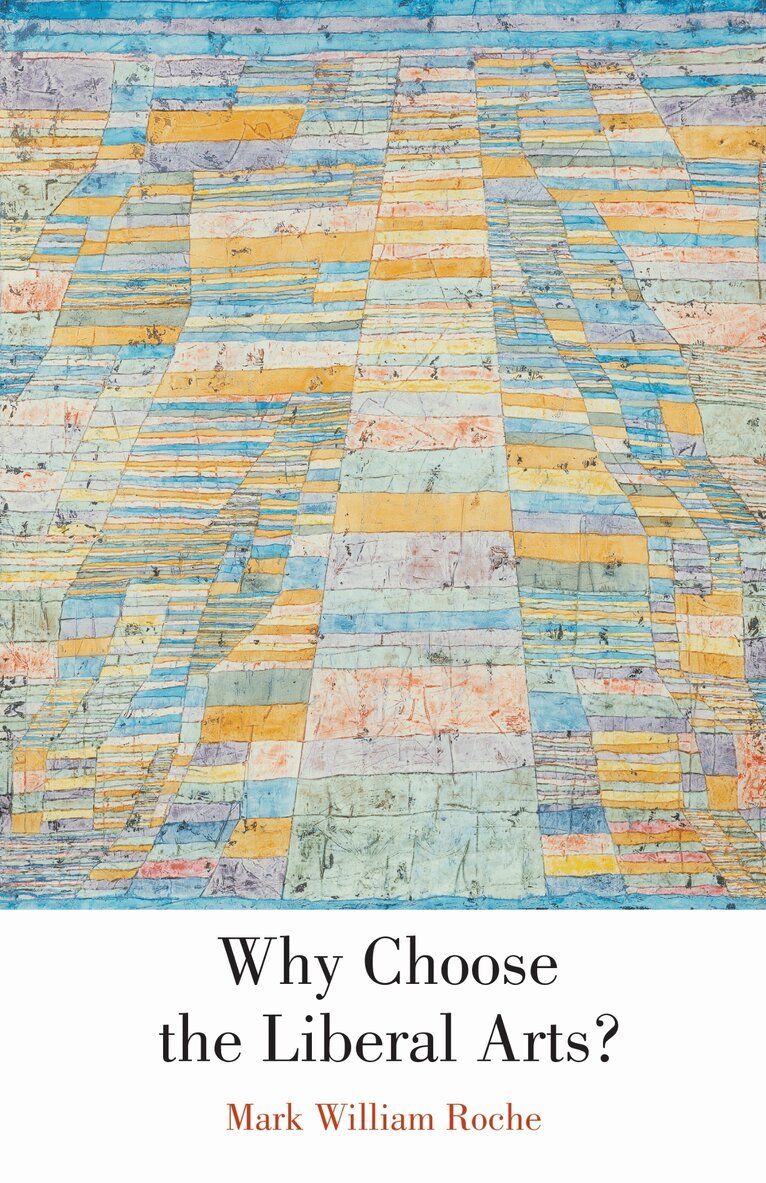
    Why Choose the Liberal Arts?

    AvMark William Roche

    Inbunden, Engelska, 2022

    834 kr

    Beställningsvara. Skickas inom 5-8 vardagar. Fri frakt över 249 kr.

    Fler format och utgåvor

    Häftad

    179 kr

    Beskrivning

    In a world where the value of a liberal arts education is no longer taken for granted, Mark William Roche lucidly and passionately argues for its essential importance. Drawing on more than thirty years of experience in higher education as a student, faculty member, and administrator, Roche deftly connects the broad theoretical perspective of educators to the practical needs and questions of students and their parents. Roche develops three overlapping arguments for a strong liberal arts education: first, the intrinsic value of learning for its own sake, including exploration of the profound questions that give meaning to life; second, the cultivation of intellectual virtues necessary for success beyond the academy; and third, the formative influence of the liberal arts on character and on the development of a sense of higher purpose and vocation. Together with his exploration of these three values—intrinsic, practical, and idealistic—Roche reflects on ways to integrate them, interweaving empirical data with personal experience. Why Choose the Liberal Arts? is an accessible and thought-provoking work of interest to students, parents, and administrators.

    Produktinformation

    • Utgivningsdatum:2022-09-30
    • Mått:140 x 216 x 13 mm
    • Vikt:402 g
    • Format:Inbunden
    • Språk:Engelska
    • Antal sidor:208
    • Förlag:University of Notre Dame Press
    • ISBN:9780268207199
    • Utmärkelser:Winner of Frederic W. Ness Book Award 2012 (United States)

    Utforska kategorier

    • Pedagogisk teori och filosofi inom Psykologi och pedagogik
    • Högskola och universitet inom Psykologi och pedagogik
    • Utbildningsstrategier och utbildningspolitik inom Psykologi och pedagogik

    Mer om författaren

    Mark William Roche is the Rev. Edmund P. Joyce, C.S.C., Professor of German Language and Literature and Concurrent Professor of Philosophy at the University of Notre Dame. From 1997 to 2008, Roche served as dean of Notre Dame's College of Arts and Letters. His books include Why Literature Matters in the 21st Century and The Intellectual Appeal of Catholicism and the Idea of a Catholic University (University of Notre Dame Press, 2003).

    Recensioner i media

    "Mark William Roche contends in Why Choose the Liberal Arts? that holistic education, vibrant residential community, and ardent engagement with great questions are the enduring traits of liberal arts learning. . . . The liberal arts indeed have pragmatic benefits, more so now than ever. Roche taps into survey data to show that the very intellectual and practical virtues prized by liberal arts proponents are also esteemed by most employers. . . ." —Journal of Interdisciplinary Studies"Roche has written a very thoughtful and fair apologia for the liberal arts that speaks to many contemporary challenges. Not only prospective students but current faculty can richly benefit from the author's extensive administrative and teaching experience. The creative teaching methods he cites as examples throughout the book can serve as valuable models for teachers in almost any field." —Anglican and Episcopal History"Why Choose the Liberal Arts? argues for the essential importance of a liberal arts education—beyond the practical value of a degree as the gateway to employment after graduation. . . . The Association of American Colleges and Universities recently named Roche . . . the winner of the 2012 Frederic W. Ness Book Award. . . . given to the book that best illuminates the goals and practices of a contemporary liberal education." —ND Works"Can a liberal arts education be defended in a time of economic decline? Mark William Roche thinks so and that's what he explores in this book. . . . Roche includes personal reflections to illustrate and personalize his points on the enduring value of a liberal arts education." —Catholic Library World"Writing with students, parents, faculty members, and administrators in mind, Roche argues for the importance of a liberal arts education and outlines its three important values: intrinsic, practical, and idealist. He shows how this education is valuable for learning for its own sake, cultivates intellectual virtues necessary for success beyond college, and has a formative influence on character and the development of a sense of higher purpose and vocation." —Book News Inc."Explaining the value of a liberal arts education to someone who does not have one can be difficult. First, one must explain what liberal arts education means and then explain its value. Roche does an admirable job of explaining both. . . . The book is clearly written, nicely crafted into four thematically organized chapters, well argued in a reasonable and balanced manner, and convincingly supported by a substantial body of research. It will prove valuable reading for anyone concerned with the state of the modern university and the future of the liberal arts." —Choice"With grace and passion, Mark Roche makes the compelling case—as timeless as the Greek poets and as timely as tomorrow's headlines—for studying the liberal arts." —Mark Shields, Columnist and Commentator, PBS NewsHour"I love this book. Mark Roche lays out a fascinating and accurate case for the liberal arts." —Donald R. Keough, Former President of The Coca-Cola Company"In a resistant country in a resistant age, Mark Roche dares to make the case for education in the liberal arts in terms both broad and deep. He makes forcefully the obligatory case for the practical value of a liberal arts education as a preparation for whatever profession—a case that must continue to be made, especially in these times. But on the basis of wide reading and long experience as a scholar, teacher, and administrator in institutions large and small, he straightforwardly makes the case for the inherent value of study in the liberal arts and for the intimate relationship between that study and what life might actually be about. He foregrounds the truly big questions that are so often avoided in pursuit of the professional by both students and faculty. Unlike so many commentators, he is not a scold. He is a thoughtful advocate for an education in which young and old alike explore together what it means to be a human being and how one might be a better one." —Don Michael Randel, President, The Andrew W. Mellon Foundation"A wise and inspiring meditation on the value of an education in the liberal arts, one that is informed by long experience, enriched by mature reflection, and not neglectful of commonsense practicalities. It beckons as a kindly light amid the encircling gloom of so much contemporary commentary on American higher education." —Francis Oakley, President Emeritus, Williams College