• Fri frakt över 249 kr
  • •
  • Snabba leveranser
  • •
  • Billiga böcker
Kundservice

Du är på sajten för privatpersoner.

Företag, bibliotek eller offentlig verksamhet?

Du handlar på classic.bokus.com, där alla dina funktioner finns intakta.
Till classic.bokus.com
Bokus logotyp. Gå till startsidan.
  • Erbjudanden
  • Nyheter
  • Student
  • Topplistor
  • Barn & ungdom
  • Bokus Play
  • E-böcker
  • Pocketböcker
  • Spel & pussel

10% rabatt på allt med kod: NYSTART10 →

Sidfot

Mina sidor

    Hjälp

    • Kundservice
    • Vanliga frågor och svar
    • Frakt och leverans
    • Retur vid ångerrätt
    • Reklamera vara
    • Betalning
    • Köpvillkor
    • Allmänna villkor
    • Information om webbplatsens tillgänglighet

    Om Bokus

    • Om oss
    • Pressrum
    • För studenter
    • För företag
    • För bibliotek och offentlig verksamhet
    • För leverantörer
    • Hållbarhet

    Populärt

    • Aktuella erbjudanden
    • Presentkort
    • Studentlitteratur
    • Nya böcker
    • Topplistor
    • Signerade böcker
    • Engelska böcker

    Inspiration

    • Boktips
    • BookTok
    • Populära bokserier
    • Barnbokskaraktärer
    • Populära författare
    Logotyp för Bokus
    Följ oss på Facebook (extern länk)Följ oss på Instagram (extern länk)Följ oss på YouTube (extern länk)Följ oss på TikTok (extern länk)
    bokus @ CookiesAnpassa cookiesIntegritetspolicyKöpvillkor
    Till Citymail hemsida (extern länk)Till Budbee hemsida (extern länk)Till Postnord hemsida (extern länk)Till Schenker hemsida (extern länk)Till Early Bird hemsida (extern länk)Till Walleys hemsida (extern länk)
    1. Samhälle och politik
    2. Politik och statsskick
    3. Politiska ideologier och rörelser

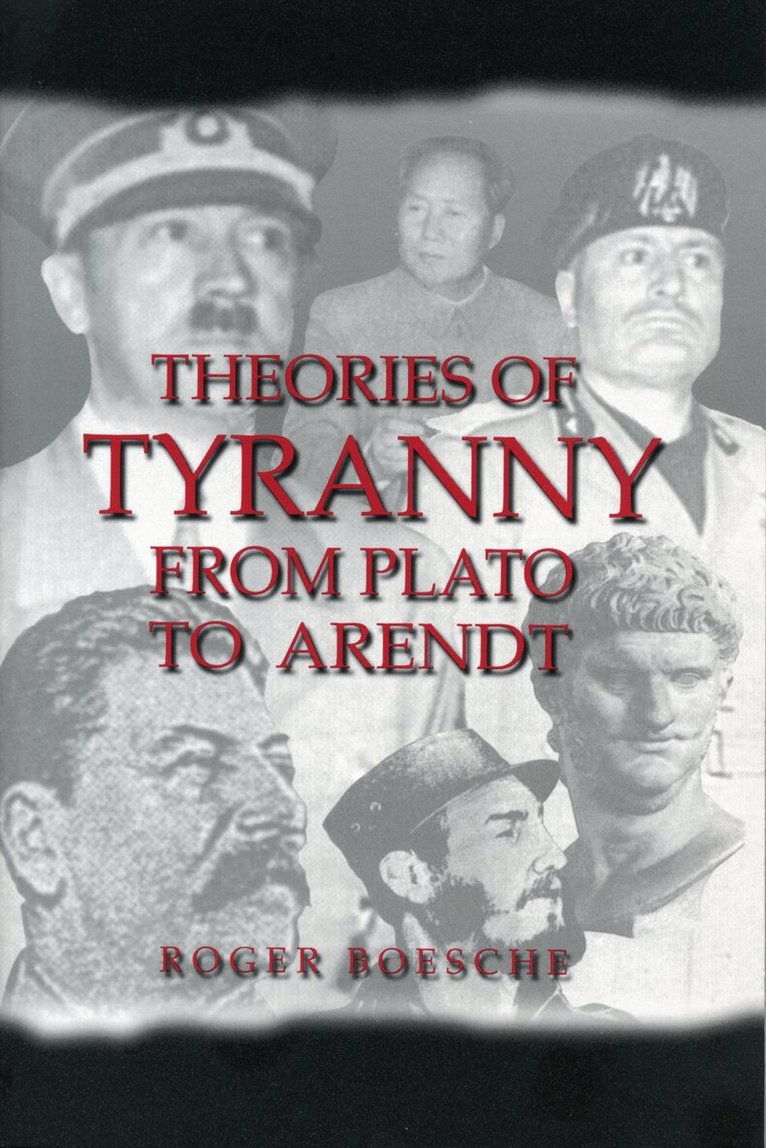
    Theories of Tyranny

    From Plato to Arendt

    AvRoger Boesche

    Häftad, Engelska, 1995

    830 kr

    Beställningsvara. Skickas inom 5-8 vardagar. Fri frakt över 249 kr.

    Beskrivning

    This book explores a little-noticed tradition in the history of European political thought. From Plato to Aristotle to Tacitus and Machiavelli, and from Tocqueville to Max Weber and Hannah Arendt, political thinkers have examined the tyrannies of their times and have wondered how these tyrannies come about, how they work, and how they might be defeated. In examining this perennial problem of tyranny, Roger Boesche looks at how these thinkers borrowed from the past—thus entering into an established dialogue—to analyze the present. Although obviously tyrannies are not identical over time (Hitler certainly did not rule as Nero), we can learn partial lessons from past thinkers that can help us to better understand twentieth-century tyrannies.

    Produktinformation

    • Utgivningsdatum:1995-09-15
    • Mått:152 x 229 x 30 mm
    • Vikt:862 g
    • Format:Häftad
    • Språk:Engelska
    • Antal sidor:504
    • Förlag:Pennsylvania State University Press
    • ISBN:9780271014586

    Utforska kategorier

    • Politiska ideologier och rörelser inom Samhälle och politik
    • Statsvetenskap och politisk teori inom Samhälle och politik
    • Filosofiska discipliner inom Filosofi och religion

    Mer om författaren

    Roger Boesche is Professor of Politics at Occidental College. He is the author of The Strange Liberalism of Alexis de Tocqueville (1987) and editor of Alexis de Tocqueville: Selected Letters on Politics and Society (1985).

    Recensioner i media

    “A great achievement in the scholarship of political philosophy. Anyone who wants to think deeply about the meaning of tyranny must read it.”—American Political Science Review (APSR)

    Innehållsförteckning

    • ContentsPrefaceIntroduction1. Plato: The Political Psychology of Tyranny2. Aristotle: Tyranny as Unnatural3. Tacitus: Tyranny as a Politics of Pretense4. Machiavelli: Defeating Princely Tyrannies5. Montesquieu’s Two Theories of Despotism: Fearing Monarchs and Merchants6. Tocqueville: The Pleasures of Servitude7. Marx: Despotism of Class and Workplace8. Freud: The Reproduction of Tyranny9. Weber: The Inevitability of Bureaucratic Domination10. Fromm, Neumann, and Arendt: Three Early Interpretations of Nazi GermanyConclusion: Thinking About TyrannyAfterwordIndex