• Fri frakt över 249 kr
  • •
  • Snabba leveranser
  • •
  • Billiga böcker
Kundservice

Du är på sajten för privatpersoner.

Företag, bibliotek eller offentlig verksamhet?

Du handlar på classic.bokus.com, där alla dina funktioner finns intakta.
Till classic.bokus.com
Bokus logotyp. Gå till startsidan.
  • Erbjudanden
  • Nyheter
  • Student
  • Topplistor
  • Barn & ungdom
  • Bokus Play
  • E-böcker
  • Pocketböcker
  • Spel & pussel

10% rabatt på allt med kod: NYSTART10 →

Sidfot

Mina sidor

    Hjälp

    • Kundservice
    • Vanliga frågor och svar
    • Frakt och leverans
    • Retur vid ångerrätt
    • Reklamera vara
    • Betalning
    • Köpvillkor
    • Allmänna villkor
    • Information om webbplatsens tillgänglighet

    Om Bokus

    • Om oss
    • Pressrum
    • För studenter
    • För företag
    • För bibliotek och offentlig verksamhet
    • För leverantörer
    • Hållbarhet

    Populärt

    • Aktuella erbjudanden
    • Presentkort
    • Studentlitteratur
    • Nya böcker
    • Topplistor
    • Signerade böcker
    • Engelska böcker

    Inspiration

    • Boktips
    • BookTok
    • Populära bokserier
    • Barnbokskaraktärer
    • Populära författare
    Logotyp för Bokus
    Följ oss på Facebook (extern länk)Följ oss på Instagram (extern länk)Följ oss på YouTube (extern länk)Följ oss på TikTok (extern länk)
    bokus @ CookiesAnpassa cookiesIntegritetspolicyKöpvillkor
    Till Citymail hemsida (extern länk)Till Budbee hemsida (extern länk)Till Postnord hemsida (extern länk)Till Schenker hemsida (extern länk)Till Early Bird hemsida (extern länk)Till Walleys hemsida (extern länk)
    1. Filosofi och religion
    2. Filosofi
    3. Filosofiska discipliner

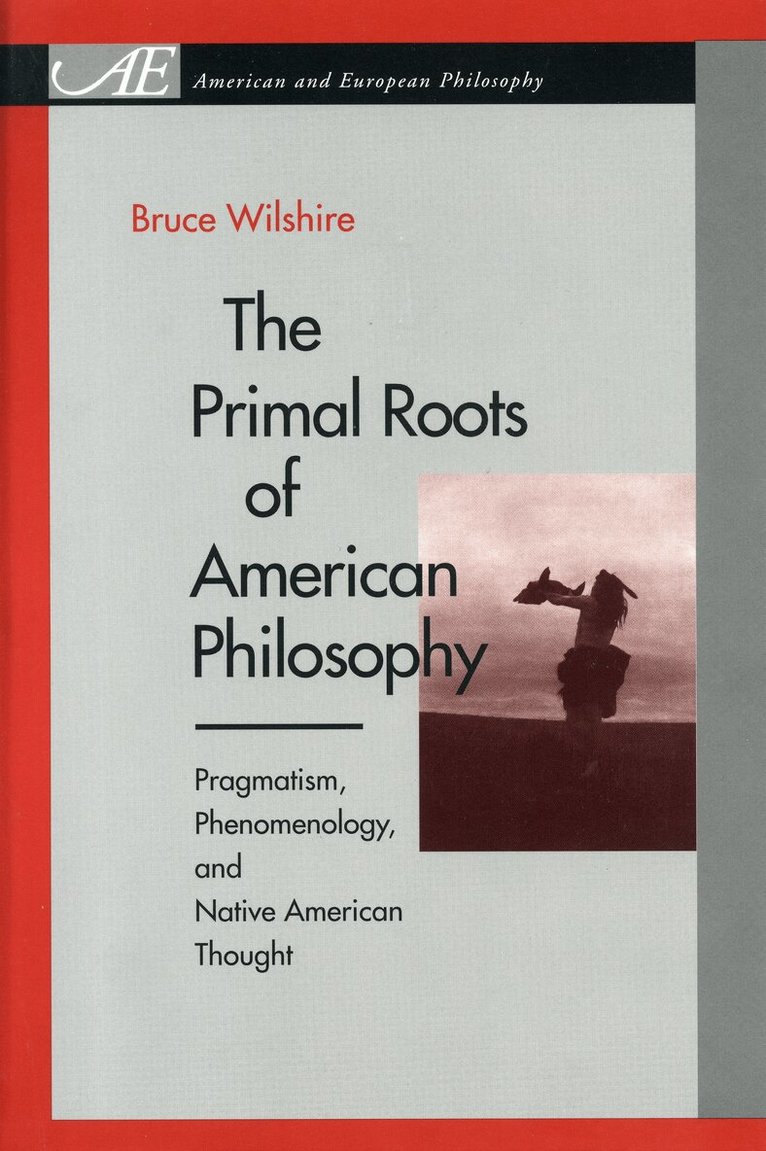
    Primal Roots of American Philosophy

    Pragmatism, Phenomenology, and Native American Thought

    AvBruce Wilshire

    Häftad, Engelska, 2000

    Del i serien American and European Philosophy

    420 kr

    Beställningsvara. Skickas inom 5-8 vardagar. Fri frakt över 249 kr.

    Beskrivning

    Continuing his quest to bring American philosophy back to its roots, Bruce Wilshire connects the work of such thinkers as Thoreau, Emerson, Dewey, and James with Native American beliefs and practices. His search is not for exact parallels, but rather for fundamental affinities between the equally "organismic" thought systems of indigenous peoples and classic American philosophers.Wilshire gives particular emphasis to the affinities between Black Elk’s view of the hoop of the world and Emerson’s notion of horizon, and also between a shaman’s healing practices and James’s ideas of pure experience, willingness to believe, and a pluralistic universe. As these connections come into focus, the book shows how European phenomenology was inspired and influenced by the classic American philosophers, whose own work reveals the inspiration and influence of indigenous thought.Wilshire’s book also reveals how artificial are the walls that separate the sciences and the humanities in academia, and that separate Continental from Anglo-American thought within the single discipline of philosophy.

    Produktinformation

    • Utgivningsdatum:2000-09-15
    • Mått:152 x 229 x 19 mm
    • Vikt:399 g
    • Format:Häftad
    • Språk:Engelska
    • Serie:American and European Philosophy
    • Antal sidor:256
    • Förlag:Pennsylvania State University Press
    • ISBN:9780271020266

    Utforska kategorier

    • Filosofiska discipliner inom Filosofi och religion
    • Etnicitet inom Samhälle och politik

    Mer om författaren

    Bruce Wilshire is Professor of Philosophy at Rutgers University. Recent books include The Moral Collapse of The University: Professionalism, Purity, and Alienation (1990) and Wild Hunger: The Primal Roots of Modern Addictions (1998).

    Recensioner i media

    “Bruce Wilshire is an original. His perceptiveness and his passion combine in his writings to create a magical world of present grief and future possibility. This new book is a unique amalgam of scholarly reflection, private soliloquy, emotional release, and spiritual self-cleansing—a prayer offered up to what Wilshire calls ‘the female archetype of a decentralized, pluralistic, and noncontrolling ground of being.’ Contrary to much dull philosophy, these essays are written for the human voice; for full impact, they need to be spoken as the eyes take them in. . . . This is a very good book, though by no means what is nowadays considered a standard work in philosophy. I consider that a strength and not a failing, for it sets an exhilarating paradigm for what philosophers can do. Wilshire appeals to experience, not only argument; to feeling, not only reason; to insight, not only discursive understanding. He requires that in reading his work we do what he recommends and place ourselves in contact with the healing energies of a deeper universe.”—John Lachs, Vanderbilt University