• Fri frakt över 249 kr
  • •
  • Snabba leveranser
  • •
  • Billiga böcker
Kundservice

Du är på sajten för privatpersoner.

Företag, bibliotek eller offentlig verksamhet?

Du handlar på classic.bokus.com, där alla dina funktioner finns intakta.
Till classic.bokus.com
Bokus logotyp. Gå till startsidan.
  • Erbjudanden
  • Nyheter
  • Student
  • Topplistor
  • Barn & ungdom
  • Bokus Play
  • E-böcker
  • Pocketböcker
  • Spel & pussel

10% rabatt på allt med kod: NYSTART10 →

Sidfot

Mina sidor

    Hjälp

    • Kundservice
    • Vanliga frågor och svar
    • Frakt och leverans
    • Retur vid ångerrätt
    • Reklamera vara
    • Betalning
    • Köpvillkor
    • Allmänna villkor
    • Information om webbplatsens tillgänglighet

    Om Bokus

    • Om oss
    • Pressrum
    • För studenter
    • För företag
    • För bibliotek och offentlig verksamhet
    • För leverantörer
    • Hållbarhet

    Populärt

    • Aktuella erbjudanden
    • Presentkort
    • Studentlitteratur
    • Nya böcker
    • Topplistor
    • Signerade böcker
    • Engelska böcker

    Inspiration

    • Boktips
    • BookTok
    • Populära bokserier
    • Barnbokskaraktärer
    • Populära författare
    Logotyp för Bokus
    Följ oss på Facebook (extern länk)Följ oss på Instagram (extern länk)Följ oss på YouTube (extern länk)Följ oss på TikTok (extern länk)
    bokus @ CookiesAnpassa cookiesIntegritetspolicyKöpvillkor
    Till Citymail hemsida (extern länk)Till Budbee hemsida (extern länk)Till Postnord hemsida (extern länk)Till Schenker hemsida (extern länk)Till Early Bird hemsida (extern länk)Till Walleys hemsida (extern länk)
    1. Kultur
    2. Konstböcker
    3. Konsthistoria

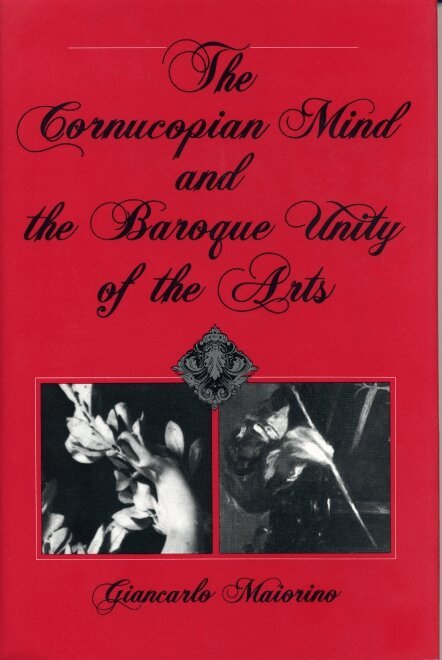
    Cornucopian Mind and the Baroque Unity of the Arts

    AvGiancarlo Maiorino

    Häftad, Engelska, 1990

    526 kr

    Beställningsvara. Skickas inom 5-8 vardagar. Fri frakt över 249 kr.

    Beskrivning

    This comparative and interdisciplinary study focuses on a cluster of epoch-making themes that emerged in the late sixteenth century. Michelangelo and Giordano Bruno are taken as the founding fathers of the Baroque, and we see that beyond the Alps their lessons were echoed in Montaigne, Cervantes, and the Counter-Reformation culture of the Mediterranean basin. Maiorino shows that the common denominator that links the origins of the Baroque to its maturity is the concept of form as "process," which is then articulated into chapters on the formative unity of the arts, art forms at the threshold, and the development from humanist perfection to Baroque perfectibility. Such an evolution in literature and the arts is situated in relation to the age of explorations (Columbus), scientific inventions (the telescope), and the fundamental shift from the enclosed Ptolemic system to the open universe of the Copernican revolution.At the Baroque point of origin, the inner vitality of Michelangelo's emphasis on creation as "process" rather than completed act taught a crucial lesson to Baroque artists. Their response to the infinite and open universe of the "New Science" was one that took part to be as dynamic and metamorphic as life itself. It is in the context of "open" forms within an "open" universe that this study moves from Michelangelo to Bruno. His poetics of immeasurable abundance set "process" at the very core of the Baroque art, thought, and science. Applied to the forms of art, growth and metamorphosis are linked to what Maiorino calls (borrowing from Mikhail Bakhtin) the Baroque chronotope of formation, which refers to forms responding to the dynamics of space-time interactions. Such interactions were exhaustive and even tested the boundaries between reality and fiction, creation and denial, conformity and criticism from picaresque Spain to middle-class Holland. And it is the painting of a Dutch artist—Rembrandt's Aristotle Contemplating the Bust of Homer— that is taken as a symbol of the Baroque reconciliation of humanist learning with human or humane understanding. Such a humanizing attitude also marked the final transformation of humanist ideals of perfection into the Baroque experience of human perfectibility.This book will be of importance to all scholars concerned with the history of ideas, cultural history, and the Baroque in literature and art.

    Produktinformation

    • Utgivningsdatum:1990-02-15
    • Mått:152 x 229 x 13 mm
    • Vikt:367 g
    • Format:Häftad
    • Språk:Engelska
    • Antal sidor:222
    • Förlag:Pennsylvania State University Press
    • ISBN:9780271027906

    Utforska kategorier

    • Konsthistoria inom Kultur
    • Kulturvetenskap inom Samhälle och politik

    Mer om författaren

    Giancarlo Maiorino is Professor of Comparative Literature at Indiana University, Bloomington. Born and raise in Rome, he did his graduate work at the University of Wisconsin, Madison. He holds an MA in art history and a PhD ini Italian and Comparative Literature. He is the author of Adam "New Born and Perfect": The Renaissance Promise of Eternity (1987) and has published in such journals as Comparative Literature Studies, Journal of the History of Ideas, Journal of Aesthetics and Art Criticism, and Gazette des Beaux-Arts.

    Recensioner i media

    “A positive aspect of the book is its strong synthesizing tendency: the author is able to combine analyses of texts drawn from philosophy, sculpture, painting, as well as literature into a coherent pattern without at the same time doing violence to the specificity of the works analyzed.”—Michael Holquist, Yale University

    Innehållsförteckning

    • ContentsAcknowledgmentsIllustrationsIn the Belly of Indigence1.Econopoetics and the Great Chain of HandoutsStarved to Death2.The Mousetrap: The Price of Staying Alive3.Inconspicuous Consumption: Of Toothpicks and LeftoversOut of Laceria4.The Water Carrier: From Subsistence to Prosperity5.The Economic Culture of Toledan ProvechoThe Price of Onomastics6.Lázaro de Tormes: What’s in a Name?7.Will Lazarus Ever Be a Wage Earner? Dividends of the Mind8.The Cost of Education: A Tale of Two Cities9.The Economy of Genre10At the Margins: Whose Renaissance? Works CitedIndex of NamesIndex