• Fri frakt över 249 kr
  • •
  • Snabba leveranser
  • •
  • Billiga böcker
Kundservice

Du är på sajten för privatpersoner.

Företag, bibliotek eller offentlig verksamhet?

Du handlar på classic.bokus.com, där alla dina funktioner finns intakta.
Till classic.bokus.com
Bokus logotyp. Gå till startsidan.
  • Erbjudanden
  • Nyheter
  • Student
  • Topplistor
  • Barn & ungdom
  • Bokus Play
  • E-böcker
  • Pocketböcker
  • Spel & pussel

10% rabatt på allt med kod NYSTART10 →

Sidfot

Mina sidor

    Hjälp

    • Kundservice
    • Vanliga frågor och svar
    • Frakt och leverans
    • Retur vid ångerrätt
    • Reklamera vara
    • Betalning
    • Köpvillkor
    • Allmänna villkor
    • Information om webbplatsens tillgänglighet

    Om Bokus

    • Om oss
    • Pressrum
    • För studenter
    • För företag
    • För bibliotek och offentlig verksamhet
    • För leverantörer
    • Hållbarhet

    Populärt

    • Aktuella erbjudanden
    • Presentkort
    • Studentlitteratur
    • Nya böcker
    • Topplistor
    • Signerade böcker
    • Engelska böcker

    Inspiration

    • Boktips
    • BookTok
    • Populära bokserier
    • Barnbokskaraktärer
    • Populära författare
    Logotyp för Bokus
    Följ oss på Facebook (extern länk)Följ oss på Instagram (extern länk)Följ oss på YouTube (extern länk)Följ oss på TikTok (extern länk)
    bokus @ CookiesAnpassa cookiesIntegritetspolicyKöpvillkor
    Till Citymail hemsida (extern länk)Till Budbee hemsida (extern länk)Till Postnord hemsida (extern länk)Till Schenker hemsida (extern länk)Till Early Bird hemsida (extern länk)Till Walleys hemsida (extern länk)
    1. Kultur
    2. Konstböcker
    3. Konstformer
    4. Övriga konstformer
    5. Skulptur

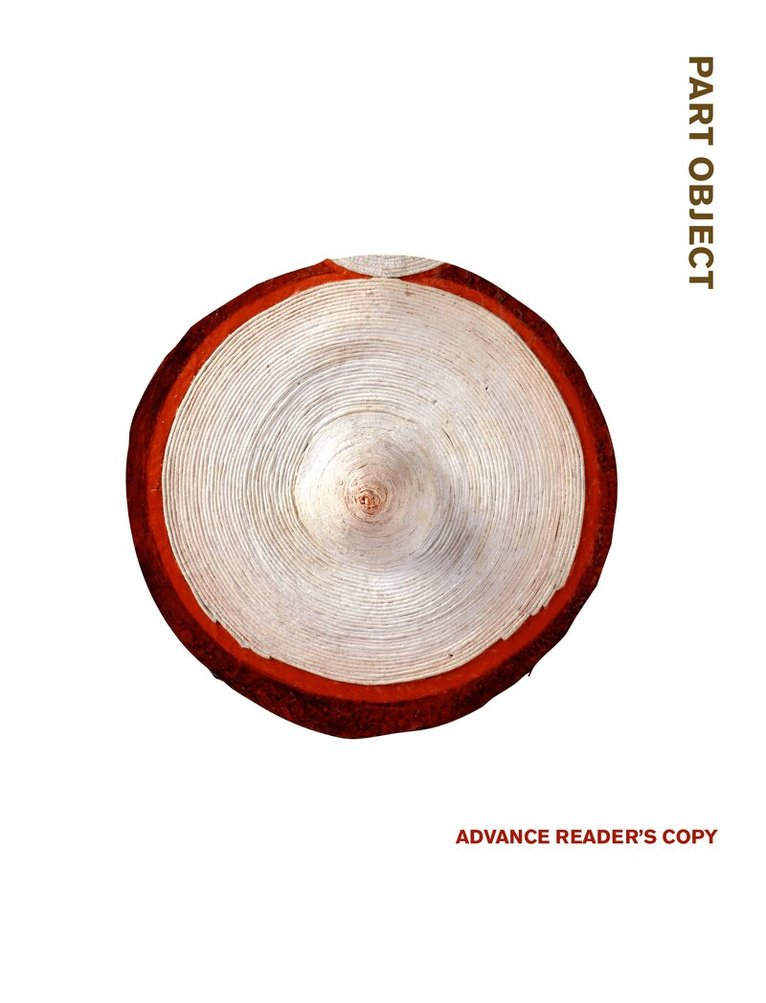
    Part Object Part Sculpture

    AvHelen Molesworth

    Häftad, Engelska, 2005

    510 kr

    Beställningsvara. Skickas inom 5-8 vardagar. Fri frakt över 249 kr.

    Beskrivning

    How did you get the concept for Part Object Part Sculpture? I remain fascinated by the tricky nature of Duchamp’s readymades—objects transformed into art, but not quite. They always retain their original identity or function. This is why many people refer to Fountain in a casual way as “the urinal.” For me this is an acknowledgment that the work is part art, part not—part object, part sculpture. What is new about your interpretation of Duchamp?I insist that we see the readymades produced in the 1960s as quite different from the readymades that were purchased by Duchamp in the teens. They are different objects, with different sets of rules. Hence they behave differently in the gallery and ultimately mean different things. I have also tried to keep Duchamp’s readymades in dialogue with his lifelong interest in eros. These two strains of his thought have been kept separate—wrongly, I think—in the American reception of Duchamp. The artists featured in Part Object Part Sculpture come from different generations, different national traditions. Why do you bring them together in this exhibition and book?I am trying to map a genealogy of postwar sculpture that challenges the Minimalist/Post-Minimalist sequence maintained in most accounts of the period. The exhibition begins in the 1950s and comes up to the present. Also, it has become increasingly difficult to narrate postwar art as predominantly or exclusively American. Artists have been engaging in an enormous transatlantic dialogue. Is there any single work in the catalogue that can be singled out as emblematic of your intervention? No, not at all. It is precisely the constellation of figures like Burri, Duchamp, and Bourgeois, and then Duchamp and Hesse and Johns, and then Duchamp and Kusama and Gober, and then Duchamp and McElheney, that makes the exhibition so potentially interesting. How did you and your collaborators develop the scope and aim of the essays in the book?I asked writers who were working on the artists in the show and have won my admiration for the sensitivity of their writing and the unconventional nature of their thought. I then allowed them to write what they pleased. The outcome is a book to be considered as another site where the counter-genealogy is being built and argued for.

    Produktinformation

    • Utgivningsdatum:2005-11-15
    • Mått:203 x 254 x 16 mm
    • Vikt:1 674 g
    • Format:Häftad
    • Språk:Engelska
    • Antal sidor:224
    • Förlag:Pennsylvania State University Press
    • ISBN:9780271028552

    Utforska kategorier

    • Skulptur inom Kultur
    • Konsthistoria inom Kultur

    Mer om författaren

    Helen Molesworth, Chief Curator at the Wexner Center for the Arts, has published Image Stream (2004) and Work Ethic (Penn State, 2003).

    Recensioner i media

    “A few months ago I was sent a remarkable catalogue for what must have been a remarkable exhibition. Part Object Part Sculpture was conceived by Helen Molesworth, the curator of the exhibition, and held at the Wexner Center for the Arts, among the most innovative venues for advanced art. That must mean that Penn State Press is among the most innovative of publishing houses, for I noticed its imprint. As a critic, I see a lot of catalogues and rely on them of necessity as well. They are mainly graceless volumes, gracelessly written. This, by contrast, was as clever as the show, with classy illustrations and smart essays. If it embodies the spirit of Penn State Press, it speaks for the latter’s entire list—edgy and authoritative, living where intellect itself lives.”—Arthur C. Danto, Columbia University