• Fri frakt över 249 kr
  • •
  • Snabba leveranser
  • •
  • Billiga böcker
Kundservice

Du är på sajten för privatpersoner.

Företag, bibliotek eller offentlig verksamhet?

Du handlar på classic.bokus.com, där alla dina funktioner finns intakta.
Till classic.bokus.com
Bokus logotyp. Gå till startsidan.
  • Erbjudanden
  • Nyheter
  • Student
  • Topplistor
  • Barn & ungdom
  • Bokus Play
  • E-böcker
  • Pocketböcker
  • Spel & pussel

10% rabatt på allt med kod: NYSTART10 →

Sidfot

Mina sidor

    Hjälp

    • Kundservice
    • Vanliga frågor och svar
    • Frakt och leverans
    • Retur vid ångerrätt
    • Reklamera vara
    • Betalning
    • Köpvillkor
    • Allmänna villkor
    • Information om webbplatsens tillgänglighet

    Om Bokus

    • Om oss
    • Pressrum
    • För studenter
    • För företag
    • För bibliotek och offentlig verksamhet
    • För leverantörer
    • Hållbarhet

    Populärt

    • Aktuella erbjudanden
    • Presentkort
    • Studentlitteratur
    • Nya böcker
    • Topplistor
    • Signerade böcker
    • Engelska böcker

    Inspiration

    • Boktips
    • BookTok
    • Populära bokserier
    • Barnbokskaraktärer
    • Populära författare
    Logotyp för Bokus
    Följ oss på Facebook (extern länk)Följ oss på Instagram (extern länk)Följ oss på YouTube (extern länk)Följ oss på TikTok (extern länk)
    bokus @ CookiesAnpassa cookiesIntegritetspolicyKöpvillkor
    Till Citymail hemsida (extern länk)Till Budbee hemsida (extern länk)Till Postnord hemsida (extern länk)Till Schenker hemsida (extern länk)Till Early Bird hemsida (extern länk)Till Walleys hemsida (extern länk)
    1. Samhälle och politik
    2. Samhälle och kultur
    3. Kultur och medier
    4. Kulturvetenskap

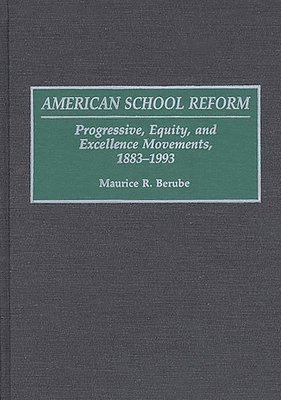
    American School Reform

    Progressive, Equity, and Excellence Movements, 1883-1993

    AvMaurice R. Berube

    Inbunden, Engelska, 1994

    1 018 kr

    Beställningsvara. Skickas inom 10-15 vardagar. Fri frakt över 249 kr.

    Fler format och utgåvor

    Häftad

    384 kr

    Beskrivning

    Berube analyzes the three great educational reform movements in the United States. He shows how they have been shaped by outside societal forces: Progressive Education was an offshoot of the Progressive Movement; Equity Reform in the 1960s was influenced by the Civil Rights Movement; Excellence Reform in the last decade was a response to foreign economic competition. Within each matrix, common characteristics of each movement emerge. Progressive Education with its emphasis on critical thinking and child-centered schools set the stage for what was to follow. Equity Reform sought to complete the unfinished agenda of Progressive Education in educating the poor. Excellence Reform repudiated both in the name of higher standards and content-specific curriculums. The emergence of sophisticated educational research since the 1960s has influenced educational policy to be more research-based. Berube provides a necessary overview of the great movements in school reform over the last century.

    Produktinformation

    • Utgivningsdatum:1994-12-08
    • Mått:161 x 240 x 14 mm
    • Vikt:420 g
    • Format:Inbunden
    • Språk:Engelska
    • Antal sidor:168
    • Förlag:Bloomsbury Publishing Plc
    • ISBN:9780275950361

    Utforska kategorier

    • Kulturvetenskap inom Samhälle och politik
    • Pedagogisk teori och filosofi inom Psykologi och pedagogik
    • Utbildningsstrategier och utbildningspolitik inom Psykologi och pedagogik

    Mer om författaren

    MAURICE R. BERUBE is Professor of Educational Leadership in the Department of Educational Leadership and Counseling at Old Dominion University. He is the author of American Presidents and Education (1991), Teacher Politics: The Influence of Unions (1988), and Education and Poverty: Effective Schooling in the United States and Cuba (1984), and many more, all published by Greenwood.

    Innehållsförteckning

    • Preface The Progressive Movement Progressive Education: The Matrix of It All John Dewey: America's Educational Philosopher The Civil Rights Movement and Equity Reform Community Control Revisited The Drift to Privatization The School Culture Wars Conclusion Bibliography Index