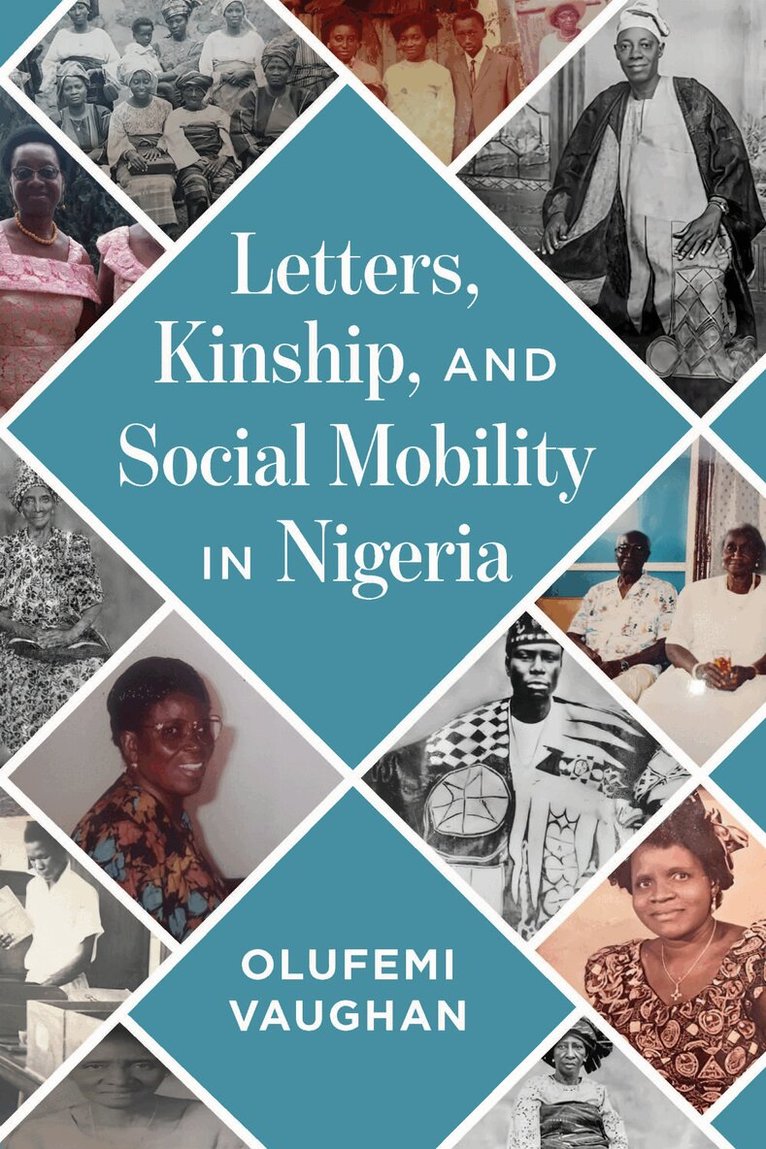
Häftad, Engelska, 2024
Letters, Kinship, and Social Mobility in Nigeria
Del i serien Africa and the Diaspora: History, Politics, Culture
340 kr
Beställningsvara. Skickas inom 10-15 vardagar. Fri frakt över 249 kr.
Beskrivning
Produktinformation
- Utgivningsdatum: 2024-12-17
- Mått: 152 x 229 x 20 mm
- Vikt: 454 g
- Format: Häftad
- Språk: Engelska
- Serie: Africa and the Diaspora: History, Politics, Culture
- Antal sidor: 282
- Förlag: University of Wisconsin Press
- ISBN: 9780299344542
Utforska kategorier
Mer om författaren
Olufemi Vaughan, the Alfred Sargent Lee ’41 and Mary Farley Ames Lee Professor and Chair of Black Studies at Amherst College, is the author of Religion and the Making of Nigeria, among other works.
Recensioner i media
“[An] illuminating historical text. . . . The letters indeed offer an empirical window onto class relations, British colonial social engineering, assimilation, eminent domain, coloniality, Indigenous filial responsibilities and expectations, and the deployment of new forms of education-based discrimination within a changing society.”—Choice “A remarkable trove of letters; a true family archive of 3,000 missives written between 1926 and 1994. Vaughan uses these letters to examine themes of modernity, elite self-fashioning, and enduring kinship obligations during the period when Nigeria was transitioning from British colonial rule to independence.”—International Journal of African Historical Studies “Reading this was a joy. It is precisely the kind of book that will command attention not only among Africanists but in adjunct and cross-fertilizing disciplines and cultural contexts where tensions and contestations around kinship, filiation, and familism—moral and otherwise—persevere, giving modernist claims of isolated individuality a run for their affective money.”—Ebenezer Obadare, author of Humor, Silence, and Civil Society in Nigeria“By synthesizing a vast number of letters, Olufemi Vaughan reconstructs the trajectory of a class of Nigerians who were part of the colonial bureaucracy and sociopolitical system but were conscious of their filial responsibility not to allow the ties that bound them to break. . . . Innovative in its content and easily relatable for anyone interested in the development of modern literacy in Africa.”—Toyin Falola, author of A Mouth Sweeter than Salt: An African Memoir
Betyg & recensioner
0 recensioner
Inga recensioner tillgängliga.